Tesla CEO Elon Musk has unveiled a new generation of the company’s Roadster electric sports car, demonstrating a vehicle capable of briefly flying, driving upside down and accelerating to highway speeds in less than a second.
The dramatic presentation, held Thursday at a SpaceX testing facility in Texas, marked the most significant public demonstration of the long-delayed vehicle since it was first announced nearly nine years ago.
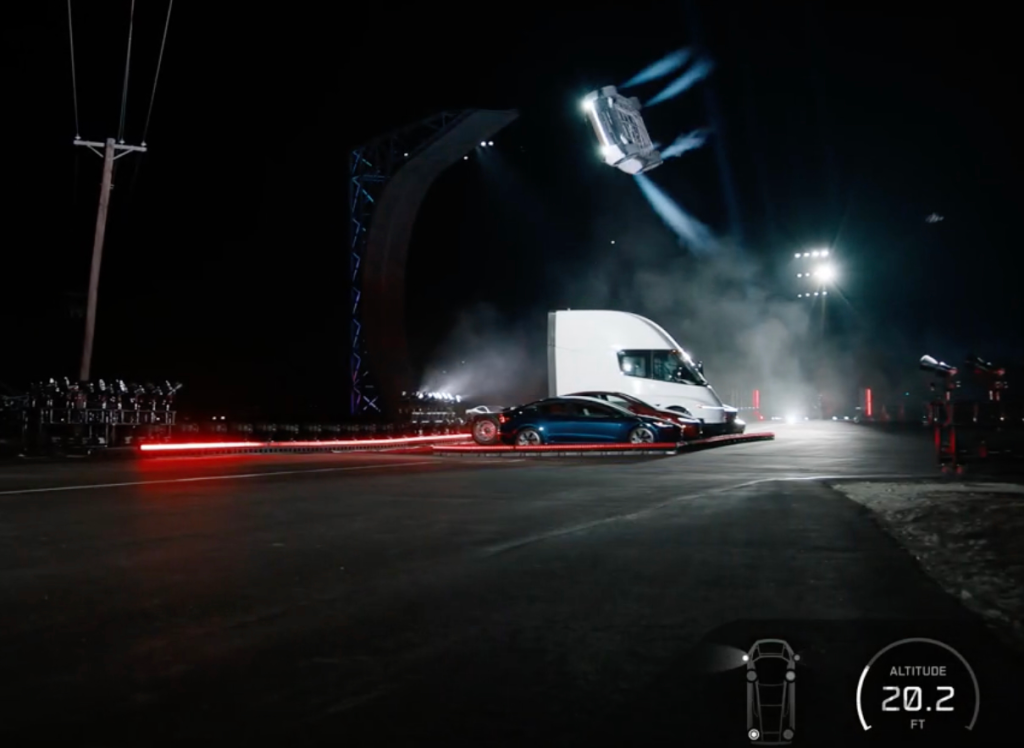
During the event, the Roadster drove up a curved ramp, continued travelling while inverted and then launched into the air before turning upright and landing safely.
The manoeuvre was made possible by a combination of powerful suction technology and high-pressure gas thrusters developed with engineers from Musk’s aerospace company, SpaceX.
Tesla also demonstrated the vehicle lifting itself over a line of other Tesla models, highlighting its ability to perform controlled airborne movements.
The company presented footage showing the Roadster accelerating from zero to 60 miles per hour (97 kilometres per hour) in just 0.81 seconds, potentially placing it among the fastest-accelerating cars ever demonstrated.
Musk said the new Roadster was designed to showcase the limits of automotive engineering rather than serve as a mass-market electric vehicle.
According to Tesla, the vehicle can reach a top speed exceeding 230 mph (370 km/h). The company has also indicated that some configurations will provide approximately 300 miles (483 kilometres) of driving range.
The redesigned Roadster will be offered in several configurations, including Performance, Thrust and an exclusive Rocket variant.
The Performance model requires a $50,000 reservation deposit, while customers seeking the Thrust version must pay $250,000 to reserve a vehicle. The Rocket version, featuring a more extensive flight system, will be available by invitation only.
Tesla has not disclosed final selling prices.
Despite the successful demonstration, questions remain about whether the airborne capabilities can be approved for use on public roads. The Rocket variant is not currently approved for ordinary road use, and the production vehicles could differ from those shown during the event.
The unveiling comes after years of missed deadlines for the second-generation Roadster, originally introduced in 2017 with promises that deliveries would begin in 2020.
Musk now expects production to start in 2028, although the company has not announced a firm customer delivery schedule.
The vehicle also represents a departure from Tesla’s growing emphasis on autonomous transportation and humanoid robotics.
While the company has increasingly focused on driverless technology, Musk described the Roadster as a vehicle built primarily for the driving experience.
Analysts expect it to remain a limited-production luxury sports car rather than a major contributor to Tesla’s revenue.