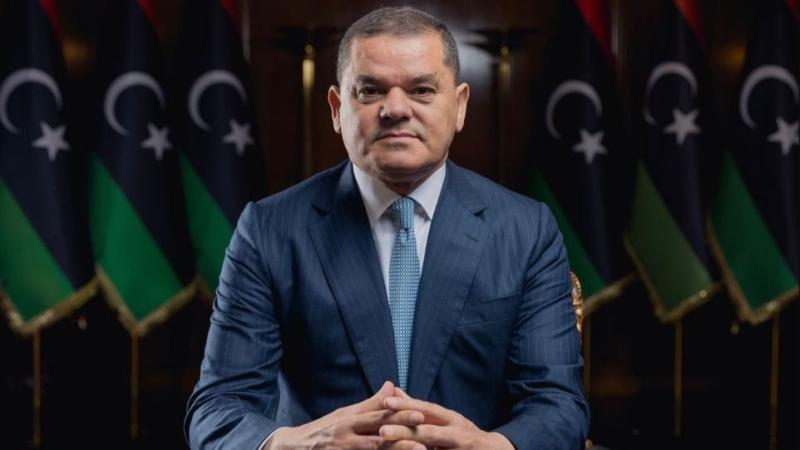
Libya’s Prime Minister Abdulhamid Dbeibah has expressed his government’s readiness to address Egypt’s concerns over maritime boundaries and economic waters in the Mediterranean, following Cairo’s rejection of a maritime agreement between Libya and Türkiye.
Dbeibah, who heads Libya’s UN-recognised Government of National Unity (GNU), conveyed the position during a telephone conversation with Egyptian intelligence chief Hassan Rashad, his office said on Saturday.
The two officials discussed bilateral relations and coordination on issues of mutual interest, including maritime disputes and regional cooperation.
The conversation followed Egypt’s rejection on Wednesday of a maritime boundary agreement between Libya and Türkiye that was ratified by Libya’s eastern-based parliament.
Cairo declared the agreement null and void, insisting it would have no legal effect on Egypt’s maritime rights or territorial claims.
Long-running Mediterranean dispute
The maritime agreement was originally signed in 2019 between Türkiye and Libya’s internationally recognised government in Tripoli.
However, Libya’s eastern authorities, aligned with military commander Khalifa Haftar, withheld their approval for several years amid the country’s prolonged political divisions.
The agreement has remained a source of regional tensions, particularly over competing maritime claims and potential offshore energy exploration in the eastern Mediterranean.
Egypt, Greece and Cyprus have opposed the accord, arguing that it encroaches on their respective maritime jurisdictions.
Türkiye and Libya, meanwhile, maintain that their maritime cooperation is consistent with their sovereign rights.
Libya’s political divisions
Libya remains divided between Dbeibah’s UN-recognised administration in Tripoli and rival authorities in the east, where Haftar maintains significant military and political influence.
The competing administrations have frequently adopted differing positions on foreign policy, security cooperation and energy agreements.
Egypt, which shares an extensive land border with Libya, maintains longstanding economic and security relations with the country and has historically cultivated close ties with its eastern leadership.
Dbeibah’s latest remarks signal a willingness to engage Cairo diplomatically as tensions persist over maritime boundaries and energy resources in the Mediterranean.