Four decades ago, Iran’s revolutionary leadership sent waves of young volunteers, including children, into heavily defended Iraqi positions, glorifying their deaths as religious martyrdom and promising them paradise.
Today, as Iranian forces wage an increasingly destructive maritime campaign in the Strait of Hormuz, an unsettling question deserves examination: Is Tehran returning to the same doctrine, this time using explosive-laden speedboats instead of infantry?
The combination of intensifying electronic warfare, Iran’s longstanding reliance on expendable forces and renewed evidence of child recruitment raises troubling questions about how far the Islamic Revolutionary Guard Corps (IRGC) might go to sustain its campaign.
The war at sea
The Strait of Hormuz has become one of the most dangerous commercial shipping corridors in the world.
According to the International Maritime Organization, 121 maritime security incidents had been confirmed across the affected Middle Eastern waters by October 27, with 24 seafarers killed.
Among the attacks was the sinking of the Singapore-flagged container ship GFS Pride on October 13. Its crew survived, but the incident demonstrated the continuing vulnerability of commercial vessels navigating the narrow waterway.
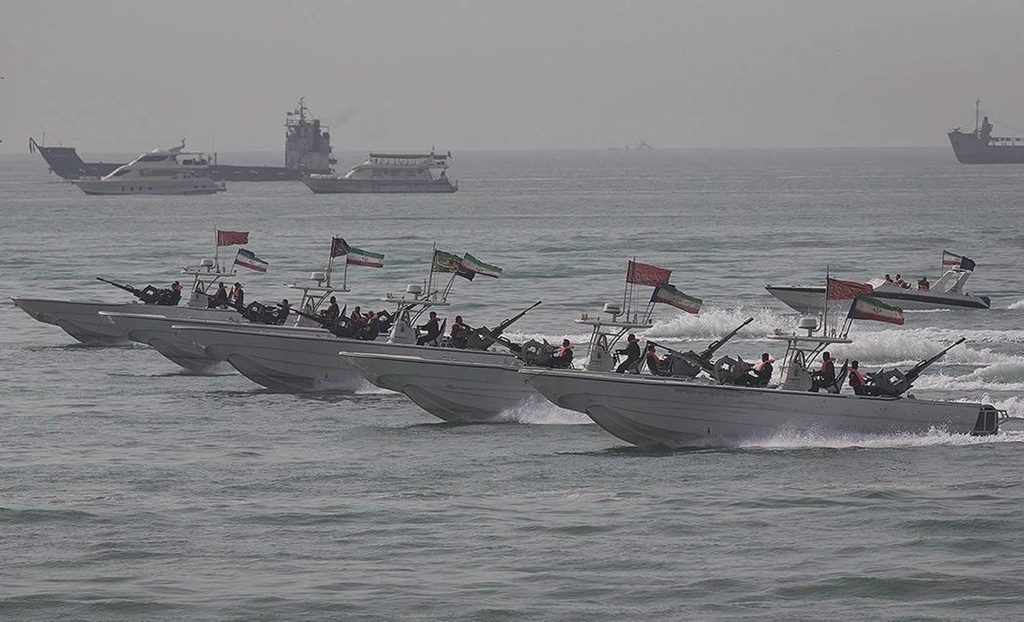
Iran has employed a combination of anti-ship missiles, aerial drones, explosive unmanned surface vessels and fast attack boats.
In March, an Iranian explosive drone boat reportedly struck the Marshall Islands-flagged tanker MKD VYOM in the Gulf of Oman, killing a crew member.
On October 16, United Kingdom Maritime Trade Operations reported that a tanker near Saudi Arabia had been struck by a rocket-propelled grenade fired from a small boat.
These incidents establish that explosive surface craft and conventional small-boat attacks are part of the maritime threat.
What remains unclear is whether every attack currently attributed to an unmanned system is genuinely being conducted without a person aboard.
When technology becomes a liability
The growing intensity of electronic warfare introduces another dimension.
The Strait of Hormuz has experienced widespread interference with satellite navigation and radio-frequency communications, creating serious problems for civilian shipping and potentially complicating military operations.
In an October 21 assessment, the Critical Threats Project argued that persistent electronic jamming makes weapons requiring uninterrupted radio-frequency guidance increasingly vulnerable.
The analysis suggested that Iran could be relying more heavily on weapons capable of independently identifying and striking targets, potentially including infrared-guided missiles or drones.
But electronic interference also raises an alternative possibility.
If remote control becomes unreliable, and sophisticated autonomous guidance remains limited or unavailable, Iranian commanders could face pressure to employ simpler methods of directing explosive craft toward their targets.
One such method would be human control.
A person steering a speedboat does not require a continuous radio link to identify a nearby vessel and adjust course.
That does not mean Iran has adopted manned suicide attacks. Electronic jamming does not render every unmanned system ineffective, and preprogrammed or independently guided weapons remain viable alternatives.
Nevertheless, the possibility of a return to human-guided attacks cannot be dismissed simply because modern warfare is increasingly associated with drones.
To understand why the hypothesis matters, it is necessary to examine Iran’s military history.
The children who were promised paradise
During the 1980–1988 Iran–Iraq War, Ayatollah Ruhollah Khomeini’s government mobilised enormous numbers of volunteers through the Basij, a revolutionary force operating alongside the Iranian military and Revolutionary Guards.
Many genuinely believed they were defending their homeland following Iraq’s invasion in September 1980.
But Iran’s revolutionary leadership also transformed military sacrifice into a religious obligation.
Young volunteers participated in mass infantry assaults against heavily fortified Iraqi positions. Some were deployed in operations involving minefields, where casualties were devastating.
Accounts from the period describe children carrying symbolic plastic keys said to represent their promised entry into paradise if they died as martyrs.
In 1982, Khomeini issued religious rulings removing the requirement for parental permission when volunteers were needed at the front, while declaring military participation a religious duty.
The battlefield consequences were enormous.
Instead of relying exclusively on conventional military strength, Iranian commanders repeatedly used mass infantry formations to compensate for deficiencies in equipment, training and firepower.
The underlying calculation was brutal: human lives could be sacrificed to overcome defenses that more sophisticated weapons might otherwise have been needed to defeat.
The Revolutionary Guards emerged from that conflict with a military culture shaped by asymmetric warfare, ideological commitment and the glorification of sacrifice.
Four decades later, those historical foundations remain relevant.
A disturbing echo in 2026
The comparison is not confined to history.
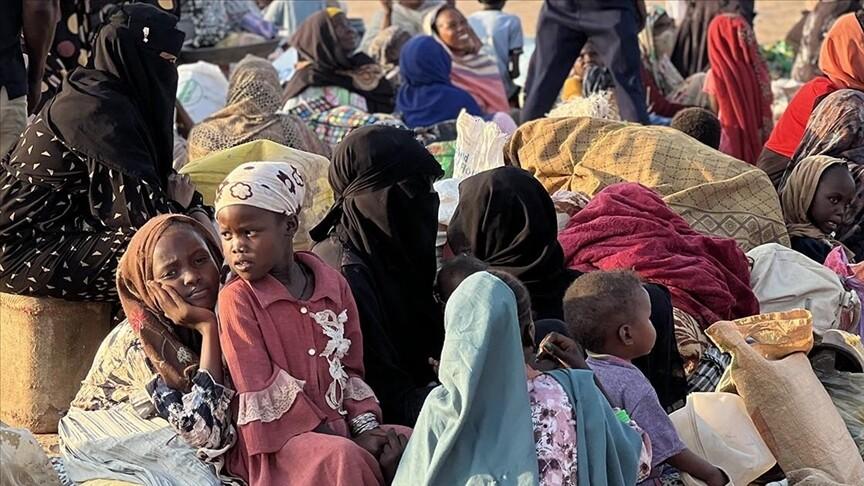
In April 2026, Amnesty International accused Iranian authorities of recruiting and mobilising children as young as 12 into military activities associated with the Revolutionary Guards.
The organisation documented a recruitment campaign announced in March and verified footage showing children carrying firearms at checkpoints and participating in security operations.
Amnesty also reported the death of an 11-year-old boy accompanying his Basij-member father at a Tehran checkpoint during an Israeli drone attack.
The organisation described Iran’s recruitment of children under 15 as a war crime.
There is no evidence connecting these children to maritime suicide attacks.
However, the findings establish that the Iranian authorities have once again been willing to expose minors to military danger during wartime.
That continuity makes the historical comparison more than an exercise in speculation.
Are Iran’s speedboats becoming the new human waves?
Iran’s maritime strategy has long emphasised inexpensive, numerous and difficult-to-detect threats capable of challenging technologically superior opponents.
Fast attack boats are particularly suited to operations in the confined waters of the Persian Gulf and Strait of Hormuz.
Their relatively low cost and ability to operate close to shore make them useful instruments of asymmetric warfare.
But there is a fundamental distinction between a conventional fast-boat attack, an unmanned explosive vessel and a suicide mission.
In the first, a crew may expect to escape.
In the second, the attacking craft is expendable, but no operator needs to die.
In the third, the attacker is deliberately sacrificed as part of the weapon’s employment.
It is this third possibility that demands investigation.
If Iranian forces are increasingly struggling to maintain reliable control of unmanned vessels, could commanders be assigning personnel to missions from which they are not expected to return?
Could the IRGC’s historical glorification of martyrdom make such missions easier to justify internally?
And could some attacks presently attributed to unspecified projectiles or explosive craft conceal a more disturbing method of operation?
The historical precedent makes these questions legitimate. The current electronic-warfare environment gives them operational relevance.
But a credible determination would require evidence, including recovered vessel components, verified eyewitness testimony, forensic examination of attack footage or documentation showing that crews were ordered to undertake deliberately fatal missions.
None of the publicly available reporting examined for this analysis establishes that Iran is systematically conducting such attacks.
Different battlefield, familiar doctrine?
The Iran–Iraq War demonstrated how Iran’s revolutionary leadership could transform religious devotion and patriotic determination into instruments of military strategy.
The current conflict is technologically different, but the underlying logic of Iran’s asymmetric warfare remains recognisable: compensate for conventional disadvantages through persistence, unconventional methods and a willingness to absorb losses.
What remains uncertain is whether that willingness has extended to deliberately sacrificing boat crews.
The possibility deserves particular scrutiny at a time when electronic warfare is reshaping maritime combat and Iranian authorities have already been accused of returning children to military roles.
Forty years ago, young Iranian volunteers were told that death on the battlefield could open the gates of paradise.
Today, the instruments of war have changed. The minefields have given way to contested waterways, and drones have replaced many functions once performed by soldiers.
But if Iran is once again substituting human lives for military technology, the Strait of Hormuz may be witnessing the return of one of the darkest doctrines of the Islamic Republic’s revolutionary past.
The question is no longer merely what Iran is prepared to destroy.
It is what its commanders may once again be prepared to sacrifice.