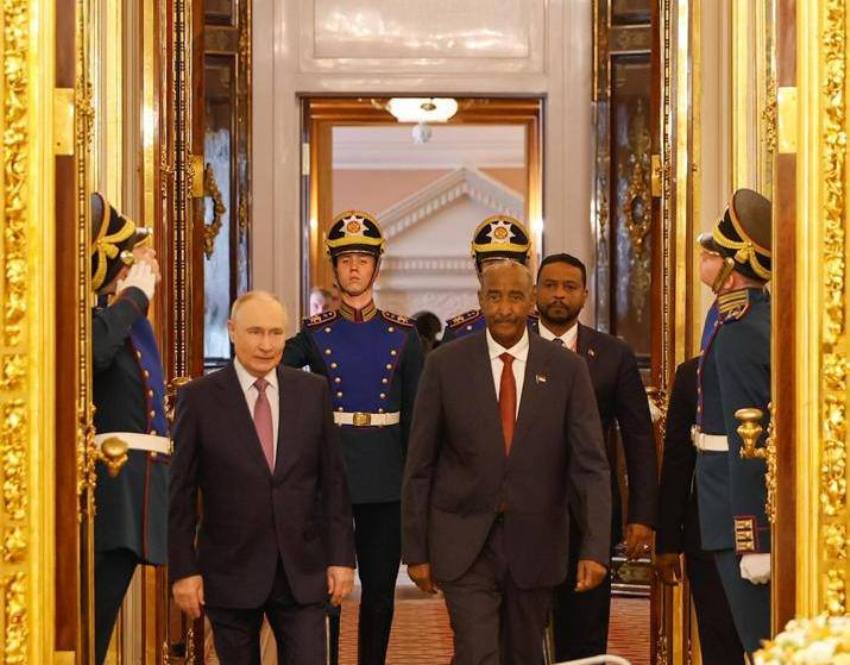
Sudanese army chief Abdel Fattah al-Burhan has offered Russia access to gold, copper and other mineral deposits, alongside a proposal to establish a Russian free economic zone on Sudan’s Red Sea coast, during talks with President Vladimir Putin in Moscow on Friday.
The proposals, reported by Russia’s TASS news agency, form part of efforts by the Port Sudan authorities to expand economic and strategic ties with Moscow as Sudan’s civil war enters its fourth year.
Burhan said Russian companies could develop mining operations across Sudan and establish fuel and wheat storage facilities within the proposed Red Sea economic zone.
He also invited Russian investment in Sudan’s railway network, highlighting opportunities to develop transport corridors linking production centres with regional and international markets.
“Logistical chains for transporting goods via railways can be established with the participation of Russian companies,” Burhan said.
The proposals were presented during bilateral discussions following the third Russia-Africa Summit, which concluded on Thursday.
Putin outlines broader economic cooperation
Putin expressed Moscow’s willingness to expand cooperation with Sudan in several sectors, including digital technology, healthcare, education, logistics and industrial development.
The Russian president said Moscow had prepared a roadmap identifying priority areas for bilateral cooperation, signalling interest in strengthening economic relations despite Sudan’s continuing conflict.
According to Russian state broadcaster RT, Putin said trade between the two countries had increased by 25% during the first eight months of 2026 compared with the corresponding period a year earlier.
He also identified Sudan as one of Russia’s 10 leading trading partners in Africa.
Neither side announced a timeline for implementing the proposed mining projects or establishing the Red Sea economic zone. Details of potential investment commitments and commercial agreements were not immediately disclosed.
Russia discusses role in Sudan peace efforts
Beyond economic cooperation, Putin said Russia was exploring ways to contribute to efforts to end Sudan’s conflict, calling for an end to hostilities and a negotiated political settlement.
Burhan, who arrived in Moscow on Thursday to head Sudan’s delegation, reiterated his opposition to external interference in the country’s political future.
Addressing the Russia-Africa Summit, he said any peace settlement must be driven by Sudanese actors without foreign dictates.
He also said the Port Sudan authorities were working towards a civilian democratic transition through an internal political dialogue, followed by a transitional period and elections monitored by regional and international observers.
The statements come amid continuing international efforts to secure a humanitarian ceasefire and a political settlement to Sudan’s war.
Strategic interests amid prolonged conflict
The proposed agreements highlight Sudan’s importance to Russia as a potential source of mineral resources and a strategic partner along the Red Sea, a major international shipping corridor.
Sudan possesses significant gold deposits and other mineral resources, while its Red Sea coastline offers access to maritime routes connecting Europe, the Middle East and Asia.
Moscow has pursued closer political, military and economic relations with Sudan over recent years, with access to the Red Sea forming part of its broader strategic interests in northeastern Africa.
The latest proposals could deepen those ties, although the extent of Russia’s potential investment and involvement remains uncertain.
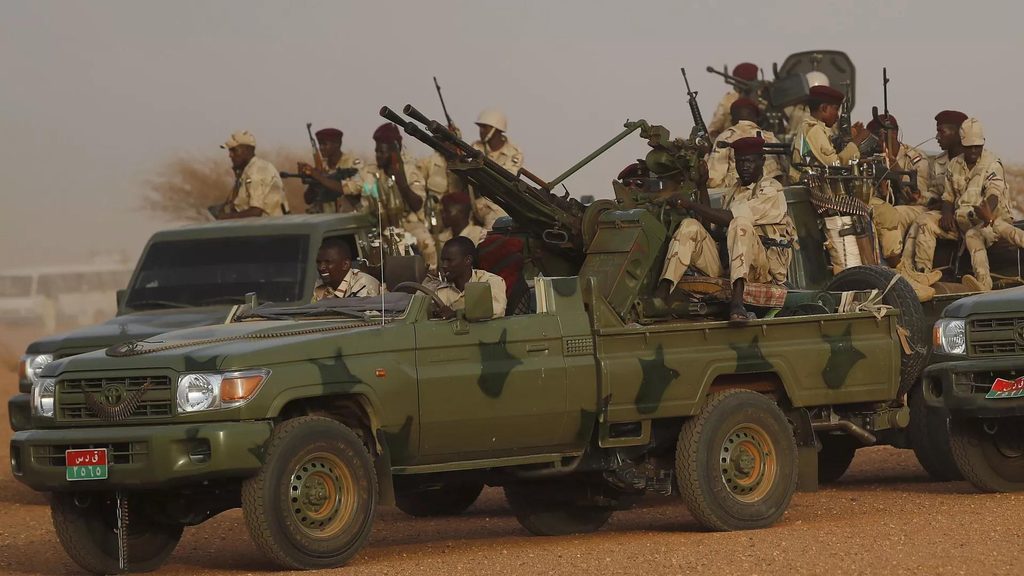
Sudan has been engulfed in war since April 2023, when fighting erupted between the Sudanese army and the Rapid Support Forces (RSF).
The conflict has killed tens of thousands of people, displaced millions and devastated infrastructure, leaving large parts of the country facing severe hunger and a worsening humanitarian crisis.
Despite diplomatic efforts to halt the fighting, the rival forces remain divided over the conditions for a ceasefire and the country’s future political arrangements.