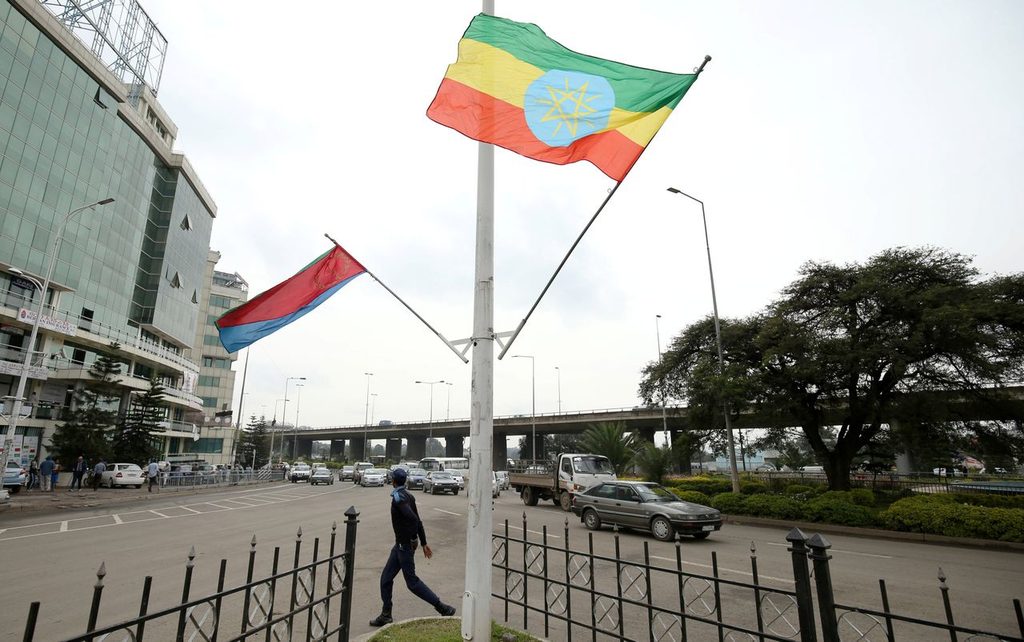
Eritrea has laid out conditions for resuming political dialogue with Ethiopia, demanding that Addis Ababa abandon threats of military force and explicitly reaffirm its recognition of Eritrean sovereignty and territorial integrity.
The demands come amid escalating tensions between the two Horn of Africa neighbours, raising questions about prospects for a diplomatic breakthrough following weeks of confrontation and the breakdown of diplomatic relations.
Eritrea’s permanent representative to the United Nations, Sophia Tesfamariam, outlined the conditions following a meeting with UN Secretary-General’s Special Envoy for the Horn of Africa, Guang Cong, at the Eritrean mission in New York.
Tesfamariam said any engagement with Ethiopia’s leadership, regardless of its level, would require a prior, public and unconditional renunciation of coercion, threats and the use of force.
She stressed that recognition of Eritrea’s independence, sovereignty and territorial integrity was a fundamental requirement for negotiations.
The Eritrean diplomat also accused Ethiopia of attempting to project its internal political and security crises onto neighbouring countries, warning that regional disputes could not be resolved through intimidation or military pressure.
She said meaningful dialogue would require mutual trust, respect, equality between sovereign states and genuine political goodwill, conditions she argued were currently absent.
Analysts divided over Eritrea’s demands
The conditions have drawn differing assessments from regional analysts, with some describing them as necessary safeguards against military escalation and others warning they could further complicate diplomatic efforts.
Ethiopian researcher Moussa Sheikhou questioned the demand for renewed recognition of Eritrean independence, noting that Ethiopia formally acknowledged its neighbour’s sovereignty in 1993 and reaffirmed that position under the 2018 peace agreement.
Sheikhou argued that introducing unilateral preconditions risked shifting attention away from immediate security concerns and could undermine efforts to restore negotiations.
While rejecting threats of military force and violations of internationally recognised borders, he maintained that a lasting settlement would require mutual security guarantees and concessions from both governments.
Ethiopia has not publicly responded to the latest conditions.
However, Prime Minister Abiy Ahmed accused Eritrea’s leadership in late October of abandoning economic development and institution-building in favour of advancing the interests of forces hostile to Ethiopia.
Abiy called for improved relations based on friendship and good neighbourliness, while warning against Eritrea becoming involved in external political agendas.
Sovereignty concerns dominate diplomatic dispute
Hussein El-Buheiri, an African affairs specialist at Egypt’s National Centre for Middle East Studies, defended Eritrea’s position, arguing that Asmara was entitled to demand firm guarantees concerning its sovereignty before restoring political and diplomatic engagement.
He linked the conditions to what he described as increasingly threatening rhetoric from Ethiopian officials, warning that continued military escalation could destabilise the wider Horn of Africa.
El-Buheiri expressed doubts that Addis Ababa would accept the demands, suggesting that the absence of political willingness to compromise could prolong the confrontation.
He also stressed that international mediation would require credible commitments to de-escalation, particularly given the strategic importance of the Red Sea region.
Sheikhou, however, cautioned against reducing the dispute exclusively to military threats or territorial sovereignty.
He argued that Ethiopia’s economic and security interests also needed to be addressed through negotiations, warning that rigid preconditions could prevent both sides from reaching a sustainable settlement.
Decades of conflict and fragile reconciliation
Relations between Eritrea and Ethiopia have been marked by recurring confrontation since Eritrea gained independence in 1993.
The countries fought a devastating border war between 1998 and 2000, followed by nearly two decades of hostility.
Relations improved significantly in 2018 when Abiy and Eritrean President Isaias Afwerki signed a peace agreement, ending years of diplomatic isolation and raising hopes for closer regional cooperation.
However, relations subsequently deteriorated amid the conflict in Ethiopia’s northern Tigray region, accusations of support for rival armed groups and renewed disagreements over regional security.
Tensions intensified in early October 2026, when Ethiopia expelled Eritrean diplomats and closed its embassy in Asmara, prompting Eritrea to sever diplomatic relations.
The dispute has been further complicated by Ethiopia’s longstanding ambitions to secure access to the Red Sea, an issue Eritrea regards as a potential threat to its territorial sovereignty.
International diplomatic efforts have sought to prevent further escalation, with growing concern that renewed fighting between the two countries could deepen instability across the Horn of Africa.
Eritrea’s latest conditions leave the prospect of renewed dialogue dependent on whether Ethiopia is prepared to offer explicit security assurances and whether international mediators can bridge the widening political divide.
For now, the absence of direct negotiations and continuing mutual accusations suggest that a diplomatic resolution remains uncertain.