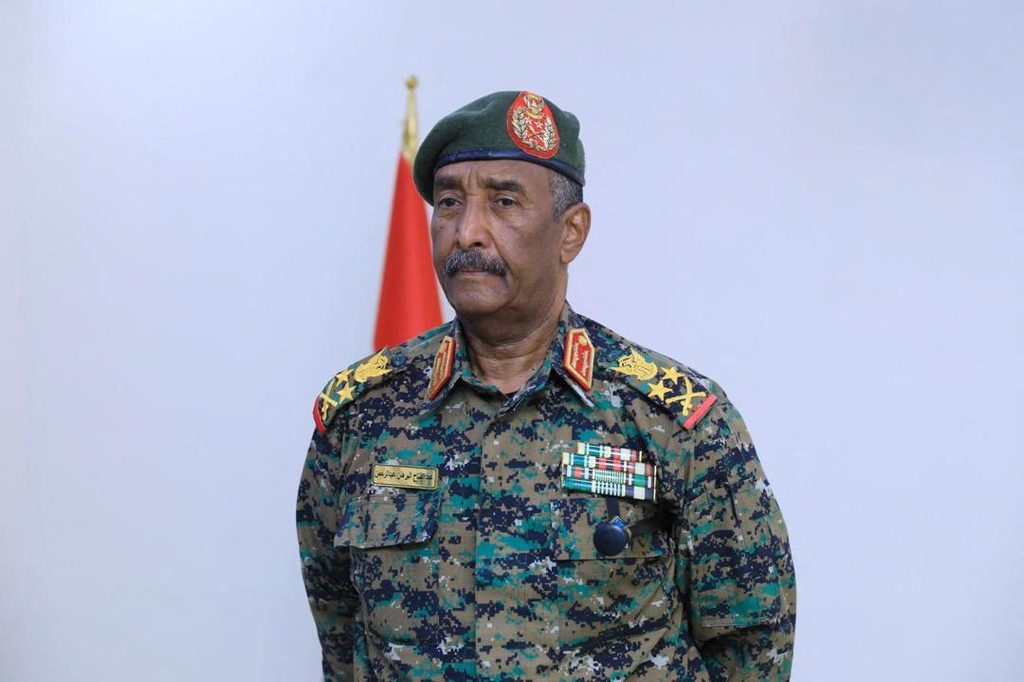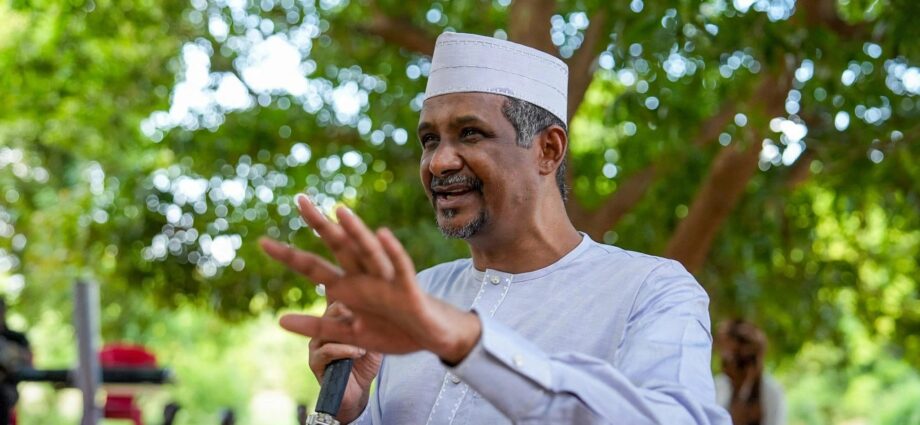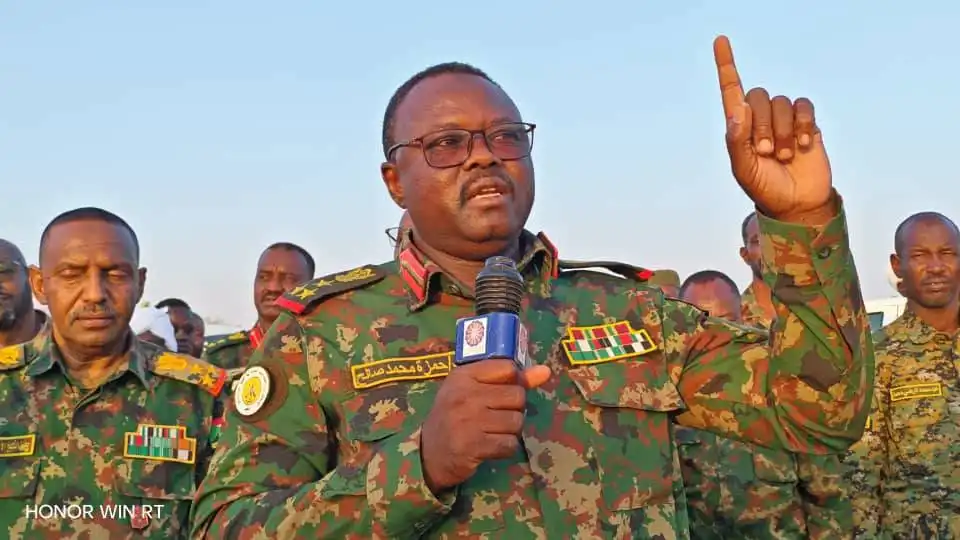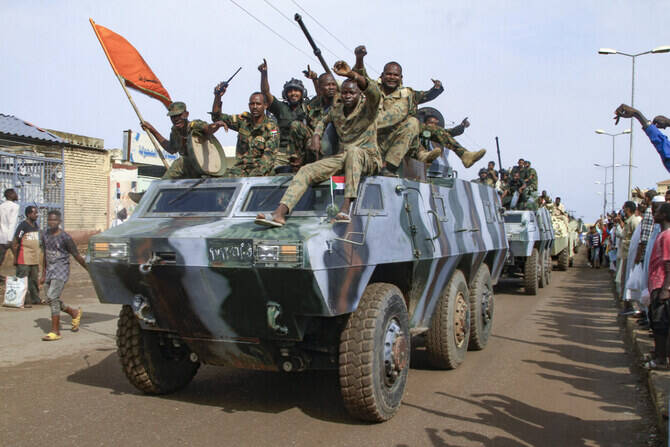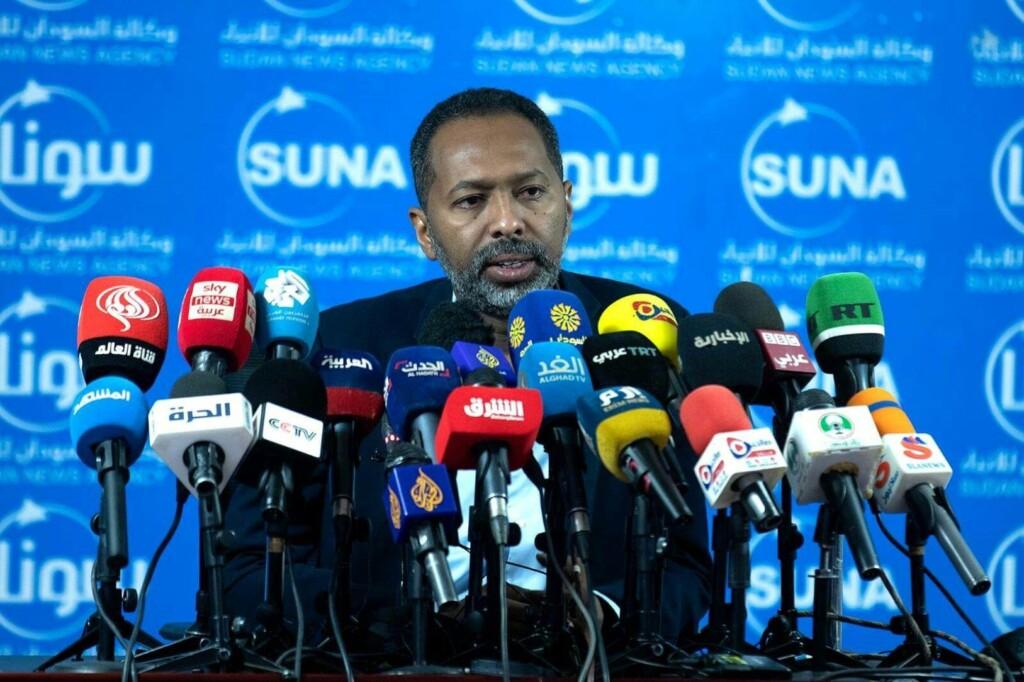
Prominent Sudanese opposition figure Khalid Omar Yousif has dismissed reports of the arrest of former ruling party chairman Ahmed Haroun as a politically orchestrated spectacle, accusing military leader Abdel Fattah al-Burhan of attempting to contain growing public anger over the Islamist official’s recent appearance in the media.
Yousif, a senior figure in the Somoud coalition and deputy chairman of the Sudanese Congress Party, described the reported detention as a “crude charade” designed to ease domestic and international pressure following Haroun’s first major public appearance in years.
In a Facebook statement on Sunday, Yousif alleged that Haroun, who is wanted by the International Criminal Court (ICC) over alleged atrocities in Darfur, had remained in Sudan with Burhan’s knowledge and protection since leaving prison following the outbreak of war in April 2023.
He rejected suggestions that the military leadership had only recently discovered Haroun’s whereabouts after his appearance on a televised podcast.
According to Yousif, Haroun has been actively involved in developments surrounding Sudan’s war, while figures associated with the former ruling National Congress Party (NCP) continue to occupy influential positions within the military-backed administration and its political and security institutions.
Arrest reports questioned amid Islamist comeback concerns
Yousif argued that Haroun’s public reappearance had triggered a wave of criticism that caught supporters of Sudan’s former Islamist establishment off guard.
He claimed the reported arrest was intended to limit the political damage caused by the interview and reduce pressure on Burhan’s leadership.
The opposition politician accused Islamist figures of using deception to navigate political crises, arguing that the controversy highlighted the movement’s growing isolation and its inability to operate openly without provoking public opposition.
He maintained that the majority of Sudanese citizens would reject any return to power by the Islamist movement, including sections of society that have supported Sudan’s military during the ongoing conflict.
Yousif also questioned whether the international community would accept the restoration of political forces associated with the government of former President Omar al-Bashir.
Islamist movement faces resistance to return to power
The Somoud leader said attempts by Sudan’s Islamist movement to regain political control, whether through alliances with the military establishment or through an open political comeback, were destined to fail.
He argued that the popular demands for civilian government and democratic change that emerged during Sudan’s December 2018 revolution remained intact despite years of political upheaval and armed conflict.
Yousif insisted that military force could not permanently suppress the aspirations of the protest movement that ultimately contributed to Bashir’s removal in April 2019.
He concluded by urging Sudanese political forces to recognise the lessons of the country’s recent history and avoid dragging the population into further bloodshed and destruction.
Haroun’s detention confirmed by party officials
The remarks came as officials from Haroun’s National Congress Party confirmed that Sudan’s military authorities had detained the former Bashir-era official.
Two NCP officials told Reuters that Haroun had been arrested following his podcast appearance, although the circumstances surrounding the decision remained unclear. The party subsequently condemned the detention and demanded his release. Reuters+1
Haroun, a former senior official under Bashir, is wanted by the ICC on charges of war crimes and crimes against humanity connected to the Darfur conflict in the early 2000s. He has denied wrongdoing.
During his recent interview, Haroun acknowledged that the NCP and Sudan’s military did not necessarily share the same political objectives but said they were united in their opposition to the Rapid Support Forces (RSF).
His reappearance has intensified scrutiny of the relationship between Burhan’s military leadership and Islamist networks associated with Bashir’s former government.