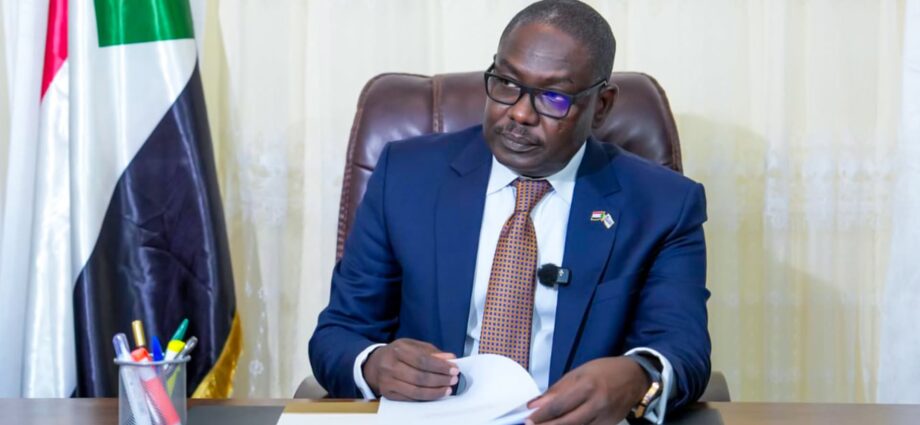
Sudan’s TASIS-backed Government of Peace and Unity has established a central committee to oversee the transfer of responsibilities from dissolved civilian administrations to newly structured government institutions, marking another step in its efforts to consolidate civilian governance.
Prime Minister Mohamed Hassan al-Taishi issued Decision No. 44 of 2026 authorising the committee, following an earlier presidential decree dissolving civilian administrations and founding councils in territories governed by the Sudan Founding Alliance (TASIS).
According to Darfur24, the committee will supervise the transfer of administrative responsibilities, government records, financial obligations and public assets to the relevant authorities.
The decision forms part of a broader restructuring intended to replace administrative arrangements established during the war with institutions operating under TASIS’s 2025 Transitional Constitution.
Government establishes handover mechanism
The committee will be chaired by the minister responsible for decentralised governance and will include representatives from the ministries of labour, finance, justice, planning and urban development.
Senior officials from the Cabinet Affairs Ministry, National Audit Chamber, federal police, intelligence service, public prosecution and civil service will also participate.
Representatives of the Rapid Support Forces (RSF), a principal component of the TASIS alliance, are among those assigned to the committee.
Its responsibilities include overseeing the collection and transfer of official documents, administrative registers, financial accounts, government property and legal records.
The committee will also review existing contracts, financial commitments, outstanding payments and other obligations inherited from the dissolved administrations.
It has been authorised to establish technical subcommittees, consult specialists and submit periodic progress reports to the prime minister.
The government says the process is intended to safeguard public property, preserve official records and maintain essential services during the transition.
TASIS advances institutional reforms
The latest decision follows Presidential Decree No. 19 of 2026, issued by TASIS Presidential Council Chairman Mohamed Hamdan Dagalo, which abolished the administrative framework introduced in 2024.
The decree dissolved civilian administrations and associated councils across South Darfur, Central Darfur, East Darfur, West Darfur and West Kordofan.
Officials appointed under the previous arrangements were instructed to surrender government documents, financial resources, equipment and other public assets.
The restructuring is intended to establish a more formal decentralised system of administration under the Government of Peace and Unity, headquartered in Nyala.
TASIS has presented decentralisation, regional autonomy and institutional accountability as central elements of its political programme.
The National Umma Party welcomed the administrative changes and called for the completion of executive and local government institutions, including legislation governing decentralisation and resource distribution.
The government has not announced a deadline for completing the handover or establishing replacement administrative bodies.