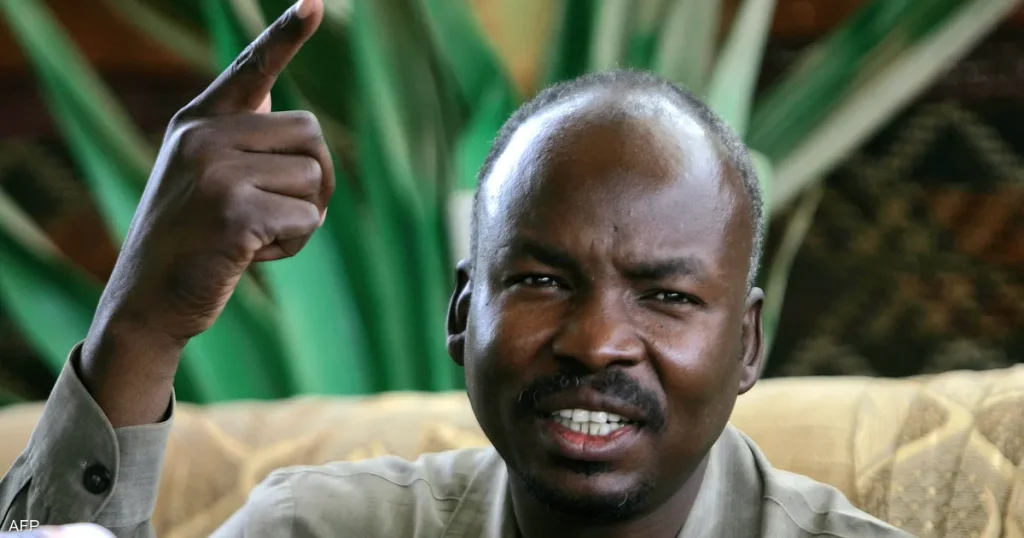
Sudan’s military leadership has dismissed Kassala state governor Al-Sadiq Mohamed al-Azraq following revelations that Ahmed Haroun, the fugitive leader of the dissolved National Congress Party (NCP), recorded a controversial interview at a hotel in the eastern Sudanese city, according to local media reports.
Sources cited by Al-Rakoba said the decision to remove al-Azraq was directly linked to the disclosure of Haroun’s whereabouts at the Al-Rabwa Hotel, where the former ruling-party official participated in a filmed interview that attracted widespread political attention.
The sources said the interview had been arranged in secrecy, but its location subsequently became public, triggering repercussions that reportedly contributed to the governor’s dismissal.
However, the sources did not identify who ordered the dismissal or explain whether the governor had been responsible for security arrangements surrounding Haroun’s visit.
The Sovereignty Council has not publicly established a connection between the interview and al-Azraq’s removal.
Burhan appoints former military inspector
Sudan’s military chief, Abdel Fattah al-Burhan, issued a decree terminating al-Azraq’s appointment and naming Lieutenant General Rashad Abdel Hamid Ismail Abdullah, a former inspector general of the Sudanese Armed Forces, as his replacement.
The decision comes amid growing tensions between military authorities and figures associated with the former government of Omar al-Bashir.
Initial reports suggested that al-Azraq’s dismissal resulted from a longstanding dispute with Mohamed al-Amin Tirik, the influential leader of the Hadendawa ethnic group.
The disagreement dates to June 2026, when Tirik publicly withdrew his confidence in the governor.
Attempts to reconcile the two sides reportedly included mediation by Mohamed Tahir Omar, director-general of the Sudanese Mineral Resources Company.
However, sources cited in the latest reports disputed that explanation, insisting that the controversy surrounding Haroun’s interview was the principal reason for the leadership change.
Haroun’s interview sparks political fallout
Haroun, who leads the dissolved NCP, recently appeared in a filmed interview broadcast by the Sudan Podcast platform, marking his first major recorded media appearance in approximately seven years.
During the interview, he discussed the overthrow of former President Omar al-Bashir in 2019, relations between the Islamist political movement and Sudan’s military leadership, and his proposals for the country’s future political system.
His appearance reignited debate over the relationship between the military establishment and members of the former Bashir government, several of whom have supported the Sudanese Armed Forces during the ongoing conflict.
Haroun remains wanted by the International Criminal Court (ICC) over allegations of war crimes and crimes against humanity committed during the conflict in Darfur.
He has previously rejected the allegations against him as politically motivated.
Questions remain over detention
The interview was followed by reports that Sudanese military authorities had detained Haroun.
Reuters reported on November 8 that two NCP officials had confirmed his detention, although the reasons for the move remained unclear.
Sudanese authorities have not publicly provided a detailed account of the circumstances surrounding his reported arrest or confirmed his current place of detention.
The Emergency Lawyers group has called on the authorities to disclose Haroun’s whereabouts and clarify the legal procedures being taken against him.
The group also demanded information about the legal status of former President Omar al-Bashir and former Defence Minister Abdel Rahim Mohamed Hussein, who are also wanted by the ICC.
The dismissal of Kassala’s governor, coming shortly after Haroun’s reappearance and reported detention, has raised further questions about tensions between the military leadership and Islamist figures who once dominated Sudan’s political establishment.