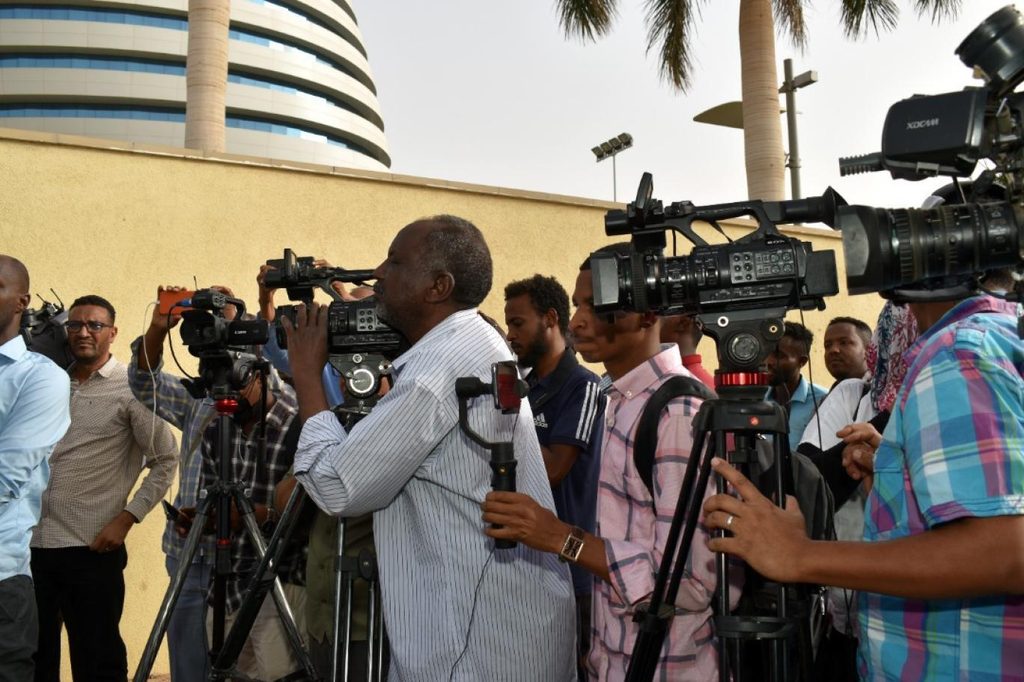
Sudan’s SAF government has expanded the country’s national security legislation to cover online publications and media content, exposing journalists and social media users to potentially severe criminal penalties, including life imprisonment and the death penalty.
The amendment to Article 51(a) of Sudan’s 1991 Criminal Act, which criminalises waging war against the state, was introduced on October 19 and has drawn criticism from press freedom organisations concerned that it could be used to silence independent reporting.
Under the revised legislation, expressions of support through digital platforms or media publications for activities deemed threatening to state security could constitute a criminal offence.
The Committee to Protect Journalists (CPJ) has called for the amendment’s repeal, warning that its broad language could allow the SAF government to prosecute journalists for carrying out legitimate reporting.
CPJ Regional Director Sara Qudah warned that extending national security offences to online publications places Sudanese journalists in greater danger and creates opportunities to criminalise independent journalism.
The Sudanese Journalists Syndicate has also raised concerns about the legislation, warning that reporters could face prosecution over material published in the course of their work.
The syndicate said the measures risk encouraging widespread self-censorship at a time when independent reporting on Sudan’s war and human rights violations remains essential.
Growing restrictions on independent media
The controversy has intensified following a separate decision by the SAF government to establish a National Mechanism for Combating Cybercrime.
Journalists’ representatives fear the new mechanism could provide the SAF government with additional powers to monitor digital platforms, investigate media workers and pursue criminal proceedings against critics.
The SAF government has previously used Article 51 to prosecute journalists, including Abdelaziz Mahmoud Saleh Arja, according to CPJ.
Press freedom has deteriorated sharply since the outbreak of war in April 2023, with journalists facing detention, intimidation and violence by Sudan’s rival armed forces.
CPJ reported that the Rapid Support Forces (RSF) have killed at least 16 journalists and media workers and detained at least six since the conflict began.
The organisation said it had contacted the Sudanese Armed Forces (SAF) for comment on the revised legislation but had received no response.
Fears of further media crackdown
The amendment comes amid growing criticism of restrictions on independent media operating in areas controlled by the SAF government.
Journalists and rights advocates warn that the legislation’s broad interpretation of national security offences could expose reporters to prosecution for publishing information about military operations, political developments or alleged human rights violations.
They argue that extending such offences to digital publishing threatens to further restrict the flow of independent information from Sudan, where years of conflict have already forced numerous media organisations to suspend operations or relocate abroad.
The SAF government’s latest measures raise fresh concerns about the future of press freedom in a country where journalists are increasingly forced to navigate the risks of reporting on war, politics and abuses by armed groups.