Some of the armed movements allied with Sudanese army chief Abdel Fattah al-Burhan have scaled back their role in recent fighting in Kordofan, as disputes over troop deployments and the groups’ political future disrupt coordination on the battlefield, Al-Rakoba reported on Tuesday.
The Sudanese outlet, citing sources familiar with the disputes, said the disagreements had been apparent about four months earlier, when army commanders pressed allied movements to send fighters to the Kordofan fronts. The movements declined to deploy. Their limited participation in more recent battles showed how far the dispute had spread beyond meetings between commanders, the sources said.
Burhan is now seeking to form a force under Maj. Gen. al-Nour Ahmed Adam, widely known as al-Qubba, as he weighs his options for a campaign in Darfur, Al-Rakoba reported. The outlet said Burhan had come to doubt whether he could count on his existing allies to fight there. The proposed force’s size and the timing of its formation remain unclear.
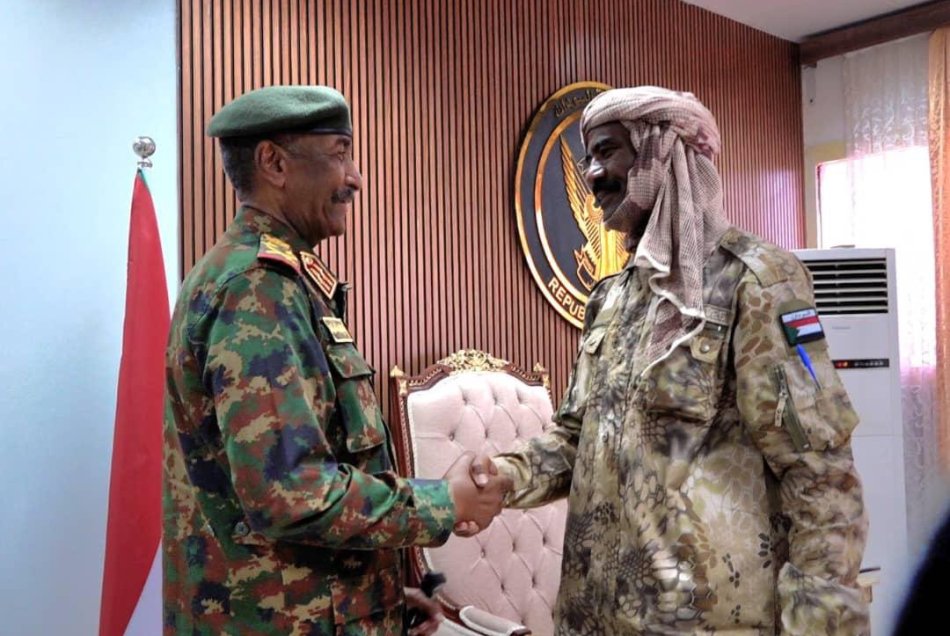
Al-Qubba was a senior commander in the Rapid Support Forces (RSF) before he defected to the Sudanese Armed Forces (SAF) in April. Burhan publicly received him in Dongola that month, and the Sovereignty Council released footage of their meeting.
The dispute over Kordofan also reflects divisions among Burhan’s allies. Al-Rakoba identified tensions among factions aligned with Minni Arko Minnawi, Jibril Ibrahim and Musa Hilal. Minnawi’s Sudan Liberation Movement and Ibrahim’s Justice and Equality Movement have been two of the army’s principal armed allies in Darfur. The report did not specify which groups declined the request to send troops to Kordofan.
For the movements, the decision to commit fighters carries consequences well beyond Kordofan. In Al-Rakoba’s assessment, some leaders fear that an army victory there could strengthen Burhan’s hand in deciding who commands Sudan’s postwar military and who retains a place in the executive. Their ability to field forces of their own gives them leverage in both disputes.
Al-Rakoba said some factions also doubt that the wartime arrangements shaped by Burhan and figures in Sudan’s Islamist movement offer any guarantee of a lasting role. Once the fighting ends, the groups could find it harder to defend their positions in state institutions, particularly if the army has recruited other commanders and can draw on their fighters instead.
Earlier leaks cited by the outlet alleged that Burhan wanted to encourage divisions among the movements and ultimately dismantle them. That allegation remains unconfirmed. The immediate issue for the alliance is whether Burhan can secure troops for a Darfur campaign while the dispute over deployments in Kordofan remains unresolved.