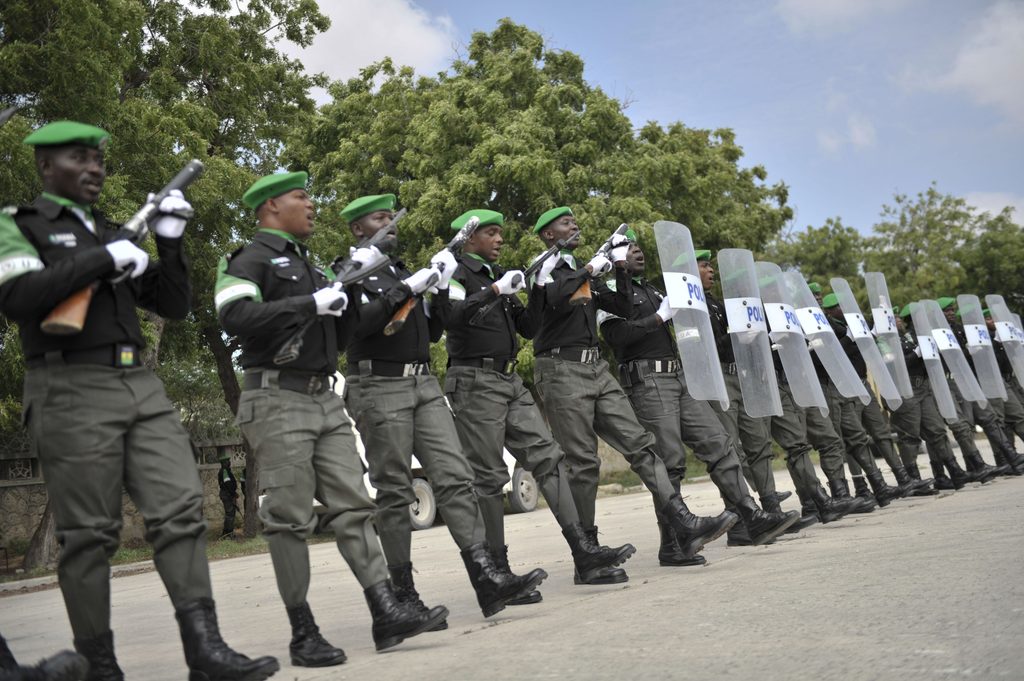
All 36 of Nigeria’s state legislatures have approved a constitutional amendment that would allow each state to establish its own police service. The National Assembly can now send the bill to President Bola Tinubu for his signature.
Nigeria currently has a single police force under federal command. The amendment to the 1999 Constitution would give states the option of recruiting and running police services of their own alongside the Nigeria Police Force. The proposal has drawn support from those who say locally based officers could respond more quickly to kidnappings, armed attacks and communal violence.
Kamoru Ogunlana, clerk to the National Assembly, said on Monday that his office had verified the resolutions from all 36 state assemblies and that the bill was ready to go to the president. He described the vote as an “unprecedented demonstration of synergy between the National Assembly and the state houses of assembly.”
The amendment had enough votes to proceed by Nov 3, when the National Assembly confirmed that 28 states had backed it. Section 9(2) of the constitution requires approval from at least 24 of the 36 state assemblies. Federal lawmakers gave the remaining legislatures until Nov 15 to submit their decisions so that every state could take a position before the bill went to Tinubu.
Supporters say officers who speak local languages and know the terrain would be better placed to gather information from residents, investigate crimes and act on warnings of an attack. They argue that those ties could strengthen cooperation between police and communities where residents are often the first to learn of a threat.
Critics have focused on how much influence governors could exercise over a state force. They warn that governors could use officers to intimidate opposition candidates, break up protests or interfere in elections. That concern has prompted calls for constitutional safeguards to protect police operations from political pressure.
States choosing to set up a force would also face practical questions about how to fund it, recruit and train officers, and investigate complaints against them. Federal and state commanders would need clear rules on who leads an investigation when a kidnapping or armed attack crosses state lines.