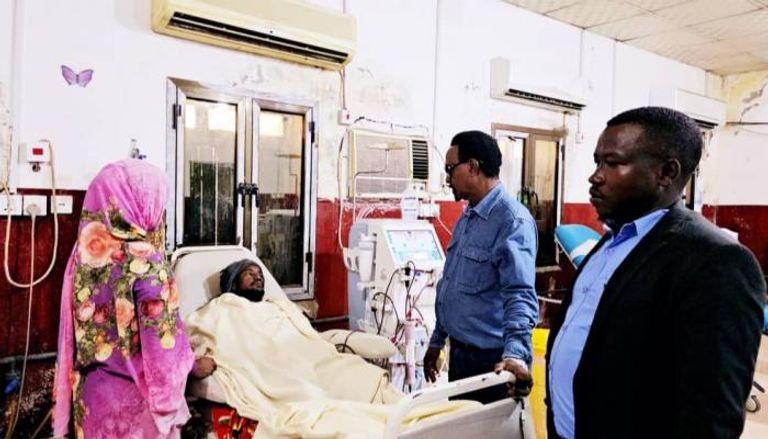
A kidney dialysis centre in Damazin, the capital of Sudan’s southeastern Blue Nile region, has suspended operations, leaving patients who depend on life-saving treatment facing an increasingly dangerous medical crisis as fighting intensifies and thousands of civilians seek safety.
Medical sources told Darfur24 on Saturday that the facility had stopped providing dialysis services, raising serious concerns for patients requiring regular treatment to survive.
The shutdown comes amid mounting pressure on Damazin’s already strained healthcare system, with hospitals and medical centres struggling to accommodate growing numbers of patients as displaced families arrive from southern parts of Blue Nile.
The influx has placed additional demands on medical facilities already grappling with shortages of personnel and limited treatment options.
Health workers warned that the interruption of dialysis services poses an immediate threat to patients with kidney failure, many of whom have few alternatives for accessing specialised care.
The situation has been compounded by the departure of medical professionals from the city, including specialist doctors who have reportedly left because of deteriorating security conditions.
Their departure has further weakened the healthcare system at a time when demand for emergency treatment and essential medical services is increasing.
Civilians flee amid fears of expanding conflict
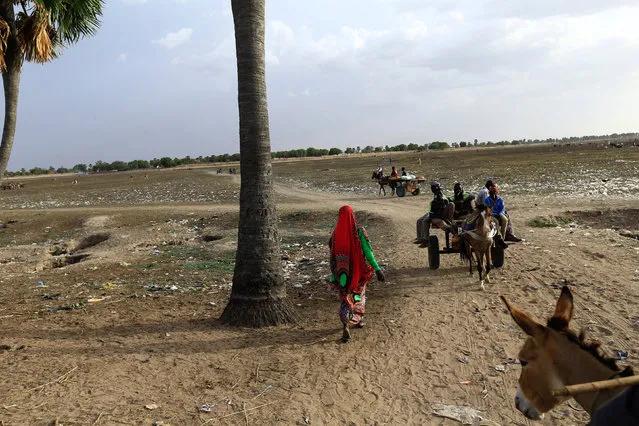
The medical emergency is unfolding alongside a growing movement of civilians away from Damazin, as residents fear that military operations could reach the regional capital.
Residents reported that significant numbers of people left the city on Friday and Saturday, seeking refuge in areas considered safer as uncertainty surrounding the security situation deepened.
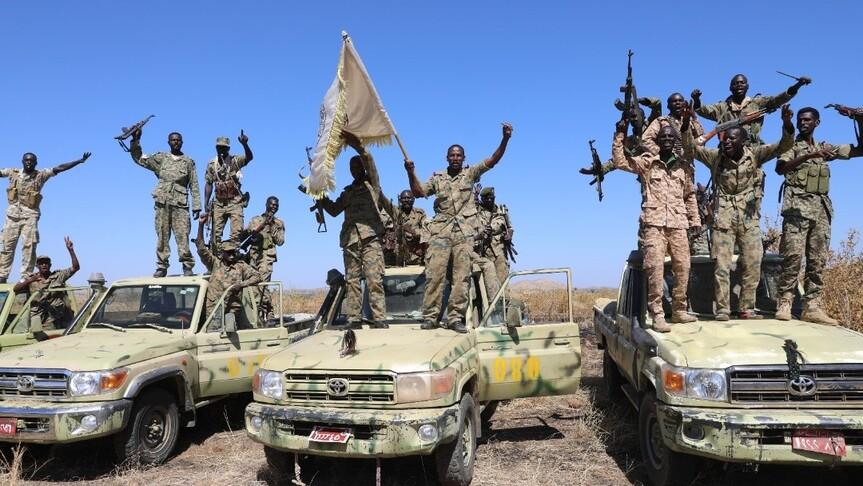
The departures follow recent territorial advances by the Sudan Founding Alliance (TASIS), whose forces include the Rapid Support Forces (RSF) and the Sudan People’s Liberation Movement-North (SPLM-N).
The alliance recently announced its capture of the headquarters of Bau locality, a development that has brought its forces closer to Damazin and altered the military balance across parts of Blue Nile.
The advance has heightened concerns among residents about the possibility of further fighting near the regional capital, although normal commercial activity continued in parts of the city on Saturday morning.
Transport costs soar as families seek safety
For civilians attempting to leave Damazin, the cost of transportation has become another major obstacle.
Residents reported sharp increases in fares as demand for vehicles surged, placing additional financial pressure on families already struggling with the economic consequences of Sudan’s prolonged conflict.
According to local accounts, hiring a shared taxi for the journey from Damazin to Sinja reached approximately 350,000 Sudanese pounds per vehicle.
Intercity bus tickets were reportedly selling for between 200,000 and 400,000 Sudanese pounds per passenger, with particularly steep prices during evening departures.
The increases have made evacuation increasingly difficult for households with limited financial resources, particularly larger families needing to pay for several passengers.
Markets remain open despite growing uncertainty
Despite the worsening security situation and the increasing number of departures, residents said markets in Damazin continued operating relatively normally on Saturday morning.
Commercial activity remained visible across the city, suggesting that daily life had not come to a complete standstill.
However, prices for several essential commodities have risen amid concerns that continued military escalation could disrupt supply routes and restrict the movement of goods into the regional capital.
The combination of rising living costs, displacement and deteriorating healthcare services has added to the uncertainty facing residents.
For patients dependent on dialysis, the crisis is particularly urgent. Unlike many other medical procedures, dialysis cannot be postponed indefinitely without potentially life-threatening consequences.
The closure of Damazin’s dialysis centre illustrates the growing civilian toll of Sudan’s conflict beyond the battlefield, as the breakdown of essential services increasingly threatens people who may never come into direct contact with the fighting.
With medical specialists leaving, transport becoming prohibitively expensive and hospitals facing mounting pressure, access to treatment is emerging as one of the most immediate challenges confronting civilians in Blue Nile.