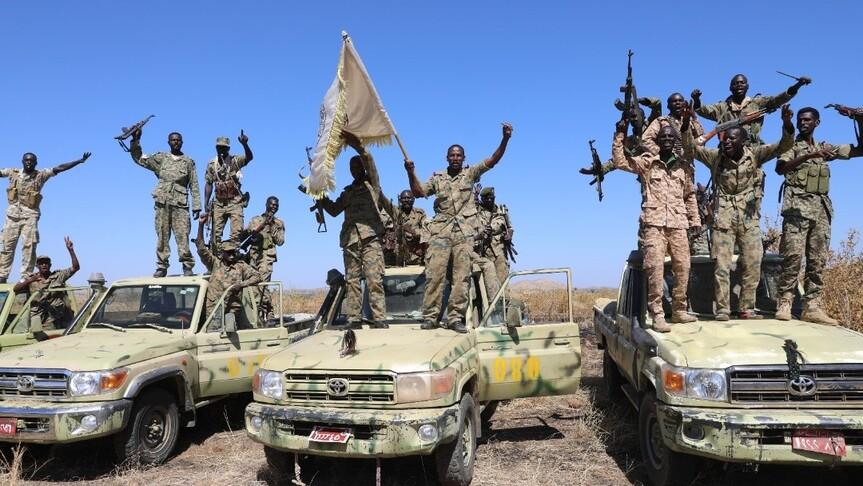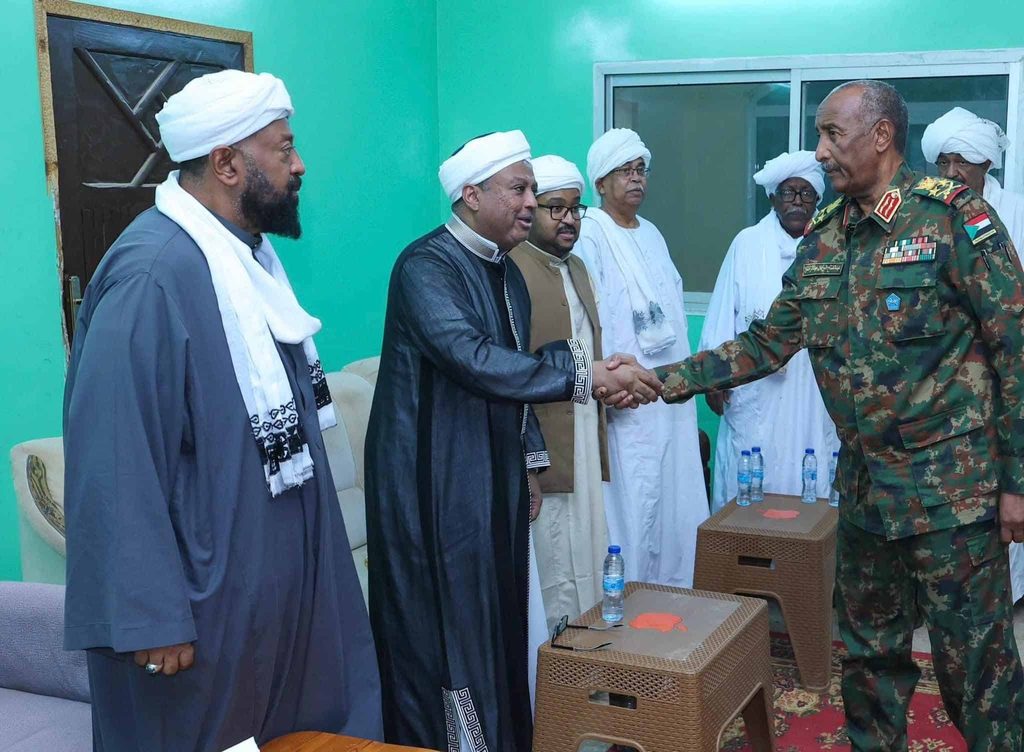
As the Rapid Support Forces (RSF) and their allies press a lightning offensive across Sudan’s Blue Nile region, seizing strategic positions and pushing the fighting towards Ed Damazin, Sudanese Armed Forces (SAF) chief Abdel Fattah al-Burhan has found himself at the centre of a very different spectacle: photographs of himself pumping iron at a Khartoum gym.
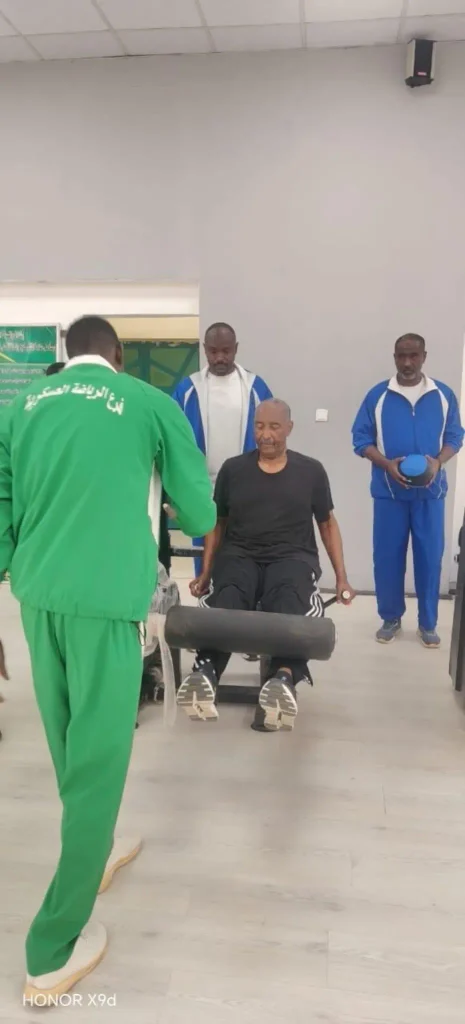
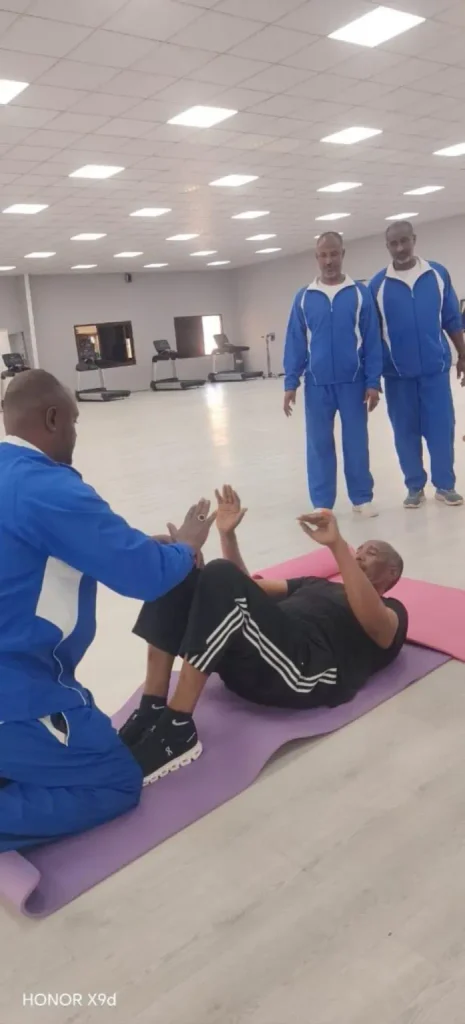
The images, which circulated widely on Sunday, show Burhan exercising on gym equipment, smiling and appearing relaxed while his military faces mounting pressure in one of Sudan’s most strategically sensitive regions.
For critics, the contrast could hardly be more striking.
While TASIS alliance fighters advance through Blue Nile and SAF commanders scramble to reinforce threatened positions, the army chief’s latest public appearance has triggered questions about political judgement, wartime leadership and the priorities of Sudan’s military establishment.
What might ordinarily have been dismissed as an innocuous glimpse into a leader’s fitness routine has instead become an uncomfortable illustration of the growing distance between the image of confidence projected by SAF leaders and the realities confronting their forces on the battlefield.
The controversy comes at a particularly sensitive moment for Burhan, whose repeated assurances about military control are beginning to sound increasingly reminiscent of Saddam Hussein’s notorious information minister, Mohammed Saeed al-Sahhaf, better known as “Chemical Ali’s” equally infamous counterpart, “Comical Ali,” who confidently proclaimed that American forces were being defeated even as US troops advanced into Baghdad in 2003.
Burhan’s declarations of confidence are now being tested by a fast-moving RSF blitzkrieg that has brought fighting to within approximately 40 kilometres of Ed Damazin.

Blue Nile blitzkrieg puts SAF on the defensive
The gym controversy erupted against the backdrop of one of the most significant recent advances by the Sudan Founding Alliance, known as TASIS, whose forces include the RSF and the Sudan People’s Liberation Movement-North faction led by Abdel Aziz al-Hilu.
In a series of operations beginning earlier this week, the alliance announced the capture of multiple strategic positions across Blue Nile, including the headquarters of Bau locality.
By November 20, TASIS forces had also announced the seizure of five additional locations: Khor Mak, Al-Madina 10, Al-Madina 11, Singa Nabag and Al-Taqa village.
The advances followed operations around Al-Madina 12 and Dayreng, where competing battlefield statements had emerged from SAF and TASIS commanders.
Independent battlefield monitoring subsequently verified footage showing RSF fighters at the Bau locality headquarters and at a health facility in Al-Madina 11, providing evidence of the alliance’s movement into those locations.
The offensive has placed additional pressure on SAF’s Fourth Infantry Division, headquartered in Ed Damazin, and complicated the army’s attempts to maintain control across the region.
By Sunday, SAF commanders were deploying reinforcements and seeking to regain the initiative around Bau and other contested areas.
The widening battlefield has left Ed Damazin, a major military and administrative centre, facing a more immediate security threat than the confident statements issued by SAF-aligned officials might suggest.
Burhan himself recently sought to reassure supporters that the regional capital was secure, declaring that there was no reason to fear for Ed Damazin.
Yet the movement of additional troops, reports of military withdrawals and the growing displacement of civilians paint a considerably more complicated picture.
A gym session that struck the wrong nerve
Against this backdrop, Burhan’s photographs began circulating across Sudanese social media platforms on Sunday morning.
The images showed the SAF chief using exercise machines inside a fitness facility in Khartoum, prompting some supporters to praise his physical conditioning and apparent composure.
One social media commentator compared his athletic image to that of Russian President Vladimir Putin, suggesting that Burhan was demonstrating the familiar principle of maintaining a healthy mind in a healthy body.
But not everyone was impressed.
Sudanese journalist Abdelmajid Abdelhamid sharply criticised the decision to circulate the photographs, arguing that the timing was deeply inappropriate while military personnel were dying and civilians were suffering from attacks.
Abdelhamid directed particular criticism at the Sovereignty Council’s media operation, questioning the judgement behind presenting Burhan’s workout routine amid continuing battlefield losses and civilian casualties.
He argued that political images carry messages, but their publication must take account of the public mood and the circumstances facing the country.
The criticism was especially pointed because it came not from TASIS representatives, but from a Sudanese commentator questioning the communication priorities of the SAF leadership itself.
Journalist Mohamed Al-Wasila also challenged the imagery, contrasting Burhan’s smiling appearance with the worsening economic conditions facing ordinary Sudanese families.
Al-Wasila pointed to the rising cost of basic necessities and questioned the apparent cheerfulness of Sudan’s military leader at a time when many households are struggling to afford daily meals.
The backlash turned what might have been intended as a display of personal strength and composure into another controversy over the SAF leadership’s public messaging.
The propaganda war meets battlefield reality
The controversy is particularly damaging because the photographs have emerged amid months of confident messaging from SAF-aligned political and social media networks, many of which have portrayed the RSF as a force approaching military collapse.
Those narratives have frequently presented SAF battlefield operations as evidence that Burhan’s forces are steadily regaining the initiative and preparing to deliver a decisive defeat to their opponents.
The developments in Blue Nile have challenged that portrayal.
Rather than disappearing from the battlefield, the RSF and its TASIS partners have demonstrated their ability to launch coordinated offensives, capture military positions and threaten areas that SAF commanders have repeatedly pledged to defend.
The speed of the latest advances has given the campaign the character of a Blue Nile blitzkrieg, with TASIS forces attacking on separate axes and exploiting weaknesses in SAF positions.
For Burhan, the political problem extends beyond the loss of individual towns or military installations.
Every confirmed territorial advance by TASIS raises fresh questions about the credibility of the SAF government’s increasingly optimistic portrayal of the war.
The army has reported advances of its own in West Kordofan, and fighting remains fluid across several fronts. Nevertheless, the Blue Nile offensive demonstrates that the conflict is far from the one-sided military campaign presented by some of Burhan’s most enthusiastic supporters.
Even as the SAF government insists that the situation remains under control, the dispatch of reinforcements to Blue Nile illustrates the seriousness with which its commanders are treating the latest threat.
Civilians pay the price as commanders trade assurances
Beyond the military implications, the offensive has triggered growing concern about the safety of civilians across Blue Nile.
Local officials reported that residents of more than 35 villages in Bau locality had fled towards Ed Damazin and other areas following the escalation of fighting.
Civil society representatives have warned that families are leaving their homes with limited resources, while others remain unable to escape because they cannot afford transportation.
The deteriorating security situation has also increased pressure on essential services and humanitarian assistance in an already vulnerable region.
For residents confronting displacement, economic hardship and the prospect of further fighting, the sight of the country’s army chief smiling inside a gym has become an especially contentious image.
Burhan’s battle for appearances
For months, the SAF government’s political messaging has sought to present Burhan as the commander capable of steering Sudan towards a military victory.
Yet the advances in Blue Nile have exposed the limitations of reassuring speeches and carefully managed public appearances when they are confronted by developments on the ground.
The TASIS offensive has brought renewed pressure to Ed Damazin, forced SAF to reinforce its positions and raised questions about the army’s ability to maintain control over several strategically important areas simultaneously.
The full military consequences of the campaign remain uncertain, and control of some locations is still disputed.
But the symbolism of Sunday’s photographs is difficult to overlook.
As TASIS fighters press their offensive, SAF commanders rush to strengthen their defences and civilians flee threatened communities, Burhan’s workout images have become an unintended focal point for frustration with the military leadership.
Burhan may be lifting weights in Khartoum, but the much heavier burden facing his army is in Blue Nile — and no amount of pumping iron will decide what happens on that battlefield.