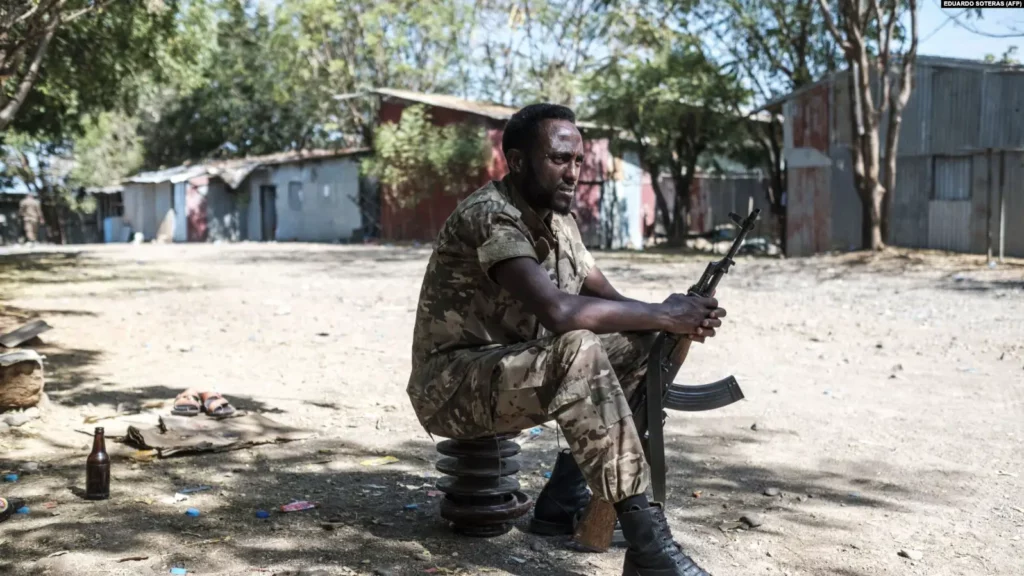
A state-appointed human rights commission disclosed on Monday that dozens of civilians in Ethiopia’s Amhara region have lost their lives in recent weeks due to a combination of drone strikes and house-to-house searches.
The conflict between state forces and local militiamen, who assert that the federal government is sidelining the region, has developed into Ethiopia’s most significant security crisis since the conclusion of a two-year civil war in the neighboring Tigray region just a year ago.
In late August, the United Nations reported that a minimum of 183 individuals lost their lives during the initial month of the conflict. However, due to widespread internet disruptions in the region, obtaining an accurate assessment of the situation has proven challenging.
In a recent publication, the Ethiopian Human Rights Commission (EHRC) has detailed multiple instances this month in which civilians lost their lives.
According to the report, on October 10th, government forces conducted house-to-house searches in the town of Adet, resulting in the tragic deaths of 12 civilians, including religious students.
One week later, in the town of Berehet Woreda, a 19-month-old child was among the casualties of a drone strike, while on October 19, another drone strike in Debre Markos claimed the lives of eight civilians, as reported.
According to the report, government forces are accused of engaging in extrajudicial killings. These alleged incidents occurred when civilians were apprehended on the streets or during house-to-house searches, with charges of supplying information or weapons to militiamen.
Representatives of the Ethiopian government, the military, and the Amhara regional administration did not provide an immediate response to requests for comment. The government has not issued any public statements regarding allegations of misconduct by its forces in Amhara.
Following their initial displacement from major cities and towns in the early stages of the conflict, Ethiopian forces managed to regain control and subsequently pushed the militiamen into rural areas.
Amhara militiamen had initially joined forces with the army during the Tigray conflict. However, tensions between the two parties escalated, particularly following the federal government’s decision in April to integrate regional security forces into the national police and army.
Amhara militiamen had initially joined forces with the army during the Tigray conflict. However, tensions between the two parties escalated, particularly following the federal government’s decision in April to integrate regional security forces into the national police and army.