Kenya’s Parliament has officially prohibited the wearing of the Kaunda suit, named after the late Zambian President Kenneth Kaunda, within its premises.
Speaker of Parliament, Moses Wetangula, declared that Kaunda suits, along with traditional African attire, are no longer permissible inside the parliamentary chambers.
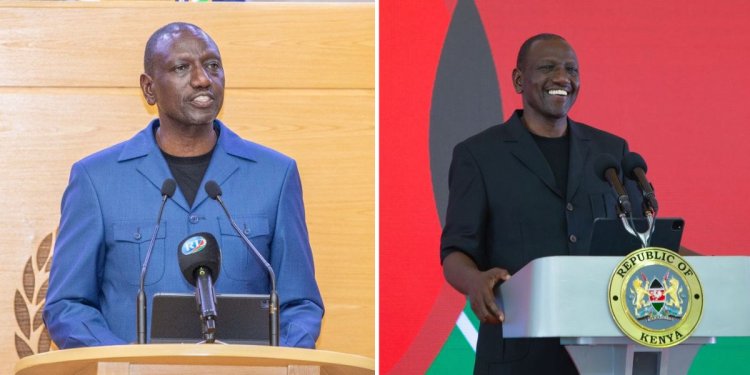
President William Ruto, frequently seen donning these suits during official functions, has propelled their popularity within the political circles.
The Kaunda suit, characterized by a safari jacket paired with matching trousers, derived its name from the late Zambian leader, who notably embraced and popularized this attire among political figures across sub-Saharan Africa.
Often referred to as the Mao Zedong suit, it features a collarless and typically short-sleeved design.
Explaining the decision on Tuesday, Mr. Wetangula cited emerging fashion trends that posed a challenge to the established parliamentary dress code. He emphasized a prescribed dress code for men, including a coat, collar, tie, long-sleeved shirt, long trousers, socks, shoes, or a service uniform.
Similarly, he outlined guidelines for women’s attire, mandating business, formal, or smart casual wear with specific requirements for skirts and dresses.
While the Kaunda suit had previously been tolerated in parliament and was a preferred choice for some MPs, Mr. Wetangula stressed the need to halt its acceptance, pointing to the imminent threat it posed to the parliamentary dress norms.
The Kaunda suit gained traction on Kenyan social media platforms, especially after President Ruto began showcasing it at official gatherings.
The ban has sparked diverse reactions online, with some expressing disbelief at the prohibition of an African attire within an African parliament. Others have supported the decision, while some have mocked it, suggesting that the Kaunda suit might now be exclusively reserved for the president.