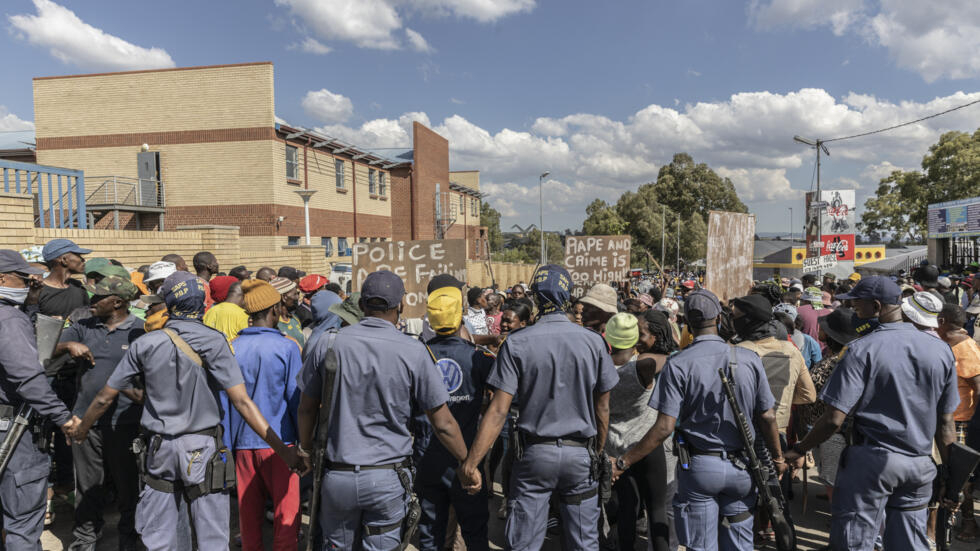
An increased police presence was observed in one of South Africa’s most violent townships following a disturbing incident where a “mob” tied up and burned seven men accused of involvement in a crime wave, according to both police officials and residents.
Diepsloot, a township with over 350,000 residents located north of Johannesburg, has been facing high rates of violent crime, including murders and rapes, prompting community leaders to express grievances about the lack of government support.
Police confirmed initiating a murder investigation after discovering the charred bodies of the seven young men.
The alert regarding two “burned bodies” was raised late Friday night, stated police spokesman Lieutenant Colonel Mavela Masondo in a statement to media.
An additional five bodies were found in another district of Diepsloot in the early hours of Saturday, Masondo added, indicating that preliminary investigations suggested the victims were assaulted and set on fire by a mob in both incidents.
The bodies of the five men, all around 20 years old, were found on a pile of bricks in a wasteland within the town.
“They were all chased, caught and tied before being killed, yes it was a ‘necklace’,” said one resident, referring to the use of tyres or rope put over the upper body of victims before they are set alight.
“There are more police today and we hope they will stay because we need them,” the resident added, speaking on condition of anonymity because of tensions in the township. “There have been a lot of robberies and people are angry.”
While no confirmed motive has been established, Masondo strongly condemned acts of vigilantism and emphasized that such actions constitute serious criminal offenses.
Previously, demonstrations in June led by three community leaders protested against a series of crimes in the town, including bombings and robberies at a petrol station.
South Africa, with a population of approximately 60 million, has seen a surge in murders, averaging 68 per day in the second quarter of 2023, reflecting an increase of nearly 20 percent from the same period in 2019.