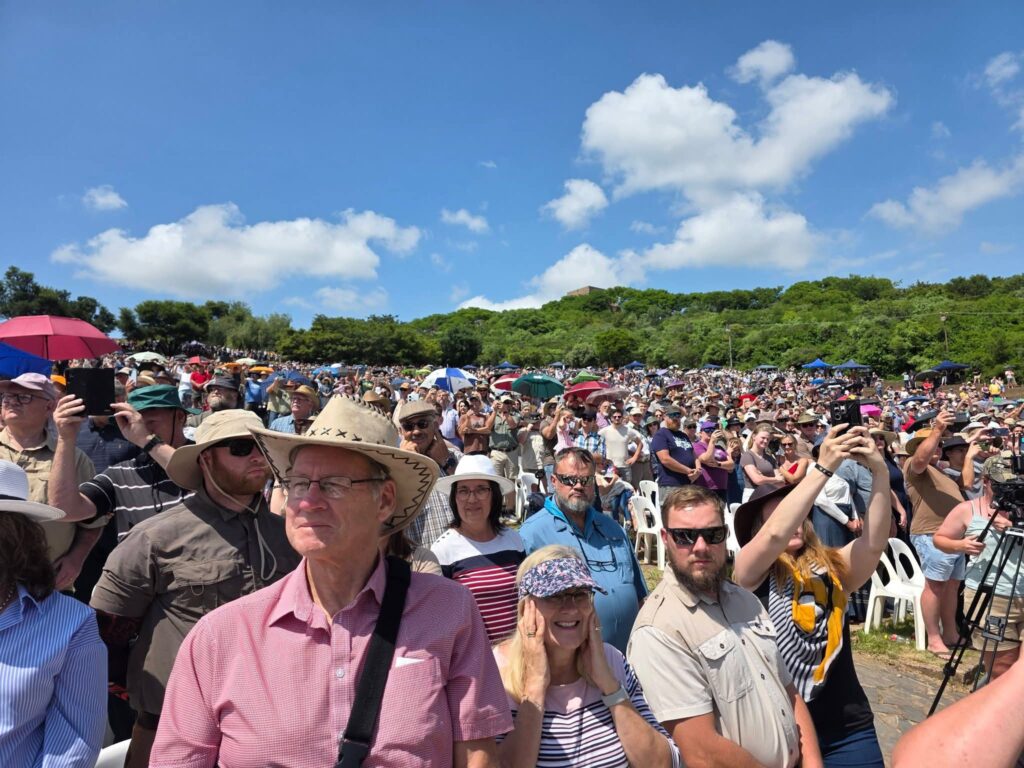
Thousands of Afrikaners gathered Tuesday at Pretoria’s Voortrekker Monument to mark the Day of the Vow, blending faith, memory, and political grievance.
Organisers said about 37,000 people attended the event, which honours Dutch-speaking settlers who migrated inland during the nineteenth century Great Trek.
Men in khaki shorts and women in traditional dresses evoked pioneer ancestors, turning the hilltop monument into a living tableau of Afrikaner history.
Many participants described the commemoration as a cultural duty, performed in Afrikaans amid growing anxiety over South Africa’s political direction.
Some attendees referenced US President Donald Trump, whose administration has voiced support for Afrikaners and repeated claims of widespread violence against them.
Trump recently boycotted the G20 summit in South Africa, citing alleged attacks on Afrikaners, despite police data showing no such pattern.
The Day of the Vow recalls an 1838 battle in which settlers defeated Zulu forces, later mythologised as divine deliverance.
After apartheid ended, the holiday was renamed the Day of Reconciliation, though many Afrikaners continue to observe its original meaning.
Historians say the Great Trek mirrors America’s Manifest Destiny, both rooted in settler beliefs of entitlement to land already inhabited.
Scholars note these narratives are resurfacing within US right-wing politics, where South Africa is portrayed as whiteness under threat.
Experts argue fears of racial targeting far exceed documented risks, reflecting deeper concerns about identity, power, and historical loss.