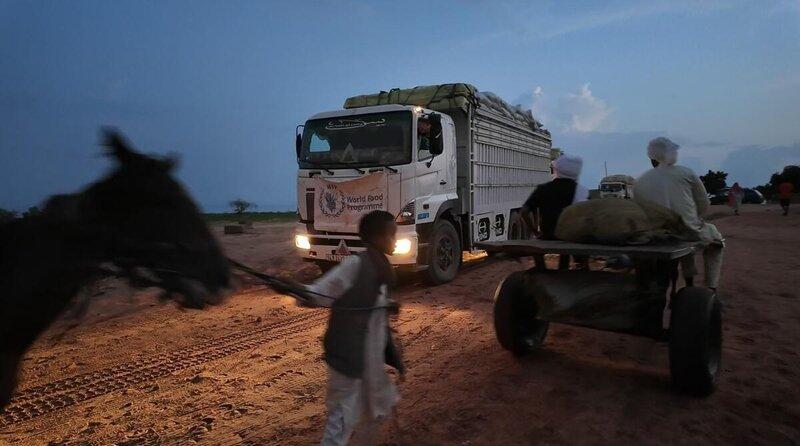
An air strike has hit two World Food Programme trucks near Dilling in Sudan’s South Kordofan state, destroying more than 50 metric tonnes of food intended for thousands of civilians.
The attack occurred on August 30 as the clearly marked vehicles were travelling to Kadugli, according to the UN agency. The destroyed supplies could have provided life-saving assistance to approximately 5,800 people for one month.
The WFP did not identify who carried out the strike.
The agency said the incident had further complicated efforts to deliver aid across Sudan’s war-affected regions and was the eighth attack this year to damage its facilities, assets or humanitarian operations.
“Attacks on humanitarian workers and operations are unacceptable and must stop,” the WFP said, urging all parties to respect international humanitarian law and protect civilians, aid personnel and humanitarian facilities.
South Kordofan, particularly Kadugli and Dilling, is experiencing a worsening humanitarian crisis as fighting and access restrictions disrupt the delivery of essential supplies.
The WFP currently provides food assistance to around 58,000 people in Kadugli who are facing emergency levels of food insecurity or even more severe conditions.
Sudanese legal group Emergency Lawyers called for an immediate and independent investigation into the air strike.
The group said attacking trucks displaying clearly visible humanitarian markings constituted a serious assault on relief operations and posed a direct threat to civilian lives.
It added that the incident followed earlier attacks on humanitarian convoys at a time when hunger and displacement are intensifying across Sudan.
Emergency Lawyers also accused parties to the conflict of obstructing, controlling or preventing aid from reaching civilians. It warned that using food and humanitarian assistance as weapons of war could amount to war crimes or crimes against humanity if the relevant legal thresholds are met.
The group urged the international community to increase humanitarian support and ensure the unrestricted delivery of aid to civilians.
It warned that Sudan’s crisis could deteriorate further because of declining agricultural and livestock production, reduced rainfall and the growing threat of water shortages.