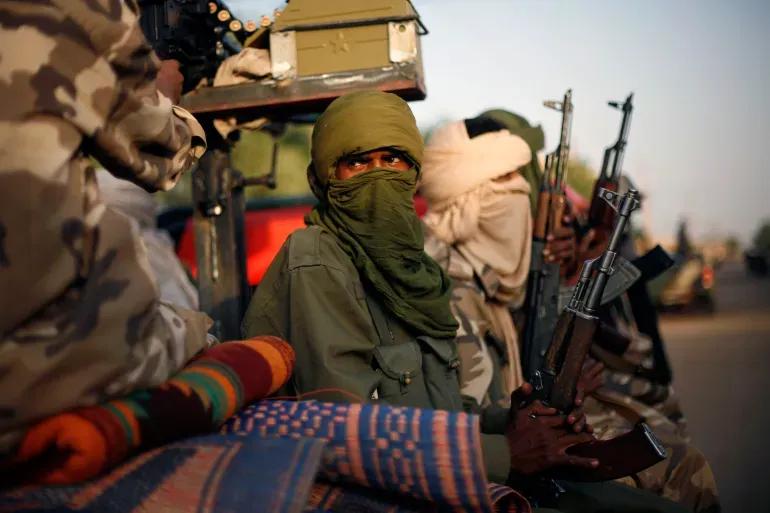
An Al-Qaeda-linked armed group operating across Africa’s Sahel region has developed an extensive criminal economy generating an estimated $100 million annually, using kidnapping, gold mining, livestock theft and extortion to finance its expanding insurgency.
Jama’at Nusrat al-Islam wal-Muslimin (JNIM), led by Iyad Ag Ghali, has established multiple sources of income that enable it to purchase weapons, recruit fighters and sustain military operations across Mali, Burkina Faso and Niger, according to research by Insight Threat Intelligence.
The intelligence firm’s analysis, published in September 2025, describes a financing network that combines organised crime with territorial control, allowing the group to exploit weak state authority and extract revenue from local populations and commercial activities.
The estimated $100 million figure reflects the research firm’s assessment rather than independently audited financial accounts.
Gold, kidnapping and extortion
Gold mining has emerged as one of JNIM’s most lucrative revenue sources, with militants controlling or influencing artisanal mining sites, imposing levies on production and charging fees for transporting precious metals.
Insight Threat Intelligence reported that artisanal mining sites in areas under JNIM influence could produce gold valued at approximately $34 million annually, although that figure represents estimated production value rather than the group’s direct earnings.
Kidnapping for ransom is another major source of financing, targeting foreign workers, business executives, humanitarian personnel and individuals associated with mining operations.
The Institute for Economics and Peace previously estimated that ransom payments accounted for approximately 40 percent of JNIM’s annual revenue in 2017, illustrating the longstanding importance of hostage-taking to the organisation’s financial operations.
The figure is historical and does not necessarily reflect the group’s current revenue composition.
Military analyst Amr Diallo told Erem News that both JNIM and the Islamic State’s Sahel affiliate exploit illegal mining, kidnappings and taxation to generate substantial funds.
He said JNIM’s financial resources had helped the group expand its arsenal and improve its operational capabilities, contributing to battlefield gains against national armed forces.
Livestock theft fuels insurgency
Beyond mining and kidnapping, livestock theft has become an increasingly important component of the militant economy.
Armed groups steal cattle from rural communities, impose compulsory payments on herders and transport animals through informal trading networks.
Research published by the Tony Blair Institute for Global Change documented 649 incidents involving livestock theft by JNIM or Islamic State-Sahel militants between January 2019 and October 2024.
Nearly 45 percent of those incidents occurred in Mali, highlighting the scale of organised livestock theft in areas affected by the insurgency.
Political analyst Eric Eziba told Erem News that criminal financing had long supported insurgent groups across the Sahel.
He identified cattle theft, illegal mining and the imposition of financial levies on businesses and communities as significant sources of revenue.
Eziba said the inability of governments in Mali, Niger and Burkina Faso to maintain effective control over large areas had created opportunities for militant organisations to consolidate their financial networks.
Fuel blockades and economic pressure
JNIM has also increasingly used control over transport corridors as an instrument of economic warfare.
Militants have targeted fuel shipments, disrupted commercial traffic and imposed payments on traders operating through areas under their influence.
In Mali, attacks and restrictions affecting fuel deliveries have contributed to shortages and severe economic disruption, increasing pressure on the military-led government in Bamako.
Such operations demonstrate how the organisation can exploit commercial supply chains not only to generate income but also to undermine government authority.
Insight Threat Intelligence said JNIM’s financial system also supports the acquisition of motorcycles, vehicles, ammunition, communications equipment and drones, enhancing the group’s ability to conduct operations across remote areas.
Military gains despite regional offensives
The financial findings come against a backdrop of continued fighting between JNIM and regional security forces.
On October 6, Malian troops, supported by Russian forces, re-entered the strategic northern town of Kidal after separatist fighters announced their withdrawal.
Although the operation represented an important territorial gain for Bamako, analysts warned that restoring control over the town would not necessarily weaken the wider insurgency.
JNIM remains active across extensive areas of the Sahel, where its financing networks and local recruitment structures have enabled it to withstand repeated military campaigns.
Formed in 2017 through the merger of several armed Islamist factions, JNIM has evolved into a decentralised organisation combining military operations, criminal financing and efforts to establish authority over communities.
Security researchers warn that disrupting its financial networks will require more than battlefield operations, including stronger oversight of gold trading, action against cross-border trafficking and the restoration of state authority over transport corridors and rural markets.
As long as militants can extract money from local economies and exploit insecure borders, those financial resources are likely to remain a major factor sustaining the insurgency.