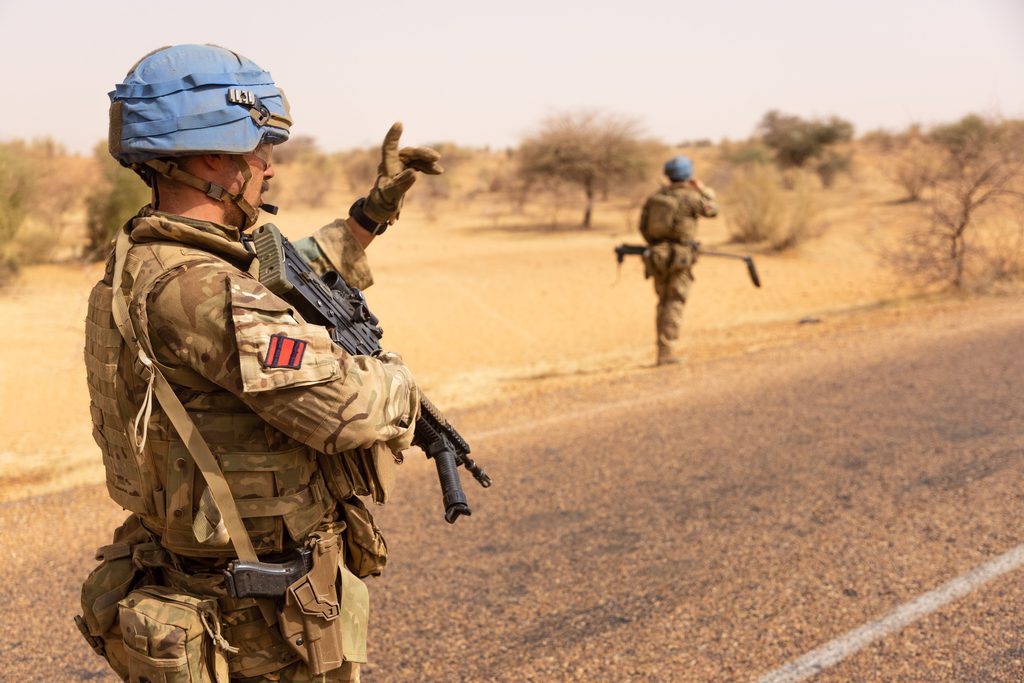
Britain faces growing challenges in rebuilding its influence across Africa’s Sahel region as Russia and China deepen their military, political and economic ties with countries that have increasingly distanced themselves from Western powers.
A British parliamentary inquiry into London’s declining engagement in the region has renewed debate over whether the United Kingdom can restore its presence in Mali, Burkina Faso and Niger, where successive military coups have dramatically reshaped regional alliances.
The House of Commons International Development Committee launched an inquiry in July to examine Britain’s development, humanitarian and security engagement in the Sahel amid deteriorating security conditions and intensifying geopolitical competition.
The three countries have undergone major political upheavals in recent years, with military-led governments severing longstanding defence partnerships with Western nations and turning increasingly towards Russia for security assistance.
The departure of Western military forces and businesses has created opportunities for Moscow and Beijing to expand their influence, particularly in the security and natural resources sectors.
Despite the growing Russian military presence, the region continues to face persistent armed violence, displacement and humanitarian emergencies, raising concerns about potential consequences for neighbouring African countries and Europe.
Political analyst Mohamed Idris told Erem News that British influence had declined sharply following the military takeovers and a broader shift in public attitudes towards Russia and China.
He said the growing preference for Russian and Chinese partnerships over Western involvement had weakened London’s position across security, diplomacy and investment.
Idris argued that Russia’s military presence, including through the former Wagner network, provided Moscow with potential strategic leverage over routes connecting the Sahel to North Africa.
He suggested that Russia could theoretically exploit migration routes to exert pressure on Europe, although he acknowledged that Moscow had given no indication of pursuing such a strategy.
The analyst also pointed to China’s expanding commercial presence, saying Chinese companies had capitalised on opportunities created by the withdrawal of Western businesses.
Re-establishing Britain’s influence would therefore be difficult, he said, although London was likely to seek greater engagement.
Economic competition adds to Britain’s challenges
The struggle for influence extends beyond security cooperation, with the Sahel’s substantial mineral resources attracting growing international interest.
African affairs economist Ibrahim Coulibaly told Erem News that Russia and China were particularly well positioned to benefit from the region’s economic opportunities because of their close relationships with its military-led governments.
He highlighted Niger’s uranium reserves as an example of the strategic resources attracting interest from international powers, including Russia, Iran and the United States.
According to Coulibaly, Britain would need to fundamentally reconsider its approach if it hoped to establish stronger relationships with governments in the region.
He argued that London should offer practical economic partnerships based on mutual interests and respect for sovereignty rather than policies perceived locally as foreign interference.
British Prime Minister Andy Burnham has not announced plans for a renewed military deployment to the Sahel.
However, the parliamentary inquiry reflects wider concerns about Britain’s ability to maintain influence in a region where shifting political alliances, continued insecurity and competition for strategic resources are reshaping relations with international powers.
The question facing London is whether it can establish a credible new partnership with Sahel governments while competing against Russia and China, both of which have strengthened their positions during the retreat of Western influence.