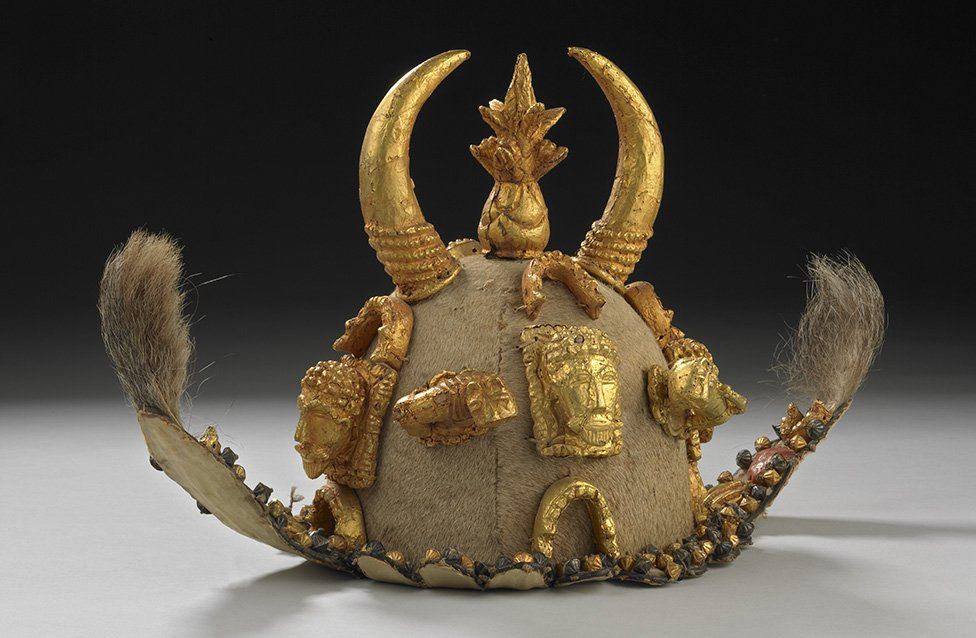
In a significant move towards cultural restitution, the British Museum and the Victoria and Albert Museum have announced their decision to repatriate gold and silver artifacts looted from Ghana’s Asante royal court during colonial times.
The decision follows a growing international trend urging museums and institutions to return African artifacts taken by former colonial powers such as Britain, France, Germany, and Belgium.
The collection of returned items includes a 300-year-old Mponponso sword used in Asantehene swearing-in ceremonies, a gold peace pipe, and cast gold soul-washers’ badges, among other treasures.
These artifacts were seized after the third Anglo-Asante War in 1874, with a total of 32 items, 15 from the British Museum and 17 from the Victoria and Albert Museum, both located in London.
The items are set to be displayed in Kumasi, the seat of the Asantehene kingdom, at the Manhyia Palace Museum for a duration of up to six years, as confirmed by the royal palace.
“Items of gold and silver regalia associated with the Asante royal court will be displayed in Kumasi later this year as part of a long-term loan commitment by the British Museum and the Victoria and Albert Museum,” the museums said in a joint statement.
This repatriation aligns with three significant milestones in the Ashanti kingdom: the 150th anniversary of the 1874 war, the centenary celebration marking the return of Asantehene Agyeman Prempeh I from exile, and the silver jubilee of the current king, Asantehene Osei Tutu II. The decision comes after almost 50 years of discussions between Manhyia Palace and the British Museum. To facilitate the return, Asantehene Osei Tutu II appointed two technical advisors, Ghanaian historian Ivor Agyeman-Duah and Scottish historian Malcolm McLeod.
In a parallel development, Nigeria is engaged in negotiations for the return of thousands of 16th to 18th-century metal plaques, sculptures, and objects looted from the ancient Kingdom of Benin, currently held in museums and private collections across the United States and Europe. Meanwhile, two years ago, the neighboring Benin Republic received two dozen treasures and artworks stolen in 1892 by French colonial forces from the capital of the former Kingdom of Dahomey.
The return of these treasures to Ghana takes place against the backdrop of ongoing pressure from Greece on Britain over the Parthenon Marbles. The sculptures, removed from the Parthenon temple at the Acropolis in Greece in the early 19th century by British diplomat Thomas Bruce, the earl of Elgin, have been a source of contention between the two countries for decades, with Athens maintaining that the marbles were stolen, a claim denied by Britain.