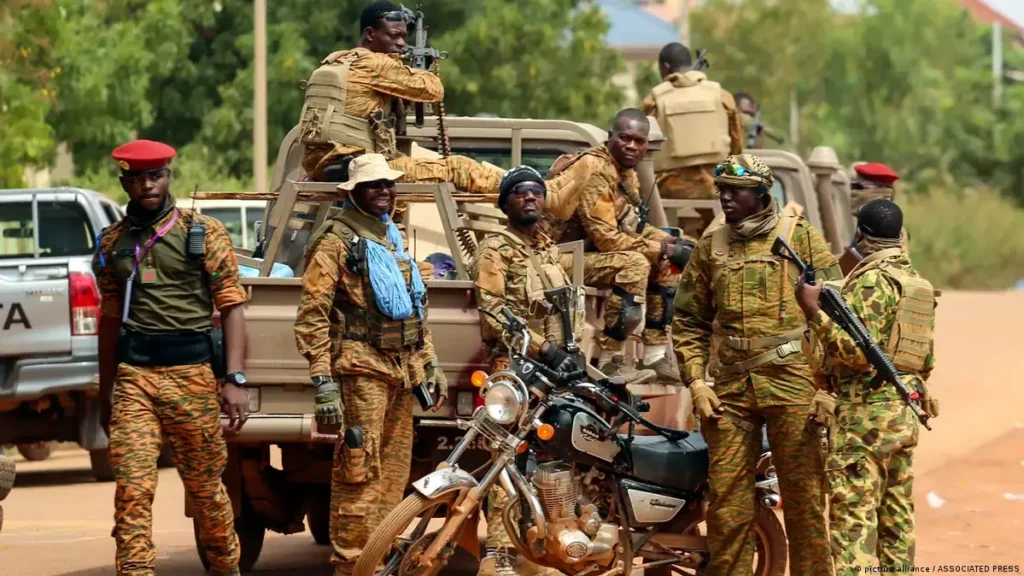
Soldiers operating in Burkina Faso’s conflict-ridden northern region reportedly carried out fatal assaults resulting in the deaths of at least 223 villagers, including 56 children, in two separate incidents on February 25, according to a report released by Human Rights Watch on Thursday.
Officials from Burkina Faso approached by media refrained from offering comments on the allegations, characterized by the New York-based organization as “some of the gravest instances of army misconduct in Burkina Faso since 2015.”
The report suggests that these large-scale killings may be part of a broader military effort targeting civilians suspected of collaborating with Islamist militant groups and could potentially constitute crimes against humanity.
In detailing the events, Human Rights Watch stated that soldiers were responsible for the deaths of 44 individuals, including 20 children, in Nondin village, as well as 179 individuals, including 36 children, in the nearby Soro village, located within the Thiou district of the northern Yatenga province.
Burkina Faso has been grappling with a jihadist insurgency since 2015, originating from neighboring Mali. The conflict has resulted in numerous casualties among civilians, military personnel, and police, leading to the displacement of approximately two million individuals.
Mounting frustration within the military over the escalating toll culminated in two coups in 2022.
Tirana Hassan, the executive director of Human Rights Watch, condemned the massacres in Nondin and Soro villages as the latest instances of civilian deaths at the hands of the Burkina Faso military during counterinsurgency operations.
Hassan emphasized the imperative of international support for a credible investigation into potential crimes against humanity, citing the repeated failure of Burkinabe authorities to prevent and probe such atrocities.
Human Rights Watch conducted interviews with 23 individuals, including eyewitnesses to the killings, local activists, and representatives of international organizations, to substantiate its findings.
The organization also verified the authenticity of videos and photographs depicting the aftermath of the attacks and the plight of survivors.
The report noted that prior to the retaliatory assaults, Islamist armed groups had launched multiple attacks targeting military installations and civilian structures, resulting in casualties among civilians, soldiers, and militia members.
Although Burkinabe Defence Minister Mahamoudou Sana acknowledged coordinated attacks by Islamist militants, no mention was made of the civilian killings in Nondin and Soro villages.
Aly Benjamin Coulibaly, the prosecutor of the high court in Ouahigouya, disclosed that investigations were initiated following reports of “massive deadly attacks” on several villages in Yatenga province, with an estimated toll of around 170 people killed.
Survivors recounted that military forces first arrived in Nondin and subsequently in Soro, allegedly motivated by retaliation for an earlier attack by Islamist fighters on a Burkinabe military and militia camp near Ouahigouya.
One survivor from Soro, wounded during the assault, recounted accusations by the soldiers of complicity with jihadists due to the failure to report their movements.
Witnesses reported the burial of victims in Nondin in three mass graves, underscoring the magnitude of the tragedy.