Police in Congo’s capital, Kinshasa, resorted to tear gas on Wednesday to disperse a gathering of opposition supporters demanding a re-run of the recent turbulent presidential and legislative elections.
This disputed vote poses a significant threat to the already struggling and poverty-stricken Congo, amplifying concerns in a country grappling with a security crisis in the east, hindering progress in the world’s leading producer of cobalt and various other industrial minerals and metals.
Amid allegations of fraud, five challengers of President Felix Tshisekedi urged their followers to participate in a protest march on Wednesday. They argued that the election was fraudulent and should be nullified.
Despite a government ban issued on Tuesday to halt the protest, citing intentions to undermine the efforts of the national election commission (CENI) as it tallies results showing Tshisekedi in a leading position, tensions escalated.
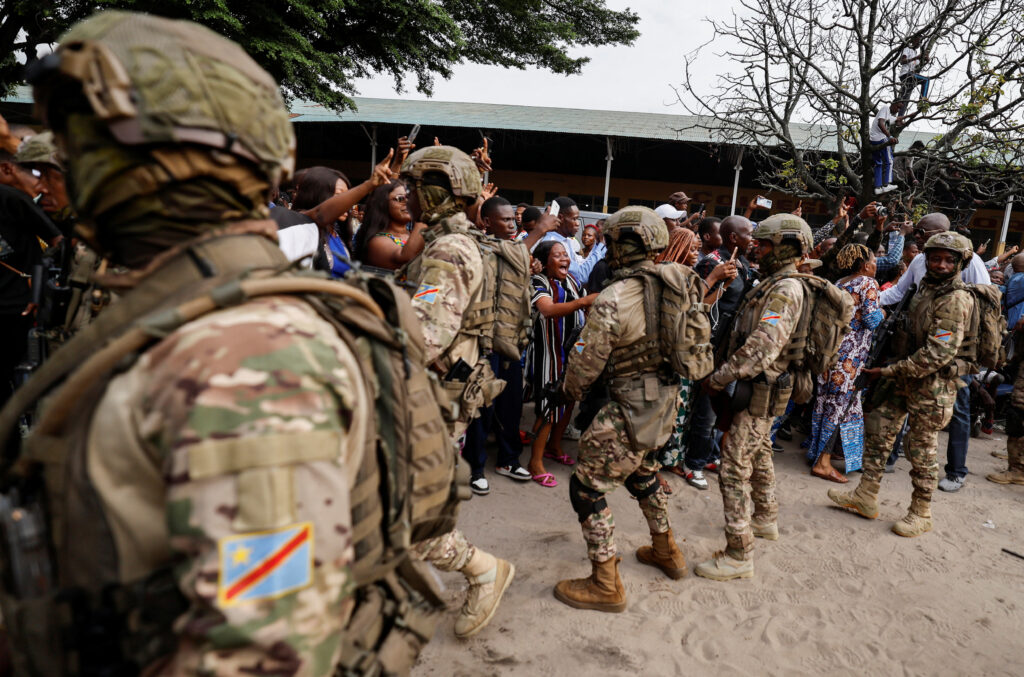
Security forces surrounded the headquarters of one key opponent, Martin Fayulu, where demonstrators were expected to assemble. The area saw a heavy security presence, with some officers equipped with riot gear and others carrying rifles. Although a large crowd did not immediately form, a few protesters attempted to block roads using burning tires before law enforcement responded with tear gas. Clashes involving stone-throwing between individuals near Fayulu’s headquarters and the police ensued.
Tshisekedi “did not win the election, his victory is fraudulent,” one protester who gave his name as Jean-Pierre said outside the building.
Government spokesperson Patrick Muyaya stated that the demonstration was prohibited, justifying police actions as necessary security measures.
In a separate incident underscoring the tension, supporters of a local candidate, seemingly facing defeat, briefly disrupted traffic in the eastern city of Butembo by blocking roads with burning tires before dispersing.
The December 20 election, marked by logistical challenges including delayed delivery of election materials, malfunctioning equipment, and disorderly voter lists, witnessed sporadic violence at various locations.
Critics leading the protest condemned CENI’s decision to extend voting at stations that failed to open on election day, labeling it unconstitutional and grounds for a complete re-run. Some independent observers also voiced concerns, asserting that the extension undermined the election’s credibility.
While acknowledging delays in the process, CENI refuted claims that the election’s legitimacy was compromised by the voting extension. Its latest update on Tuesday revealed Tshisekedi leading with almost 79% of approximately 6.1 million counted votes, out of the 44 million registered voters.
The exact number of ballots cast remains undisclosed amidst ongoing tensions and disputes surrounding the election outcome.