Catholic bishops in the Democratic Republic of Congo have accused authorities of restricting freedom of worship and peaceful assembly after police blocked young Catholics from attending Mass at a Kinshasa stadium and fired tear gas at a church-led march in Lubumbashi the following day.
The National Episcopal Conference of Congo, known as CENCO, called on authorities on Tuesday to uphold the constitutional rights of worshippers and demonstrators. Its intervention brings the bishops into public disagreement with President Félix Tshisekedi’s government at a time when church leaders are trying to broker a national political dialogue.
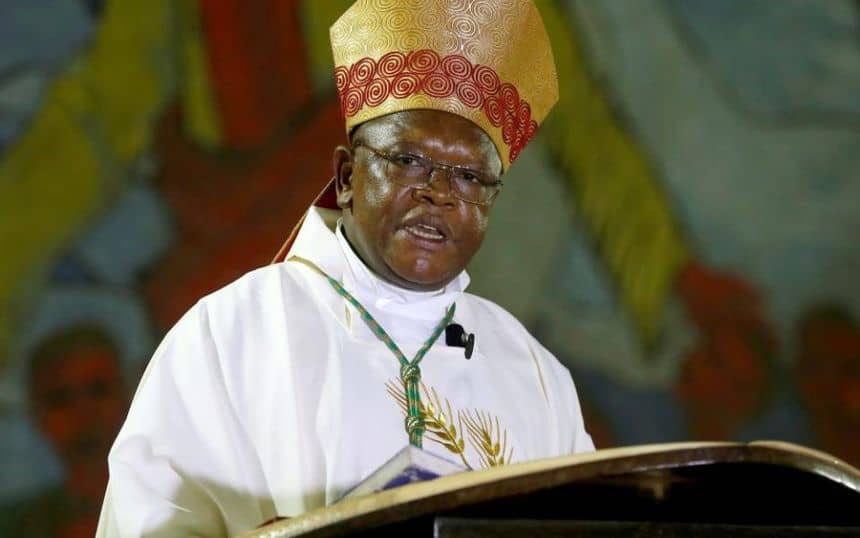
In Kinshasa on Sunday, police surrounded Tata Raphaël Stadium, where Cardinal Fridolin Ambongo was due to celebrate Mass for young Catholics from parishes across the capital. Organisers moved the gathering to the grounds of nearby Saint-Raphaël College, where the service began several hours late.
The archdiocese said a government official told organisers on Saturday evening that they could no longer use the stadium. They received neither a written order nor an explanation. Authorities later cited security concerns, according to Erem News, citing Jeune Afrique. Yet an interior ministry letter dated November 21, reviewed by the magazine, had instructed police to protect participants before, during and after the event.
Ambongo questioned what the government stood to gain by provoking the Catholic Church. He said he believed the decision was political and urged officials to take responsibility for it. In an interview with Vatican News, he also appealed for restraint and renewed his call for dialogue.
Police disperse priests and parishioners in Lubumbashi
In the southeastern city of Lubumbashi, Archbishop Fulgence Muteba, who heads CENCO, had called a march for Monday to demand enforcement of a court ruling in the Church’s favour over land at Tshamalale.
Security forces surrounded the archbishop’s residence overnight, preventing Muteba and his staff from leaving, Erem News reported. Priests and parishioners who tried to proceed with the march on Monday were dispersed with tear gas. Footage circulated on social media showed Muteba confronting a police officer and telling him that anyone seeking to arrest him knew where to find him.
Lubumbashi’s acting mayor later called for further talks over the land dispute. She said Muteba had been absent from recent meetings convened to find a settlement. The archdiocese maintains that the dispute has already been decided in court and wants the judgment enforced.
Bishops seek a role in national talks
For months, the bishops have held private discussions with the presidency about a national dialogue. Church leaders want broad participation and hope to mediate. Tshisekedi’s government has insisted that former president Joseph Kabila and rebel representatives be excluded, according to Erem News.
The bishops’ decision to keep those talks going has frustrated opposition figures who want the Church to speak more forcefully about Tshisekedi’s push to change the constitution. On November 11, the president signed a law setting out how referendums can be held. Opposition leaders say it could pave the way for constitutional changes allowing him to seek a third term.
The bishops have yet to issue a separate response to the referendum law. In June, however, they said they saw no need to change the constitution and warned that forcing through a revision could divide the country.
With the 2028 election approaching, opposition figures are looking to the Church’s role in the final years of Kabila’s presidency. Between 2016 and 2018, Catholic groups mobilised supporters to demand a transfer of power after his final constitutional term expired. This week, the bishops have focused their public demands on two rights their congregations tried to exercise on successive days: gathering for worship in the capital and marching to seek enforcement of a court ruling in Lubumbashi.