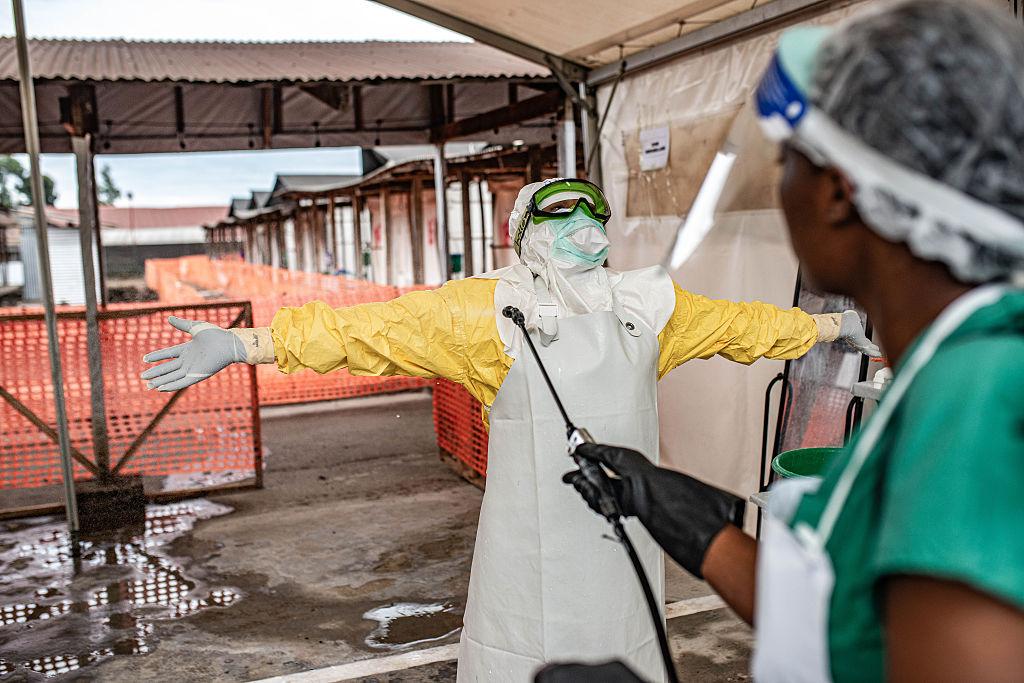
The Democratic Republic of Congo’s Ebola outbreak has surpassed 8,000 confirmed infections, with nearly 4,000 deaths, as the country battles the deadliest epidemic of the disease in its history.
Government figures released on Monday showed that the number of confirmed cases had reached 8,067, while the death toll stood at 3,901, according to the latest situation report from the country’s public health institute.
The outbreak, caused by the Bundibugyo species of the Ebola virus, has overtaken the devastating 2018–2020 epidemic in both infections and fatalities, making it the largest Ebola outbreak ever recorded in DR Congo.
It is now the second-largest Ebola epidemic globally, surpassed only by the 2014–2016 outbreak in West Africa, which infected more than 28,600 people and killed over 11,000 across Guinea, Liberia and Sierra Leone.
The latest figures come as health authorities struggle to contain the virus, which has spread across several provinces and placed mounting pressure on an already fragile healthcare system.
The World Health Organization (WHO) said in its September 25 assessment that the outbreak had reached 63 health zones across seven of DR Congo’s 26 provinces. Ituri remained the epicentre, while North Kivu had experienced a substantial increase in infections.
The WHO also warned that the virus’s expansion into new areas, including health zones near the border with South Sudan, had increased the risk of transmission beyond DR Congo.
Efforts to contain the epidemic have been complicated by armed conflict, insecurity and population displacement, which have restricted access to healthcare and hampered contact tracing, disease surveillance and the delivery of medical supplies.
Health officials face additional challenges because there is currently no licensed vaccine or specific treatment for Ebola disease caused by the Bundibugyo virus. The response relies heavily on early detection, patient care, infection prevention and tracing people who may have been exposed.
The WHO has warned that delays in identifying infections and providing adequate medical care are contributing to continued transmission and deaths, particularly in communities with limited access to health facilities.