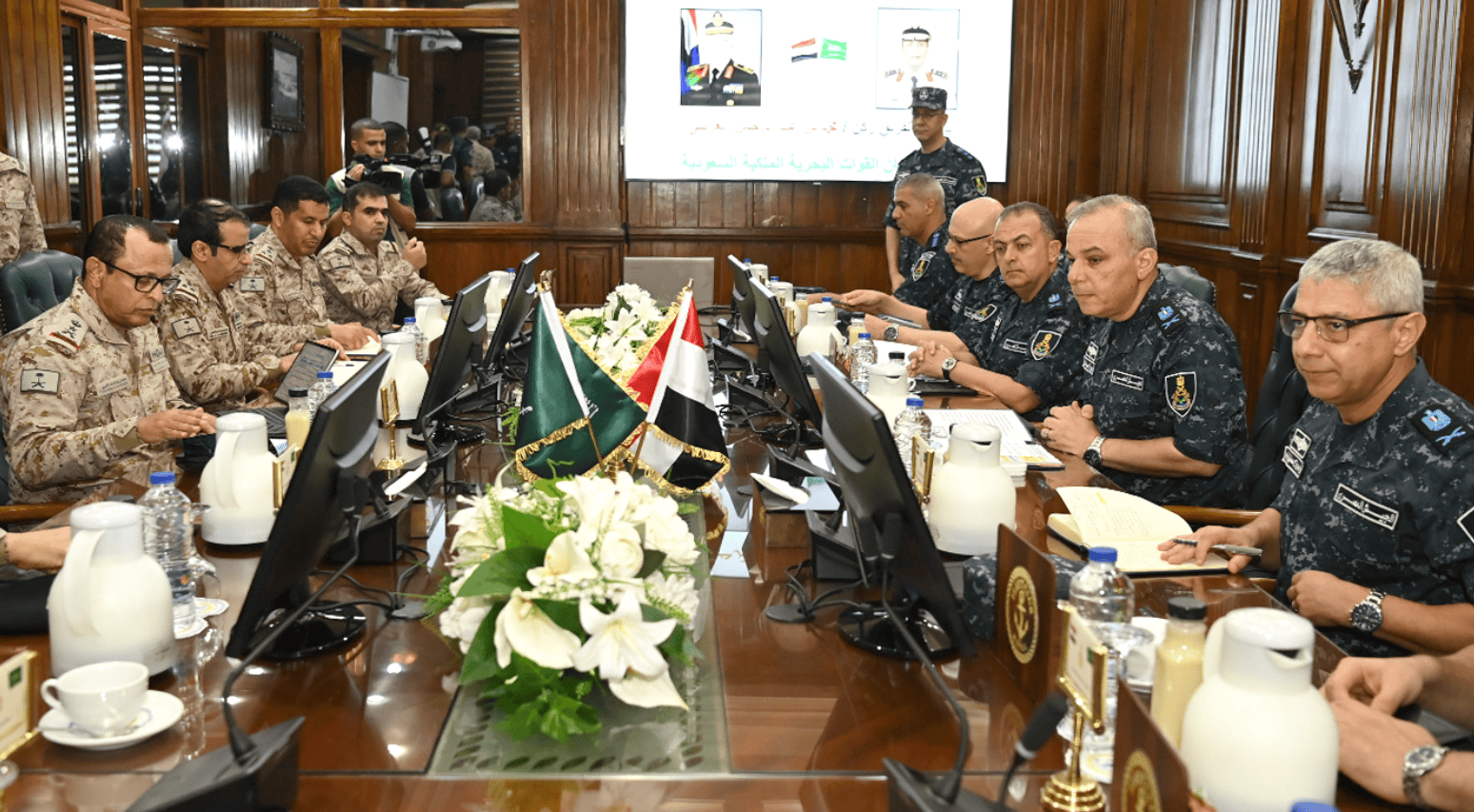
Egypt has expressed reservations about joining a multinational naval coalition proposed by Saudi Arabia, despite intensive efforts by Riyadh to secure Cairo’s participation, according to an informed Egyptian source cited by Al-Araby Al-Jadeed.
The source said Egyptian and Saudi officials had held discussions in recent days over the coalition’s objectives, structure and proposed mechanisms for participation. Cairo, however, reportedly informed Riyadh that it remained unwilling to take part in military operations outside its borders unless they were directly connected to Egyptian national security.
According to the source, Egypt’s position reflects a long-standing foreign policy doctrine aimed at avoiding involvement in external military alliances or operations that could widen regional conflicts.
Cairo believes political and diplomatic solutions should remain the priority, particularly amid the region’s current tensions and overlapping crises, the source said.
Another factor behind Egypt’s reluctance is its desire to preserve communication channels and relations with the various parties involved in regional disputes. Egyptian officials believe those relationships provide Cairo with room to pursue diplomacy and mediation.
Joining a military coalition, the source said, could be interpreted as Egypt siding with one party against another and potentially undermine its ability to act as a mediator in future crises.
Egyptian officials reportedly told their Saudi counterparts that Cairo supports stability in the Red Sea, freedom of navigation and the protection of international shipping. However, Egypt would prefer to contribute through political and security coordination, intelligence sharing and diplomatic engagement rather than direct participation in military operations that could lead to confrontations with regional actors.
Egyptian state-linked media reported on Monday that the question of Egypt’s participation in the coalition remained under review.
An informed source quoted by the outlets said the authorities were assessing the legal and constitutional implications of joining an alliance designed to protect maritime navigation and global trade routes.
The review reportedly includes the requirement to obtain approval from Egypt’s parliament before any final decision is made.
Officials are examining whether any future participation would comply with the Egyptian constitution, national law and institutional procedures while also protecting the country’s strategic interests, the source said.
Former Egyptian assistant foreign minister Massoum Marzouk said the idea of establishing a regional security coalition was strategically sound but required greater clarity.
He said the coalition’s objectives, the threats it was intended to address and the specific responsibilities of each participating country had not yet been sufficiently defined.
Marzouk said any alliance of this kind should clearly establish the role and obligations of every member, as well as the scale and nature of the threats it would confront.
He argued that the initiative should eventually be developed into a comprehensive regional security framework rather than remain limited to a naval coalition.
Marzouk, who previously served as an officer in the Egyptian armed forces, said he had long advocated the establishment of a Middle Eastern regional security system.
He said such a framework should address what he described as the present and future threats posed by Israel to countries across the region.
Commenting on the absence of a declared Emirati role and the debate over possible Egyptian participation, Marzouk stressed that he had no inside information from the Egyptian government and was expressing his personal opinion.
He said Egypt should join the coalition and seek to reshape its structure from within. Cairo’s participation, he argued, could allow it to influence the coalition’s balance, understand its mechanisms and play an active regional role.
Egypt’s hesitation comes amid rising maritime tensions and fears that regional confrontations could spread further across the Red Sea and Bab al-Mandab Strait, threatening global trade and strategic shipping routes.
Any disruption to Red Sea traffic could also directly affect Egypt’s economy and revenues from the Suez Canal.
In recent years, Cairo has largely avoided direct military involvement in regional conflicts, focusing instead on diplomacy and mediation in crises including Gaza, Libya and Sudan while maintaining relations with competing regional powers.
Observers say Egypt’s reservations also reflect concerns about being drawn into an open-ended conflict in an increasingly polarised region where regional rivalries and international interests intersect along vital waterways.
Cairo is seeking to distinguish between its commitment to protecting Red Sea navigation, which is a direct strategic interest, and participation in a combat-oriented coalition that could broaden the regional confrontation.
Saudi Arabia’s Defence Ministry announced last Thursday that 14 countries, including Egypt, Türkiye, Pakistan, Qatar and Jordan, had issued a joint statement supporting the proposed establishment of a multinational defensive naval coalition.
The ministry said Saudi Arabia had hosted a meeting attended by military chiefs of staff, representatives of participating countries and the European Union delegation to the kingdom.
The talks focused on Saudi Arabia’s proposal to establish the coalition as part of efforts to strengthen maritime security, protect international sea lanes and confront threats to global shipping and trade.