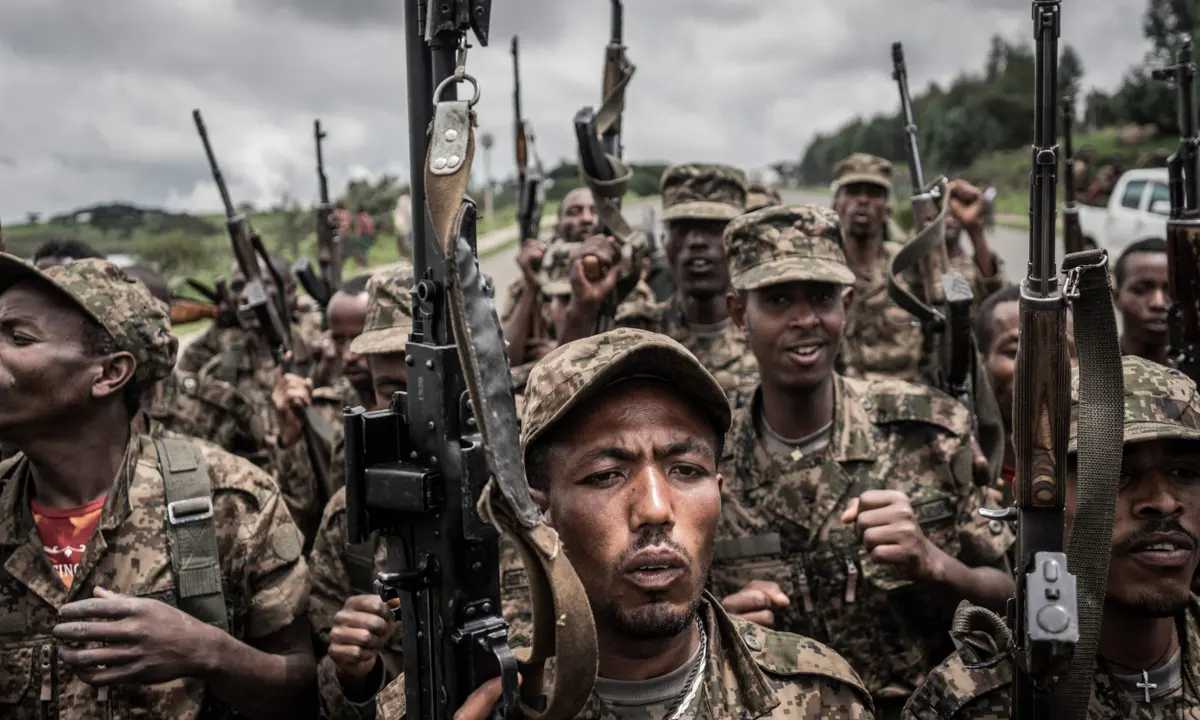
The Ethiopian Human Rights Commission (EHRC), an independent state-affiliated organization, reported on Tuesday that government security forces in Ethiopia were responsible for the deaths of at least 45 civilians in a late January massacre in Amhara state.
In a statement, the EHRC confirmed that these civilians were extrajudicially killed in the town of Merawi, allegedly for supporting the ethnic Amhara militia known as Fano.
The EHRC emphasized that the actual number of victims might be higher than the confirmed 45.
The EHRC also revealed that an additional 15 individuals, including women, were killed during a door-to-door search conducted by government forces in another part of Amhara earlier in the same month.
The violence in Merawi followed months of clashes in the previous year between Ethiopia’s military and Fano, prompting the United States to call for an investigation last week.
According to the EHRC, security forces not only carried out killings but also arrested an undisclosed number of individuals in Merawi on suspicion of being members of Fano.
Fano members had initially fought alongside government forces during the two-year war in the neighboring Tigray region but later fell out after a peace deal was signed between Addis Ababa and Tigrayan rebel authorities in 2022.
In response to the violence in Amhara last year, the federal government imposed a state of emergency in August, extending it by four months in February.
EHRC head Daniel Bekele, in a statement posted on X, reiterated the commission’s call to end extrajudicial killings, ensure accountability, and demonstrate a commitment to peaceful dialogue.
International concern
Media access to northern Ethiopia remains heavily restricted, hindering independent verification of the situation on the ground. Last week, the United States expressed deep concern over reports of “targeted civilian killings” in Merawi.
The US statement also highlighted “numerous disturbing reports of other violations and abuses” across Ethiopia, involving both government and non-state actors. It urged all parties to engage in dialogue.
The violence in Amhara has renewed international concerns about Ethiopia’s stability, months after a peace agreement was signed in November 2022 to end the Tigray war. The peace deal stirred feelings of betrayal among the Amhara, given historical land disputes with the Tigray region.
Tensions escalated in April of the previous year when Prime Minister Abiy Ahmed’s government decided to dismantle regional forces nationwide, triggering protests among Amhara nationalists who argued it would weaken their state.
In September, the EHRC accused federal government forces of conducting extrajudicial killings in Amhara, along with mass arbitrary detentions in the region and beyond.