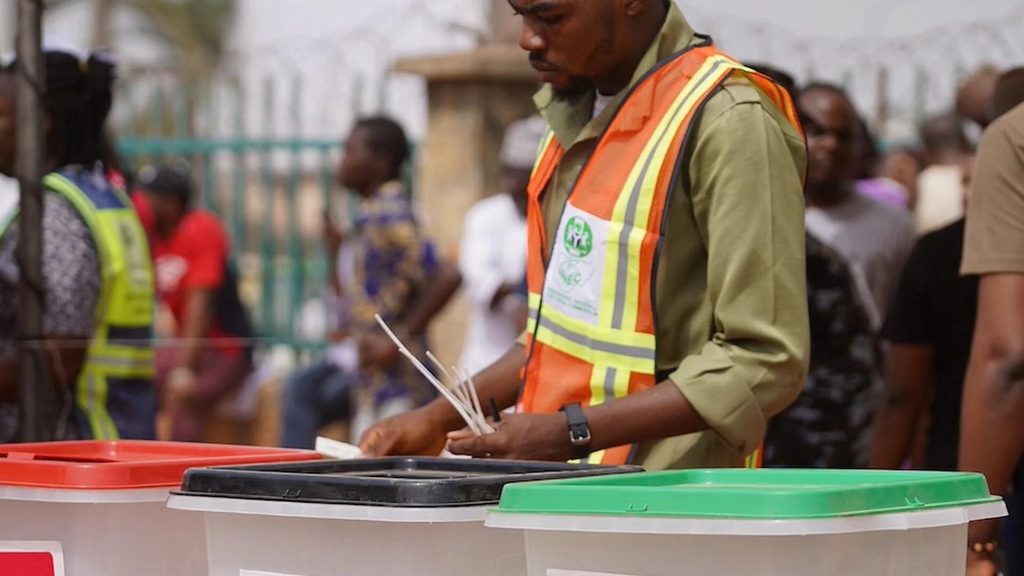
An EU-supported election monitoring coalition has raised concerns over widespread vote-buying in Nigeria, warning that electoral malpractice could undermine the credibility of the country’s 2027 general elections.
The European Union Support to Democratic Governance in Nigeria (EU-SDGN) Election Observation Hub said voters were allegedly offered between 10,000 and 50,000 naira ($7.50 to $38) during recent governorship elections in Ekiti and Osun states.
The findings, presented in Abuja, highlighted what observers described as increasingly organised vote trading during the June 20 election in Ekiti and the August 15 poll in Osun.
Bolade Eyinla, a former senior adviser to ex-Independent National Electoral Commission (INEC) chairman Mahmood Yakubu, warned that financial inducements were eroding voters’ freedom to choose their representatives.
According to the monitoring coalition, vote trading accounted for 77% of 84 verified electoral incidents documented in Ekiti, with political party agents identified as key participants in most cases.
In Osun, observers also documented widespread allegations of vote-buying, including cases in which voters were reportedly required to display marked ballot papers to party agents before receiving payment.
The coalition said the practice threatened ballot secrecy and weakened public confidence in the democratic process.
Despite the reported violations, observers said they were unaware of arrests, investigations or prosecutions linked to the documented incidents.
They warned that the apparent absence of legal consequences could encourage further electoral misconduct ahead of the 2027 national vote.
The election observation hub called on Nigerian authorities to strengthen enforcement of electoral laws, investigate suspected vote-buying networks and prosecute those responsible.
It also urged INEC to improve transparency in election result management, including publishing results at ward level and strengthening safeguards against manipulation.
More than 1,400 citizen observers were deployed across Ekiti and Osun during the two elections, providing independent assessments of voting procedures, electoral security and reported irregularities.
Despite its concerns, the coalition acknowledged improvements in election administration, particularly the timely commencement of voting and the close correspondence between official results and independently collected figures.
The findings come as Nigeria approaches its 2027 general elections, placing renewed pressure on electoral authorities, security agencies and political parties to safeguard the integrity of the vote.
Observers warned that addressing vote-buying, protecting ballot secrecy and ensuring accountability for electoral offences would be essential to maintaining public confidence in the country’s democratic institutions.
Nigeria’s electoral commission currently lists January 16, 2027, for the general election and February 6 for governorship and state assembly polls.