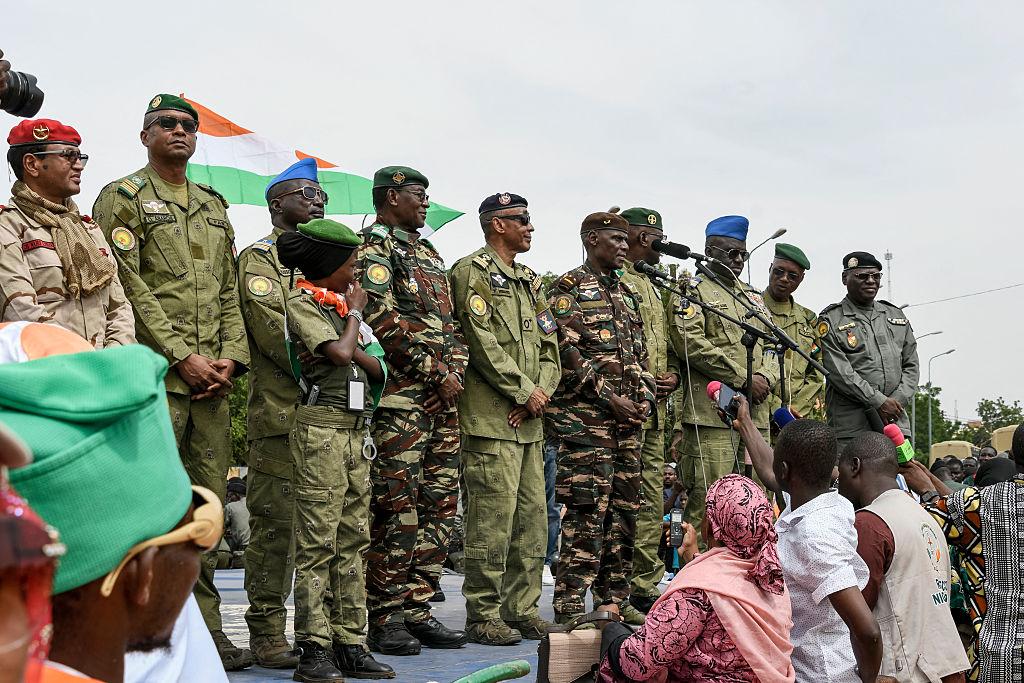
A failed military mutiny in Niger has renewed questions over the stability of armed forces across Africa’s Sahel, where frustration among frontline troops is increasingly emerging alongside the region’s worsening militant insurgencies.
The attempted uprising in Niamey came as armed groups continue to make territorial gains in countries including Mali and Burkina Faso, placing additional pressure on military governments that themselves came to power through coups.
Special forces units were reportedly involved in the latest attempt to remove Niger’s military leader, General Abdourahamane Tiani, raising concerns over the possibility of deeper divisions within the armed forces.
The incident also points to a shift in the pattern of coups and attempted coups across the Sahel. Military takeovers in the region have traditionally been led by senior officers seeking to overthrow civilian governments. Increasingly, however, signs of unrest are emerging among younger soldiers and units deployed on the front lines against militant groups.
Growing anger among frontline troops
Local reports said soldiers from special forces units deployed in the Tillabéri region were involved in the August 29 mutiny attempt.
The reported involvement of frontline troops has prompted questions about whether deteriorating battlefield conditions and dissatisfaction within the ranks are becoming important drivers of military unrest.
Mohamed Awal, a political analyst specialising in African affairs, said the latest events in Niger reflected accumulated anger among soldiers.
“The latest mutiny attempt in Niger reveals growing frustration within the ranks for several reasons, including low salaries compared with the difficult missions soldiers are being asked to carry out,” Awal told Erem News.
He said troops fighting armed groups have also complained about shortages of food and medical supplies, as well as inadequate military equipment.
Such grievances are particularly serious, he said, because soldiers are confronting militant organisations that in some cases possess increasingly sophisticated weapons and battlefield capabilities.
Awal added that resentment has also been fuelled by perceptions that senior military officers enjoy greater privileges and significantly better living conditions than ordinary soldiers.
Generational tensions inside Sahel armies
The instability comes as militant organisations expand their activities across the Sahel.
Among the most prominent is Jama’at Nusrat al-Islam wal-Muslimin, or JNIM, an Al-Qaeda-linked coalition that has become one of the most powerful armed groups operating across the region.
At the same time, military governments in the Sahel have repeatedly accused outside powers, including France, of involvement in efforts to destabilise their governments. Paris has denied accusations that it supports attempted military rebellions.
Political analyst Qassem Keita said discontent among lower-ranking personnel has become an increasingly important factor inside the region’s armed forces.
“There are broad sections of the national armies in the Sahel that feel discriminated against and marginalised while they are confronting armed groups operating in the region,” Keita told Erem News.
He said the problem was compounded by what he described as a generational struggle within military institutions.
Younger soldiers, Keita argued, have watched senior officers overthrow governments and take power themselves, potentially creating an incentive for lower-ranking personnel to attempt the same path.
Some soldiers may therefore see rebellion not only as an avenue to power but also as a means of expressing anger over poor pay, limited resources and difficult conditions on the front lines.
Keita also pointed to unease among some younger soldiers over the growing role of foreign military partners, particularly Russia, whose forces and security personnel have been deployed to support Sahel governments in their campaigns against armed groups.
The combination of battlefield pressure, internal military grievances and political instability could further reshape the pattern of coups in a region that has already witnessed repeated military takeovers.
Rather than being driven solely by senior commanders seeking to overthrow civilian governments, future instability may increasingly emerge from within the lower ranks of military regimes themselves — particularly among soldiers bearing the brunt of the Sahel’s expanding insurgencies.