A Kenyan court on Tuesday prolonged a restraining order preventing the government from dispatching hundreds of police officers to Haiti for a UN-endorsed mission intended to bring stability to the strife-torn Caribbean nation.
The judgment was issued one day after the United Nations sounded an alarm about the deteriorating security situation in Haiti. Violent gangs now dominate extensive areas of the country, leading to a surge in major crimes, which have reached “record highs.”
In early October, the UN Security Council granted approval for the deployment of a non-UN multinational mission, under the leadership of Kenya, aimed at providing assistance to the beleaguered Haitian police.
However, the High Court in Nairobi later issued a temporary restraining order in response to a case initiated by opposition politician Ekuru Aukot. He contended that the deployment was unconstitutional since it lacked support from any law or treaty.
“This court became seized of this matter earlier than everyone else and it would not make sense for it to set aside or allow the interim orders to lapse,” High Court judge Enock Mwita said, adding that doing so would amount to “an academic exercise”.
He mentioned that the issue would be addressed in a public court session starting on November 9, and he anticipated a faster resolution.
Aukot informed media that he was “very happy and excited” about the latest court order, as it suspended the deployment until the case could be heard and resolved.
“The judge has made the orders even better,” said Aukot, a lawyer who helped draft Kenya’s 2010 constitution.
The specifics of Kenya’s deployment have not been fully settled, as parliamentary approval, mandated by law, is still pending.
On October 13, Kenya’s cabinet announced that it had “ratified” the deployment and forwarded the resolution to parliament for official approval.
However, Aukot contested that this decision was in violation of the court order and declared his intention to initiate a legal challenge against all cabinet members.
“They are doing a cleanup and seeking approvals after we got the court injunction.”
Test subjects
Kenya’s participation has faced criticism domestically, with numerous individuals expressing doubts about the prudence of undertaking such a perilous mission.
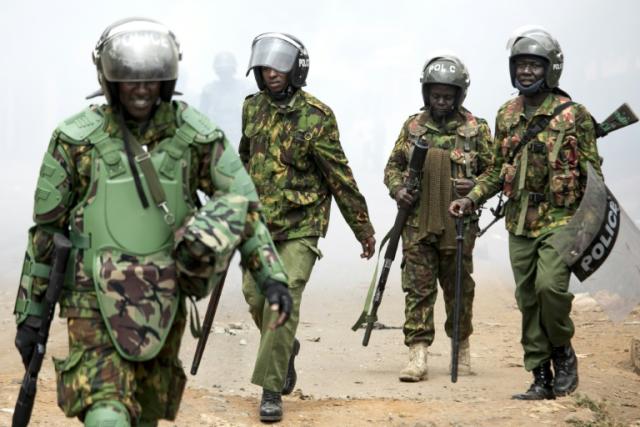
Rights advocacy groups have also pointed out that Kenyan police have a track record of employing, at times, deadly force against civilians. They argue that deploying them to Haiti, where foreign troops have been involved in past intervention-related abuses, presents an unacceptable risk.
Earlier this month, Interior Minister Kithure Kindiki defended the deployment, asserting that they are not treating their officers as experimental subjects by sending them to Haiti.
Kenya is regarded as a pillar of democracy in East Africa, and it has actively engaged in peacekeeping efforts within its neighboring areas, such as the Democratic Republic of Congo and Somalia, in addition to various global locations.
Haiti, the most economically challenged nation in the Western Hemisphere, has been embroiled in prolonged turmoil. Armed gangs have seized control of certain regions, leading to severe violence, while the nation’s economy and public healthcare system remain in a state of disarray.