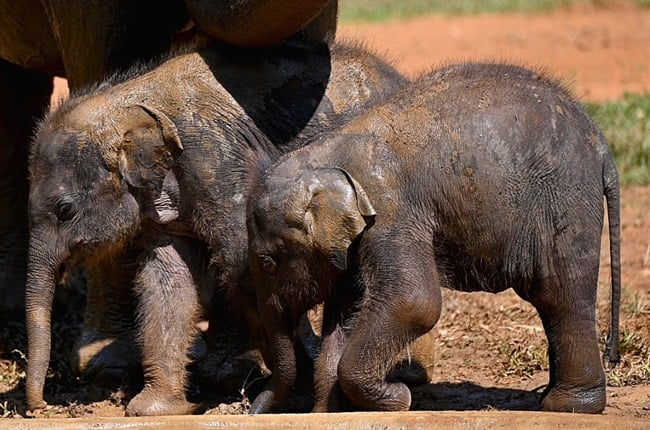
A conservation group announced the rare birth of twin elephants in Kenya’s Samburu National Reserve, labeling it as a moment of “double joy.” Save the Elephants revealed that both newborns, females named Alto, were captured nursing from their mother in a heartwarming video shared on X (formerly Twitter).
Elephant twins are a rarity, accounting for only about one percent of elephant births. This event follows the birth of another exceptional pair, a male and female, in the same reserve earlier in 2022.
While the birth of elephant twins is a cause for celebration, it’s often a challenging journey for them. Sadly, a previous set born in Samburu in 2006 didn’t survive beyond a few days.
African elephants have the longest gestation period among living mammals, lasting nearly 22 months. They typically give birth approximately every four years.
The news comes against the backdrop of the endangered status of African savanna elephants, as declared by the International Union for Conservation of Nature (IUCN). Poaching and habitat destruction have had a devastating impact on elephant populations in Africa.
Efforts to counter poaching in Kenya have made strides, with the Kenya Wildlife Service reporting a current elephant population of over 36,000 in the country. Yet, this marks a significant decline from the estimated 170,000 elephants in the 1970s and 1980s, a decrease largely attributed to ivory demand.
The recent birth of elephant twins brings hope amidst ongoing conservation challenges, highlighting the importance of continued efforts to protect these majestic creatures in their natural habitats.