Military officers have taken an increasingly prominent role across Mali’s civilian administration since the August 2020 coup, occupying positions in ministries, regional governments, diplomatic missions and state-run institutions, according to an investigation based on decades of official appointment records.
The investigation, reported by Jeune Afrique and cited by Erem News, analysed 81,387 appointments published in Mali’s official gazette since 1992.
Its findings showed that the proportion of civilian administrative posts held by military officers rose from 1.3% before 2012 to 9% since August 2020. Among deputy prefects, the figure reached 48.6%.
Military officers or police commissioners currently head 15 of Mali’s 20 regions, according to the investigation. Officers have also been appointed to 19 embassies, consulates-general and diplomatic missions since the August 18, 2020 coup, which the report identified as a major turning point in the military’s growing role within state institutions.
Before 2012, civilian administration was largely reserved for civilian officials, with relatively limited exceptions. Military personnel accounted for 2.2% of deputy prefects, 25% of governors and 12.1% of heads of diplomatic missions.
Beginning in 2015, four exemptions allowed military officers to take administrative posts in areas facing severe security pressures. A subsequent measure known as Article 30 widened eligibility for deputy-prefect positions to include non-commissioned and more junior officers.
The measure was signed by transitional president Bah Ndaw and co-signed by Abdoulaye Maiga, now Mali’s prime minister, along with the late Colonel Sadio Camara and Colonel Modibo Kone.
During the five years following its adoption, 74 governors and 204 deputy prefects from the military or police were appointed, compared with 16 governors and 52 deputy prefects over the previous three decades.
Among those appointed were 28 captains or lieutenants, ranks below the level theoretically required for deputy prefects under Article 19, according to the investigation.
Military appointments accelerated sharply in 2024, when 277 officers were named to posts, compared with an average of about 30 a year between 2013 and 2019.
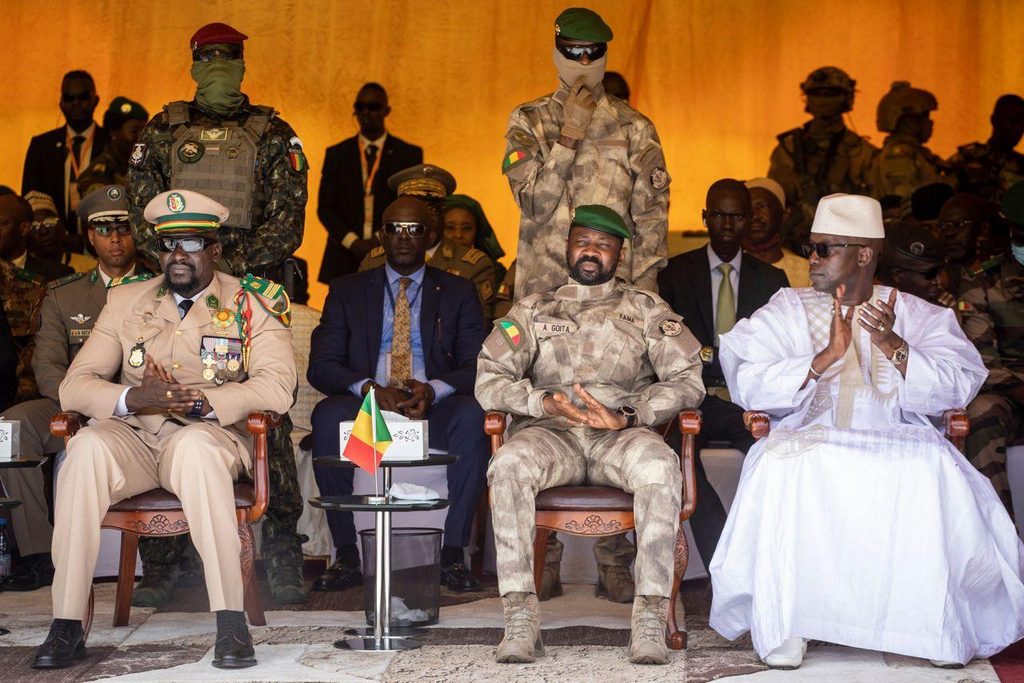
At the highest level of government, transitional leader Assimi Goita was promoted to the rank of army general in 2024, while Abdoulaye Maiga was confirmed as prime minister after previously serving in the position on an interim basis.
The investigation said Mali had not experienced such a concentration of military influence over state institutions since 1968, when Moussa Traore overthrew President Modibo Keita.
Military representation within the cabinet has also increased. Five officers hold ministerial posts in the 28-member government in 2026, compared with two officers among 37 ministers under former president Ibrahim Boubacar Keita, according to the report.
Ouloguem, who worked on the analysis, described the trend as a “gradual militarisation” of Malian society, saying the aim of compiling and analysing the appointment records was to provide data documenting a shift that many Malians had already perceived.
The investigation argued that the increase in military appointments could reduce opportunities for qualified civilian administrators, including graduates of Bamako’s National School of Administration and foreign academic institutions, while placing officers in positions that can require specialised technical expertise.
Ouloguem said the trend could have broader consequences for the management of civilian affairs, particularly as Mali continues to face a prolonged security conflict.
He said the country’s political divide was increasingly defined less by traditional left-right politics than by tensions between military and civilian rule and between authoritarian and democratic models of government.
Ouloguem said he hoped the research would serve the public interest and provide Malians and future generations with a clearer record of the changes taking place within the country’s state institutions.