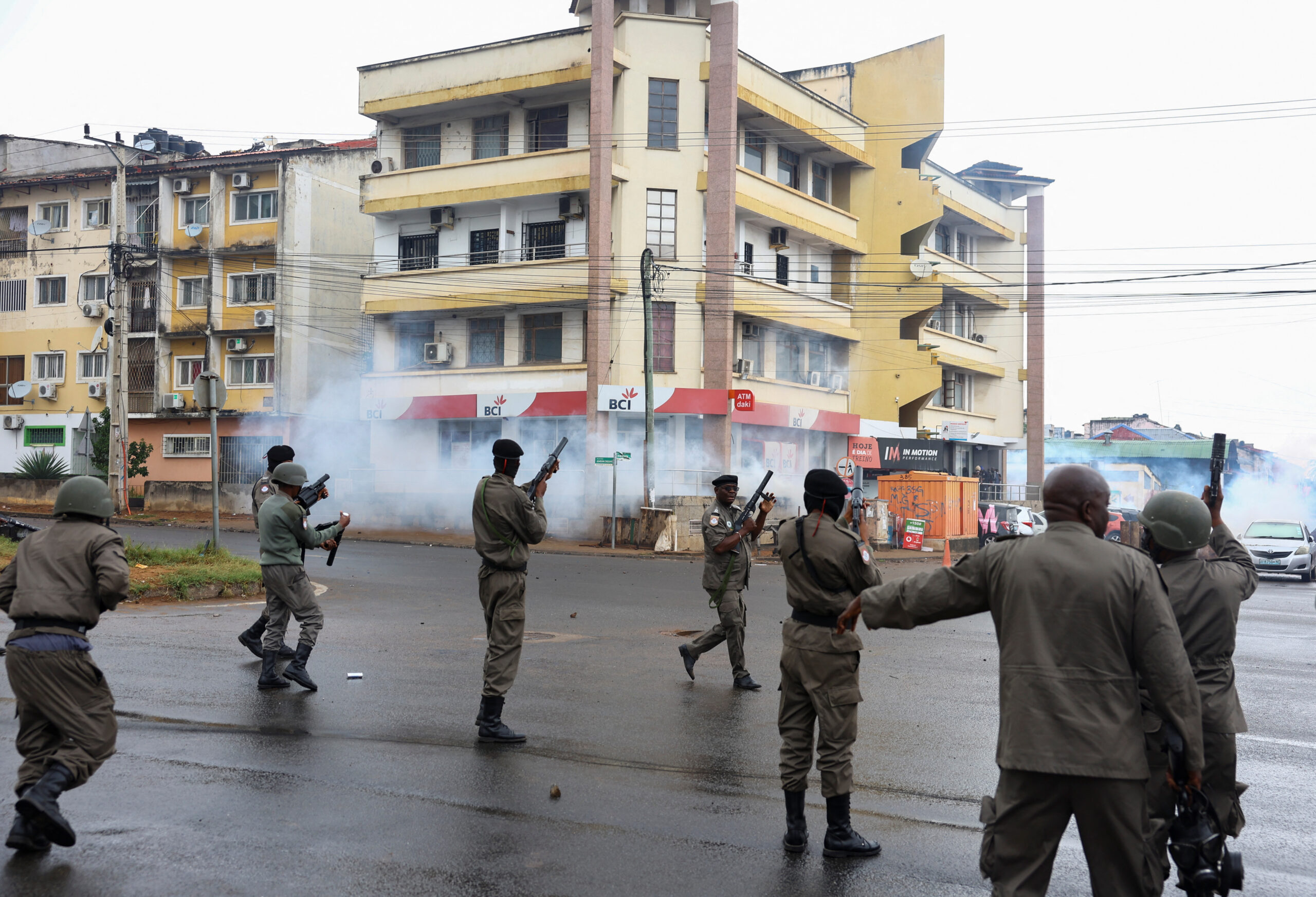
Police in Mozambique clashed with opposition protesters in the capital, Maputo, on Monday, using teargas to disperse crowds following a weekend of violence related to a disputed election. The protests erupted after two opposition figures were shot dead on Saturday, further heightening tensions surrounding the country’s contested October 9 election.
As the nation awaits the final election results, early tallies suggest the ruling party, Frelimo, is on course for another victory. Opposition leaders, however, have claimed that the election was marred by widespread fraud. Frelimo, which has held power since Mozambique’s independence in 1975, faces accusations from opposition parties, civil society groups, and election observers. The party has denied any wrongdoing.
Protester Vladimir Manhique, a 32-year-old mechanic, condemned the police response, stating, “They are turning this into a violent protest because they are firing at us. We are here to demand that the truth about the election is upheld.” Manhique also called for an end to the current regime, saying, “This is a way to demonstrate that enough is enough. This regime must fall.”
During the protest, a reporter witnessed a civilian firing a gun into the crowd before leaving the scene with a police officer. Mozambican authorities have previously used live ammunition at political protests, as seen in demonstrations last year.
Efforts to reach a police spokesperson for comment were unsuccessful.
Tensions flared after the shooting of an opposition lawyer and a party official in Maputo on Saturday, two days before the planned national strike organized by independent presidential candidate Venancio Mondlane. Following the clashes with police, Mondlane declared the strike a success and urged protesters to disperse.
On Monday, many businesses remained closed in Maputo, and the usually busy streets were unusually quiet.
Meanwhile, Mozambique’s electoral commission has not commented on the fraud allegations. International observers, particularly those from the U.S., criticized the election process, citing issues such as vote-buying, intimidation, inflated voter rolls, and other irregularities that undermine the credibility of the election.