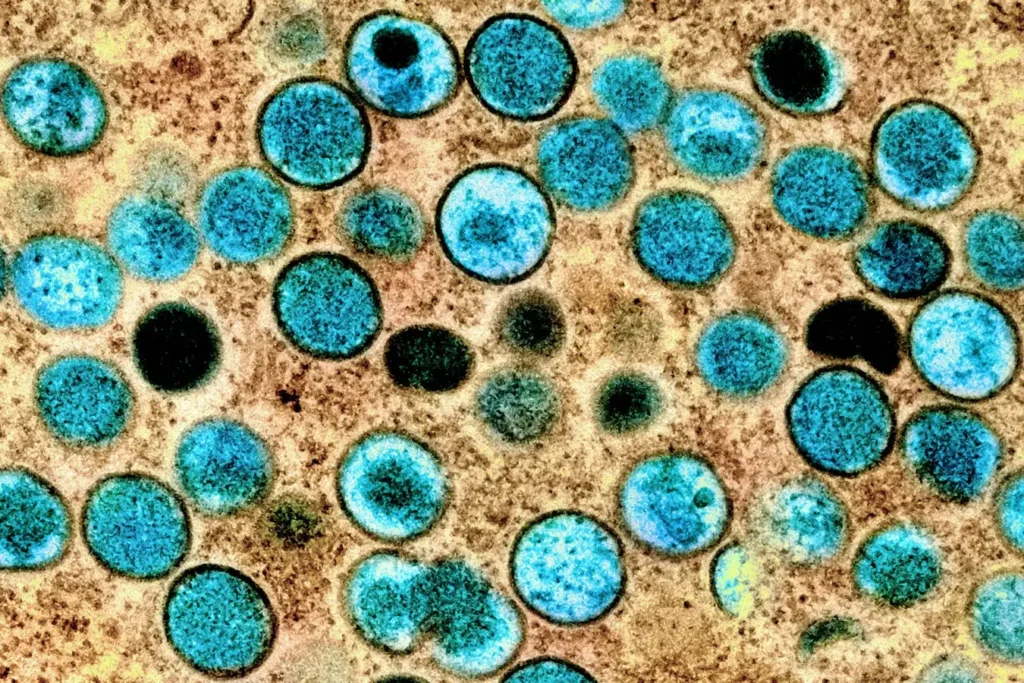
A new strain of the mpox virus, previously known as monkeypox, is causing alarm in the eastern border regions of the Democratic Republic of Congo (DR Congo). Health officials have labeled this variant “incredibly worrying” due to its rapid spread and severity.
Unlike previous outbreaks, this strain not only spreads through sexual contact but also through close skin-to-skin contact, raising concerns about its potential for international transmission.
Global health experts have identified it as the “most dangerous strain yet,” capable of causing severe illness and fatalities, especially among children.
The current outbreak, primarily driven by sexual transmission initially among sex workers in Kamituga, has quickly spread to other areas along the border with Rwanda, Burundi, and Uganda.
Cases have surged in South Kivu province, with nearly 8,000 reported cases this year, including 384 deaths, highlighting the strain’s deadly impact.
Scientists are particularly concerned about the virus’s ability to spread asymptomatically and its unknown impact on existing vaccines. They emphasize the urgent need for further research and vaccination efforts to contain its spread across borders.
The World Health Organization (WHO) has warned of a heightened risk of international spread and severe illness, urging swift action to mitigate the outbreak’s impact on vulnerable populations.
The situation remains critical as health officials brace for potential escalation during the dry season, emphasizing the need for improved public awareness, treatment resources, and vaccination coverage to combat this evolving health threat in DR Congo.