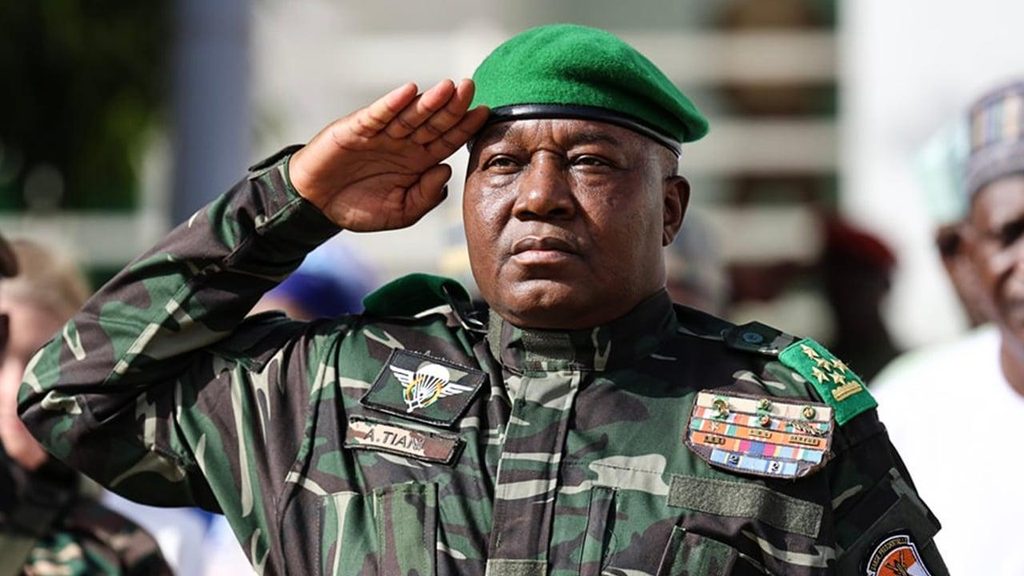
Niger’s military leader, General Abdourahamane Tiani, has appointed a new armed forces chief following a failed mutiny in the capital, Niamey, last month, in an apparent effort to restore order and cohesion within the country’s military.
State television said Tiani issued a decree naming Brigadier General Maman Sani Kiaou as chief of staff, replacing General Moussa Salaou Barmou.
The appointment comes amid questions over unity and trust within the armed forces as Niger confronts worsening insecurity and battlefield gains by rebel and militant groups.
Mounting security challenges
Kiaou has led military operations against armed groups in Tillabéri, a volatile region in western Niger, and Diffa in the country’s southeast.
African affairs analyst Maysa Nawaf Abdel Khalek said the change in military leadership reflected rapidly developing events following the attempted mutiny, which raised fears of a deeper split within the armed forces.
“The appointment appears to be another attempt to restore security and prevent divisions within the army,” she told Erem News.
Abdel Khalek said the mutiny exposed anger among soldiers over deteriorating conditions and the conduct of operations against armed groups. Some of those involved reportedly came from southern and western Niger, areas that have suffered some of the country’s deadliest militant attacks.
She said Tiani and the new chief of staff now face the difficult task of stabilising the military and strengthening Niger’s defence capabilities amid growing internal and external pressures.
Closer ties with Russia
Political analyst Mohamed Idriss said deteriorating relations between Niger and France were likely to push Niamey closer to Moscow.
Niger’s military leaders have repeatedly accused Paris of supporting armed groups, allegations France denies, while using opposition to the former colonial power to reinforce their domestic legitimacy.
Idriss said Russia’s rapid intervention to support Tiani’s government during the unrest in late August could provide the ruling military council with further justification for deepening its alliance with Moscow.
However, he warned that the underlying causes of the attempted mutiny remained unresolved.
“Anger is growing within Niger’s military, and appointing a new chief of staff alone will not solve the problem,” Idriss said.