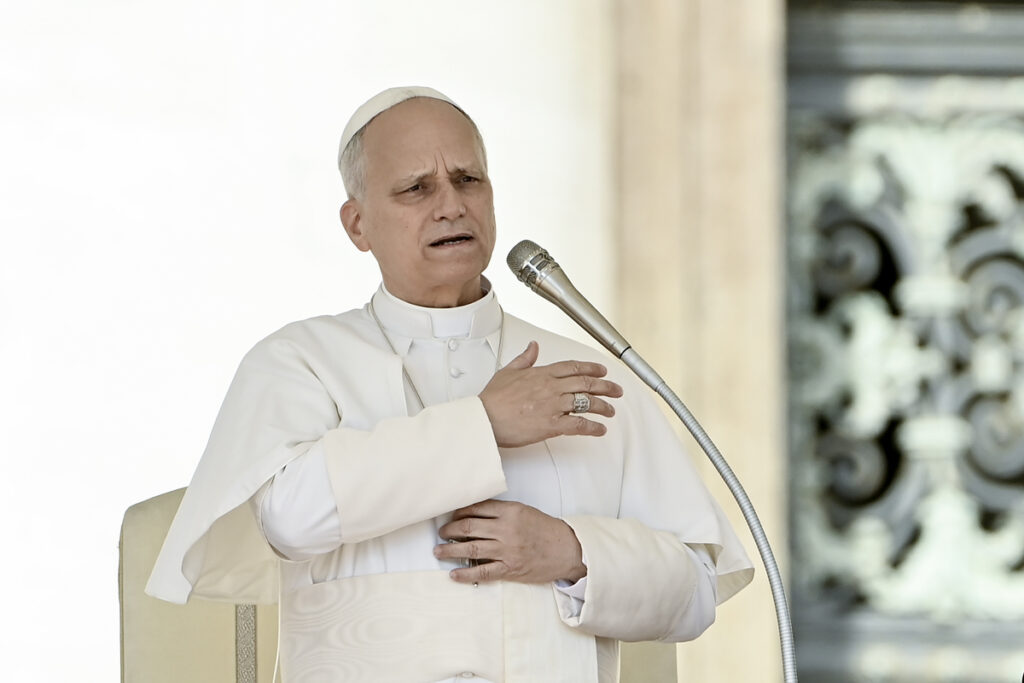
Pope Leo concluded his Africa tour in Equatorial Guinea, urging action against deep inequality in the oil-rich nation.
He called on citizens to bridge divisions between wealthy elites and struggling communities, warning that unchecked disparity threatens social cohesion and dignity.
The visit unfolded as the Vatican leader drew scrutiny over tensions with U.S. President Donald Trump and a controversial deportation agreement.
Equatorial Guinea recently agreed to accept deportees from other countries under a deal with Washington, criticised by lawyers and rights advocates.
Leo began the day in Mongomo, celebrating Mass in Central Africa’s largest basilica before vast crowds gathered in anticipation.
Addressing thousands, he urged leaders and citizens alike to serve the common good rather than narrow personal or political interests.
He also condemned the treatment of prisoners, describing detention conditions as troubling and lacking basic hygiene and humane standards.
President Teodoro Obiang Nguema Mbasogo attended the Mass alongside his son, Vice President Teodoro Nguema Obiang Mangue, known as Teodorin.
The vice president, often associated with a lavish lifestyle, was convicted of embezzlement in France, with assets worth over 100 million euros seized.
Crowds estimated at 100,000 filled the basilica and surrounding colonnades, cheering as the pope arrived in his white popemobile.
Celebratory smoke in national and Vatican colours rose into the sky, while worshippers danced and welcomed the rare papal presence.
Leo later travelled to Bata, where he planned to visit a prison accused by rights groups of holding detainees without due process.
Activists hoped the pope would spotlight deportees sent from the United States, raising concerns about their treatment and legal protections.
An open letter signed by dozens of organisations urged him to advocate for humane, lawful conditions and resist forced repatriations.
The pope’s visit ends a demanding journey across four African nations, marked by strong rhetoric on justice, governance and human dignity.