Russian forces played the decisive military role in suppressing an attempted mutiny against Niger’s military leader Abdourahamane Tiani, while Algeria intervened a day later and the Alliance of Sahel States confined its response to political support, according to a report by Jeune Afrique.
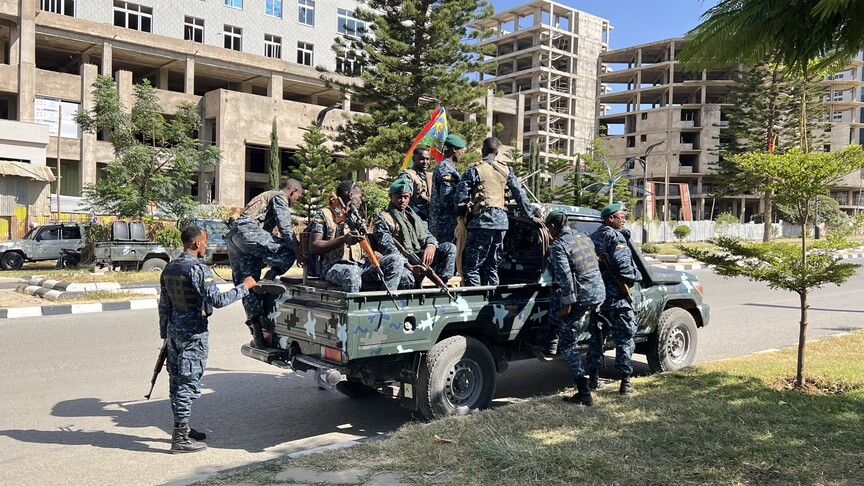
The French-language magazine said Tiani’s government faced a serious challenge on August 29, when a group of junior officers, including members of Niger’s special forces, attacked key sites in the capital, Niamey.
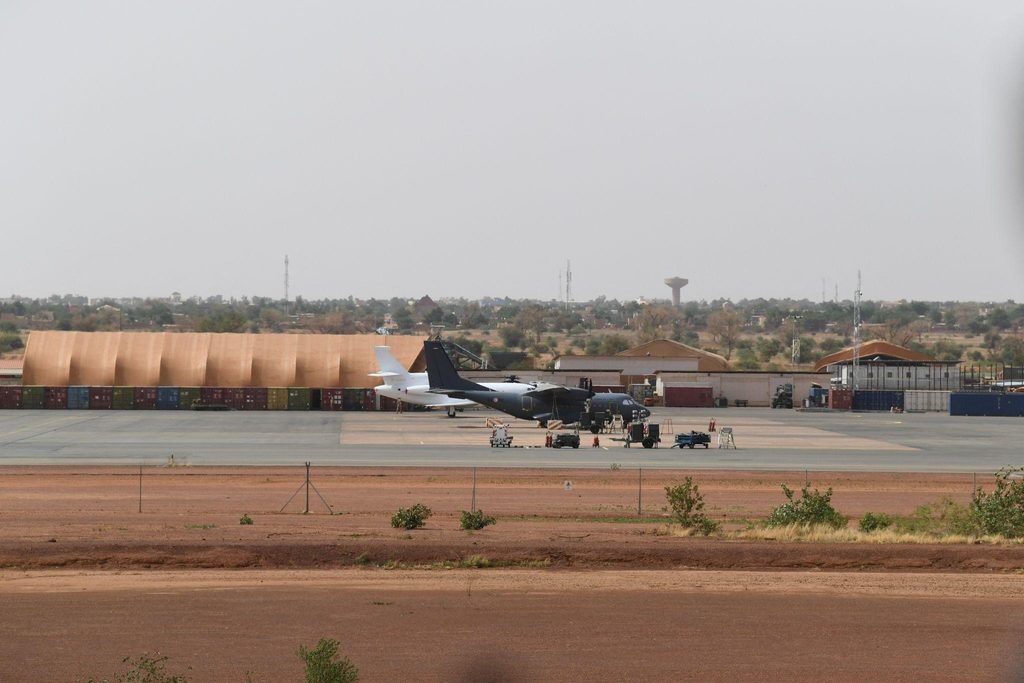
The targets reportedly included the presidential palace, state television headquarters and Air Base 101, which adjoins Niamey’s international airport. Niger’s Defence Ministry described the unrest as a mutiny carried out by “a group of soldiers acting in violation of military regulations.”
The mutineers barricaded themselves inside the airbase before forces loyal to Tiani retook the facility in a rapid and reportedly bloody assault. Some sources cited by the magazine said dozens of people may have been killed, although no independently verified casualty figure was available.
Russia’s decisive intervention
Jeune Afrique reported that personnel from Russia’s Africa Corps, whose local headquarters are located near the airport, provided crucial support to loyalist forces after receiving a direct request from Tiani on the morning of August 29.
Tiani was reportedly eager to regain control of Air Base 101 because of its strategic importance and the presence of military drones there. At the time, he was said to be uncertain about which army units remained loyal to him, apart from the presidential guard responsible for his protection.
Russian Ambassador to Niger Viktor Voropayev confirmed on the evening of August 29 that Africa Corps personnel had intervened in response to a request from Niger’s military leadership.
Local sources cited by Jeune Afrique said the Russian contribution was primarily aerial. Russian forces allegedly deployed explosive-laden drones against rebel positions equipped with heavy weapons, including 12.7 mm and 14.5 mm machine guns.
One source told the magazine that the intervention shifted the balance of power. After losing their heavy weapons and beginning to run out of ammunition, the mutineers were forced to surrender.
Algeria sends military aircraft
Moscow was not Tiani’s only source of external assistance. According to Jeune Afrique, Algeria dispatched four Sukhoi Su-30 fighter jets to Niger on August 30, a day after the attempted mutiny.
An Ilyushin Il-76 military transport plane and an Il-78 aerial refuelling aircraft were also reportedly sent as part of the deployment.
Algeria had already condemned the attempted overthrow and declared its “strong support” for Niger’s authorities. That diplomatic backing was subsequently followed by a military move that Algerian officials described as a response to an attempt to destabilise the neighbouring country.
The deployment marked a potentially significant shift in Algeria’s longstanding security policy. Jeune Afrique quoted an Algerian analyst as saying it was the first time since the country gained independence in 1962 that it had intervened militarily in another state’s internal crisis, having traditionally relied on diplomacy.
The development comes amid rapidly expanding ties between Algiers and Niamey. Relations strengthened following Tiani’s visit to Algeria in February, when the two countries signed several economic agreements.
Algeria also delivered four military helicopters to Niger on August 9, weeks before the unrest in Niamey.
Jeune Afrique said the move could reflect Algeria’s desire to increase its influence within the Sahel region at a time of strained relations with France. It may also be intended to present Algiers to the region’s military-led governments as a dependable partner during moments of crisis.
Sahel alliance offers political support
Mali and Burkina Faso, Niger’s partners in the Alliance of Sahel States, or AES, did not participate militarily in suppressing the mutiny, despite Air Base 101 also hosting a camp belonging to the alliance’s joint force.
Instead, Bamako and Ouagadougou reiterated their “full support for the institutions of the Republic of Niger” and praised the loyalty and courage of Nigerien forces that confronted the rebellion and restored order.
The events in Niamey highlighted the different layers of foreign support underpinning Tiani’s government: direct and reportedly decisive Russian military intervention, a subsequent Algerian deployment and political backing from Niger’s allies in Mali and Burkina Faso.
They also illustrated the rapidly evolving security relationships across the Sahel, where military-led governments have reduced their reliance on former Western partners and increasingly turned towards Russia and regional powers such as Algeria.