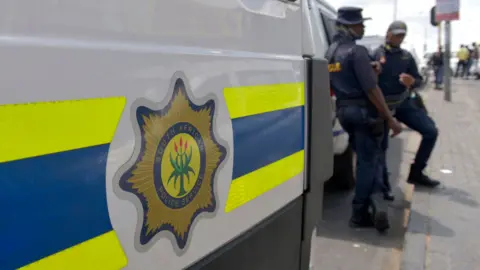
South African police launched a manhunt on Sunday after two shootings killed 27 people near Johannesburg and Cape Town, with investigators examining possible links to an illegal mining feud and a business dispute.
The attacks took place within hours of each other and left another 26 people injured. No arrests had been announced.
President Cyril Ramaphosa condemned the killings, which came days after 11 people were shot dead at a house party near Durban.
“This cannot go on like this,” he told local media, pledging intensified efforts by security forces to tackle violent crime.
The deadliest attack occurred at a tavern in Wedela township, about 80 kilometres from Johannesburg, at around 9:30 p.m. on Saturday. Police said assailants carrying AK-47 rifles opened fire, killing 17 people and wounding 15.
Gauteng police commissioner Tommy Mthombeni said investigators were examining whether a struggle for control of illegal mining operations had triggered the attack. He added that it could have been retaliation for a shooting at the same tavern roughly a month earlier.
Ramaphosa said police had images of the suspects and were trying to locate them.
Residents largely declined to discuss the killings. One said illegal miners, locally known as zama zamas, lived in the area, where powerful gangs dominate the illicit gold trade.
Soldiers and police pathologists arrived in the township after the attack. Two burnt vehicles stood nearby, while a sign at the tavern read: “No weapons allowed”.
The second shooting took place at about 2 a.m. on Sunday at a grilled-meat venue in Lwandle, on Cape Town’s outskirts. Ten people were killed and 11 wounded.
Footage recorded at the venue showed a crowd dancing and singing outdoors before gunshots sent people screaming.
Police said a business rivalry was among the possible motives, citing reports that customers had been purchasing cheaper alcohol elsewhere and bringing it to the venue. Investigators had not established a definitive motive for either attack.
Onlookers gathered behind police cordons in Lwandle but declined to speak to reporters, saying they feared for their safety.
The killings have renewed pressure on authorities to address South Africa’s persistent gun violence and high murder rate ahead of municipal elections in November.
Crime is expected to be a central concern for voters as the African National Congress faces the prospect of further losses in support. The discovery of women’s bodies near Johannesburg since July has also fuelled public anger and fears over femicide.
Ramaphosa earlier this year described organised crime as the greatest threat to the country’s democracy and deployed soldiers to support police in some areas.
Crime expert Yusuf Abramjee told Reuters that illegal firearms were widely used by organised criminal groups and in gang violence, urging investigators to examine the networks supporting the attacks.
“Authorities need to look at the wider networks behind the violence,” he said.