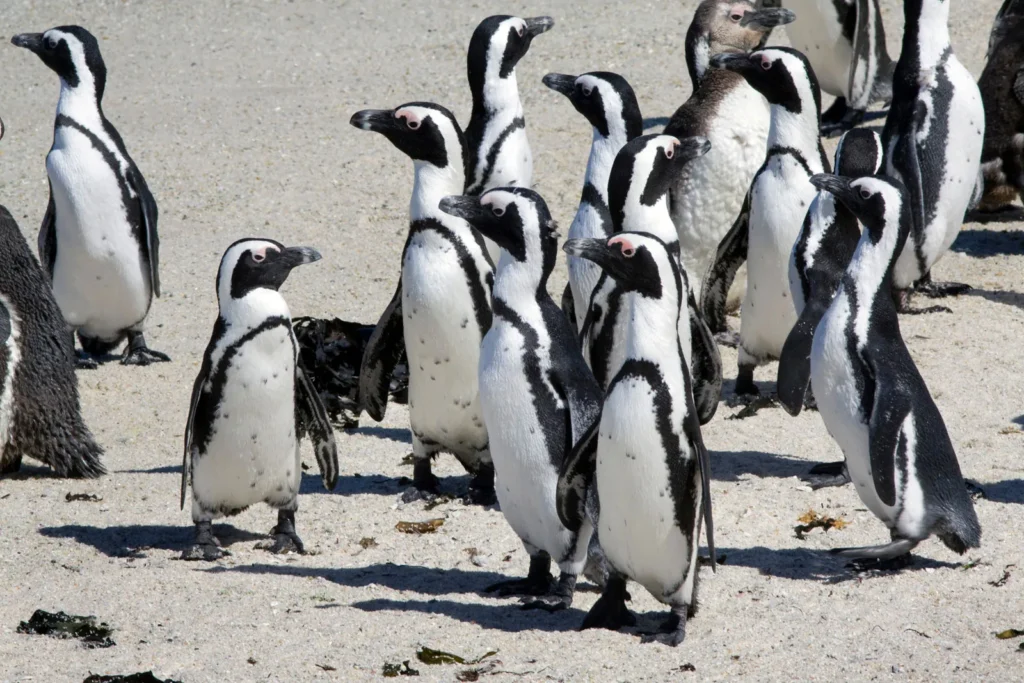
Endangered African penguins off South Africa’s coast have suffered a devastating collapse driven by chronic food shortages, a new study warned Friday.
Researchers said some colonies plunged by 95 percent in just eight years, leaving fewer than 10,000 breeding pairs worldwide as the species now sits on the IUCN’s critically endangered list.
Scientists from the University of Exeter and South Africa’s environment department found that two major colonies near Cape Town collapsed between 2004 and 2011, with an estimated 62,000 birds lost.
Sardine numbers — the penguins’ primary food source — remained below a quarter of historical levels throughout those years, according to co-author Richard Sherley.
He said industrial fishing and environmental shifts, including changes in water temperature and salinity, drove the drastic decline in sardine stocks.
These conditions “appear to have caused severe food shortage for African penguins, leading to an estimated loss of about 62,000 breeding individuals,” Sherley said.
The global population has fallen by nearly 80 percent in three decades, raising fears the species could vanish from the wild by 2035.
Authorities have enforced a commercial fishing ban around six key colonies for the past decade, including Robben Island and Dassen Island, the two sites examined in the study.
Other efforts include installing artificial nests and attempting to establish new breeding sites in safer locations.
African penguins remain a major draw for visitors, with thousands travelling to observe the birds each year along South Africa’s coast.
But conservationists warn that tourist pressure adds to the strain by disturbing nesting sites and increasing stress on already vulnerable birds.