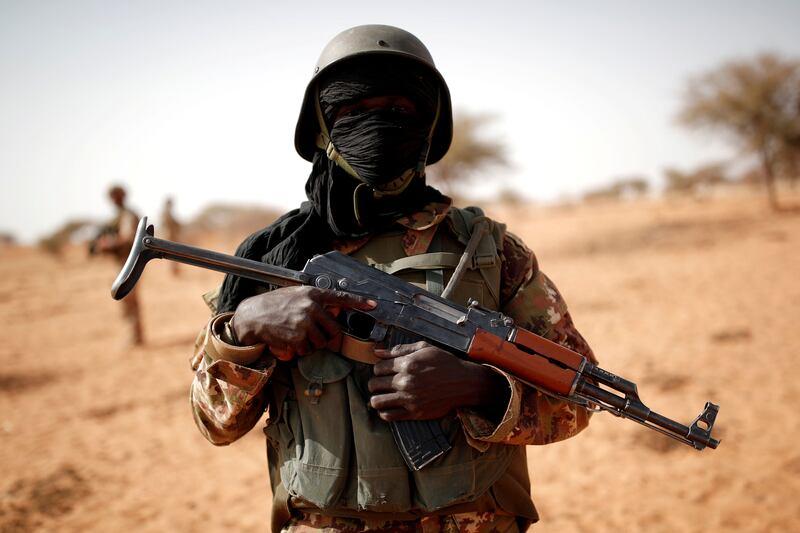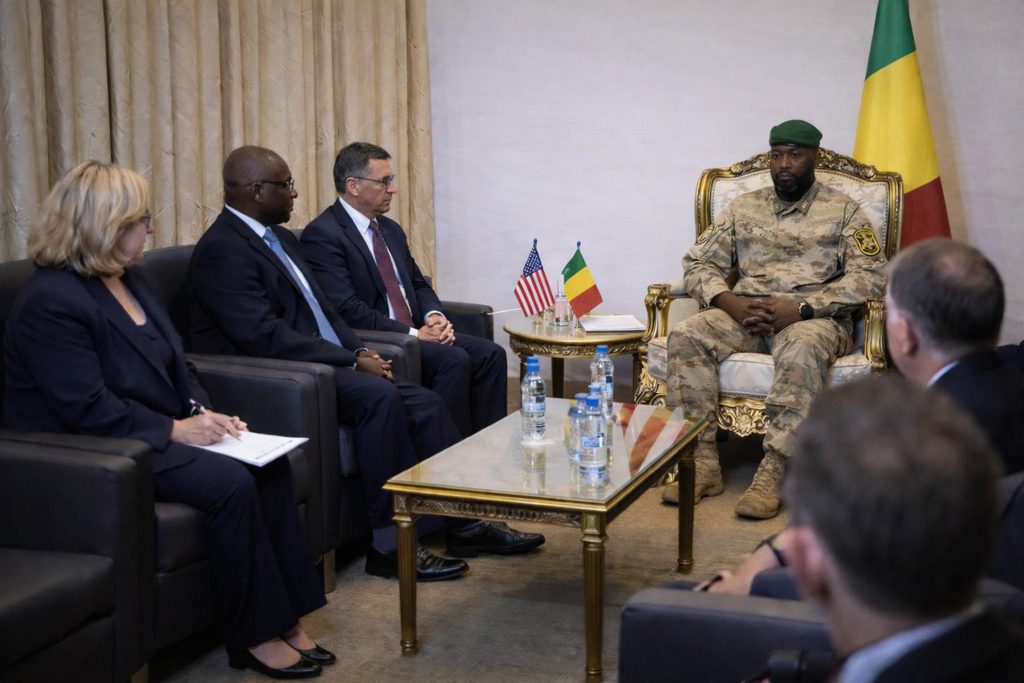
US lawmakers from both parties are urging President Donald Trump’s administration to set clearer parameters for its renewed engagement with Mali as jihadist groups expand across the Sahel and security threats intensify in West Africa, according to Jeune Afrique.
Democratic Representative Jimmy Panetta of California and Republican Representative Joe Wilson of South Carolina have drafted legislation focused on security cooperation and counterterrorism in Mali.
The bill would require the administration to report on the expansion of Jama’at Nusrat al-Islam wal-Muslimin, or JNIM, and examine its sources of financing, including gold trading, informal taxation and illicit commercial networks.
It would also require Secretary of State Marco Rubio to develop a strategy for countering the group, which is led by Iyad Ag Ghaly.
The proposed strategy would include bilateral and multilateral diplomatic initiatives, cooperation with regional partners and international organisations to strengthen intelligence sharing and coordination, measures to disrupt recruitment and financing, and benchmarks for assessing the effectiveness of Washington’s policy.
Panetta said a significant share of the militant threat in the region originated from Mali, adding that the strategy could later be expanded to include Burkina Faso, Niger and other countries.
The initiative comes as Washington reassesses its relationship with members of the Alliance of Sahel States after the military-led governments of Mali, Burkina Faso and Niger deepened ties with Russia and its Africa Corps.
The draft legislation says the withdrawal of traditional international counterterrorism forces and declining regional cooperation created a security vacuum that extremist networks have exploited to expand their operations.
In recent months, the Trump administration has signalled a cautious rapprochement with the government of Malian leader Assimi Goita, including renewed counterterrorism cooperation and intelligence sharing.
In February, Washington lifted sanctions on three Malian officials linked to Russia’s Wagner Group, including Defence Minister Sadio Camara, who was later killed in a joint attack by JNIM and the Azawad Liberation Front.
The renewed engagement has also included senior US diplomatic visits. In July, US Under Secretary of State for African Affairs Frank Garcia travelled to Mali, where he met Prime Minister Abdoulaye Maiga and Foreign Minister Abdoulaye Diop.
The legislation also raises the question of US sanctions imposed on Mali following the country’s military takeover, calling for an assessment of restrictions on Malian entities and whether they are limiting the government’s ability to combat armed extremist networks.
However, closer cooperation with governments that came to power through coups has drawn criticism from some US analysts.
Liam Carr, who leads the Africa team at the American Enterprise Institute’s Critical Threats Project, warned that cooperation could lend legitimacy to authoritarian governments and said differences between Sahel governments’ counterterrorism methods and US approaches could complicate any partnership.
Washington increasingly views Mali as a test case for renewed US engagement in the Sahel, particularly after losing access to its air base in neighbouring Niger.
Bilateral cooperation between Washington and Bamako has also contributed to the release of former American hostage Kevin Rideout.
At the same time, renewed US engagement has attracted criticism from supporters of anti-Western narratives within the Alliance of Sahel States.
Mali’s ambassador to the United States, Sekou Berthe, declined to comment on Bamako’s position regarding the proposed legislation.