Zambia’s President Hakainde Hichilema has officially declared a national disaster to confront the persistent drought plaguing the nation. In an address to the public on Thursday afternoon, President Hichilema revealed that 84 out of 116 districts in the country were adversely affected.
The prolonged dry spell has led to a scarcity of rainfall, raising concerns about potential food shortages and a strain on electricity production, as a significant portion of Zambia’s energy is derived from water sources.
Notably, the water levels at the Kariba Dam, a crucial reservoir for hydroelectricity shared with Zimbabwe, have dwindled to approximately 11.5% of usable storage since last December.
President Hichilema disclosed that the drought is anticipated to impact the generation of over 450 megawatts of power, and nearly half of the land allocated for crop cultivation has been adversely affected. In response to the crisis, the government is committed to importing additional maize and other essential food items to address the shortfall.
To mitigate the impact, President Hichilema announced the mobilization of Zambia’s defense forces, emphasizing a collective effort to combat the challenges posed by the drought.
He expressed determination to encourage farmers to increase crop cultivation and enhance social support programs for those affected by the dry spell.
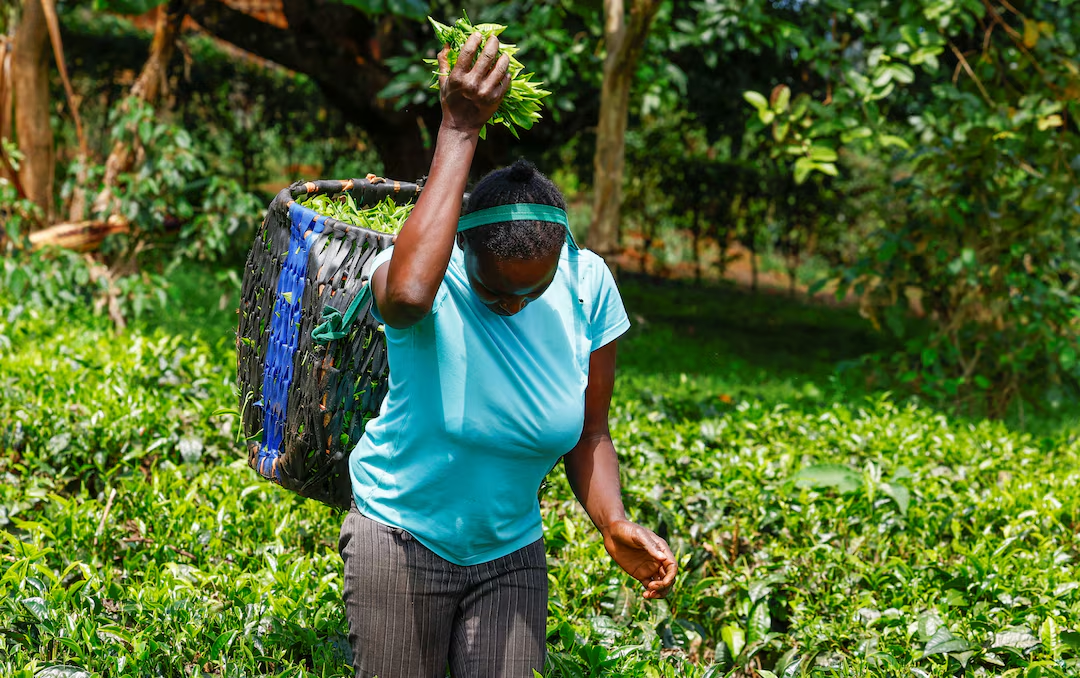
Calling for support from both local and international partners, President Hichilema acknowledged commitments from entities such as the British government, the UN system, and the World Bank Group. He urged farmers to adopt irrigation methods to cope with the adverse conditions, recognizing that an estimated one million farmers have been negatively impacted by the drought.
President Hichilema emphasized a collaborative approach involving various stakeholders, opposition politicians, and the church to address the situation. Social media platforms have been inundated with distressing visuals depicting fields with failing crops, reflecting the severity of the drought’s impact on agriculture.