Energy markets convulsed Thursday as Iranian strikes on Gulf infrastructure rattled investors, sending oil prices sharply higher and equities tumbling across global financial centres.
Brent crude surged above $115 per barrel while US benchmark West Texas Intermediate briefly crossed $100, reflecting mounting fears over disrupted global supplies.
The escalation followed Iranian retaliation against regional energy facilities after an Israeli strike targeted infrastructure linked to Iran’s vast South Pars gas field shared with Qatar.
European natural gas prices jumped more than one-third amid supply anxieties before retreating slightly, underscoring extreme volatility gripping energy markets worldwide.
Missiles struck Qatar’s Ras Laffan complex, the world’s largest liquefied natural gas hub, reportedly causing extensive damage and heightening concerns about prolonged supply shocks.
Drone attacks also hit a Saudi refinery on the Red Sea while fires erupted at two facilities in Kuwait, widening fears of regional energy instability.
Analysts warned the conflict risks evolving into a prolonged energy war, amplifying uncertainty and darkening economic growth prospects already weakened by geopolitical tensions.
Susannah Streeter of Wealth Club said markets increasingly expect a drawn-out confrontation, with investor sentiment deteriorating rapidly as economic risks multiply.
Kathleen Brooks of XTB cautioned central banks may be underestimating growth risks while focusing heavily on inflation pressures driven by surging fuel costs.
Equity markets fell broadly, with Wall Street declining during trading and major European indices closing more than two percent lower amid widespread selling.
Asian markets mirrored losses, as Tokyo plunged over three percent and Hong Kong and Shanghai also retreated amid escalating geopolitical anxiety.
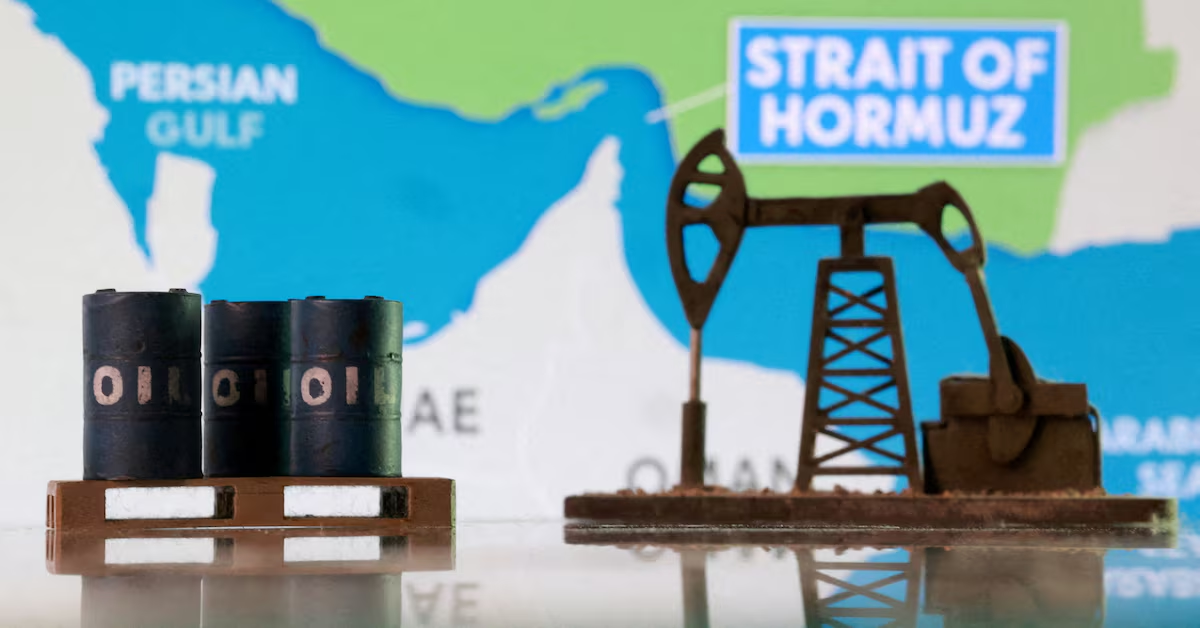
Markets have struggled since hostilities began February 28, with attacks across the Gulf effectively restricting traffic through the Strait of Hormuz, a vital energy artery.
Rising oil prices have revived fears of persistent inflation and higher borrowing costs, complicating policy decisions for central banks worldwide.
The Bank of England, European Central Bank, Federal Reserve and Bank of Japan all held interest rates steady, while warning energy-driven inflation could intensify soon.
Fresh US data showing stronger-than-expected wholesale inflation compounded worries, reinforcing expectations that higher energy costs may soon ripple through global consumer prices.