Middle East oil producers have restored crude exports to prewar levels despite continuing disruption in the Strait of Hormuz, while Iranian shipments have been almost completely shut out of the recovery, according to new tanker-tracking data.
At least 16.5 million barrels per day of crude and condensate left the Middle East Gulf region, excluding Iran, between September 1 and 28, matching average export levels before the war, according to commodities intelligence firm Kpler.
Iran stands as the stark exception.
Before the conflict began in February, Iranian crude exports averaged about 1.7 million barrels per day. Shipments through Hormuz have remained close to zero since the United States reimposed its naval blockade in July, Kpler said.
The figures highlight an increasingly two-tier oil market in the Gulf: Saudi Arabia, the United Arab Emirates, Iraq, Kuwait and Qatar have progressively rebuilt their export networks, while Iran remains largely isolated from international crude markets.
The regional recovery has not meant a return to business as usual at Hormuz.
Around 9.9 million barrels per day, or 60% of non-Iranian Gulf exports, physically crossed the strait in September. The remaining 40% bypassed Hormuz through alternative routes, compared with just 17% before the war.
Saudi Arabia has increasingly used its East-West pipeline to move crude toward the Red Sea, while the UAE has relied heavily on its pipeline to Fujairah on the Gulf of Oman.
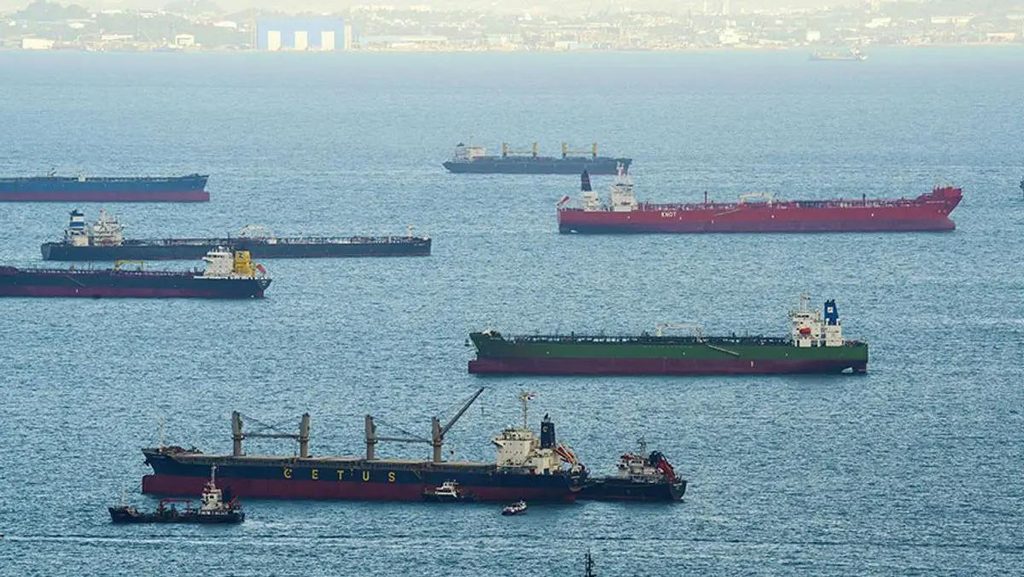
Exporters have also created what amounts to a new maritime logistics network around Hormuz.
Kpler said more than 70% of crude crossing the strait in August was transferred between tankers off Fujairah or Sohar, Oman. At least 63 very large crude carriers are now involved in the shuttle trade, carrying oil from Gulf terminals through Hormuz before transferring it to long-haul tankers outside the strait.
Saudi shipments through Hormuz alone climbed from around 700,000 barrels per day in August to 2.8 million bpd in September.
The result is that Gulf producers outside Iran have effectively rebuilt their prewar export capacity through a combination of pipelines, tanker shuttles and offshore transfers.
Iran has not shared in that recovery.
Its crude accounted for around 1.6 million of the 1.8 million barrels per day still crossing Hormuz in March. A US naval blockade imposed in April drove Iranian crossings close to zero by May.
Exports briefly recovered after a June agreement between Washington and Tehran and a temporary sanctions waiver, reaching around 1.1 million barrels per day that month.
But the waiver was later withdrawn and the blockade reimposed in July. Iranian crossings have remained near zero since, according to Kpler.
Iranian crude inventories have consequently built up onshore, with Kpler estimating stocks at roughly 67 million barrels since mid-August.
Including Iran, total regional crude exports are still only around 91% of their prewar level — meaning Tehran’s missing barrels account for nearly the entire remaining deficit.
The figures underline an unexpected consequence of seven months of disruption around Hormuz: rather than eliminating Gulf oil exports, the conflict has pushed Iran’s neighbours to develop alternative routes and shipping systems capable of moving almost the same amount of crude as before the war.
Iran, meanwhile, has increasingly become the producer left on the wrong side of the system.