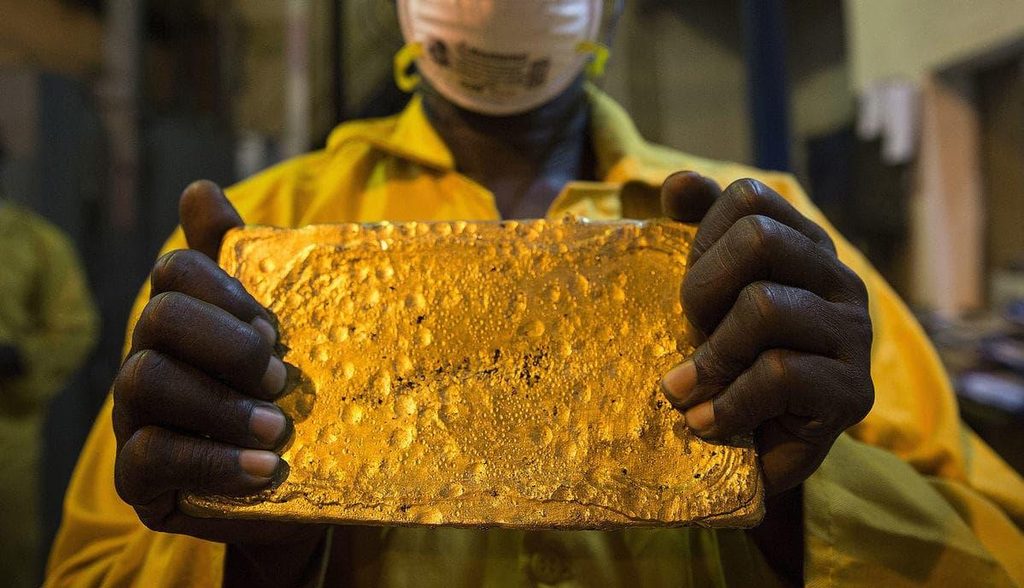
Sudan’s booming gold sector is generating record revenues, but official figures have also highlighted a vast gap between the amount of gold produced and the quantities passing through formal export channels.
The Sudanese Mineral Resources Company said gold export earnings reached $2.292 billion during the first nine months of 2026, while revenues collected from the mining sector climbed to 1.886 trillion Sudanese pounds.
The state mining regulator said production had already reached 105% of its target for the whole of 2026 by the end of September, while revenue collection stood at 131% of the annual target.
But figures from the previous year underline the scale of the challenge facing authorities seeking to control Sudan’s lucrative gold trade.
Sudan produced around 70 tonnes of gold in 2025, according to the Mineral Resources Company, while Central Bank figures showed that just 14 tonnes were exported through official channels.
That leaves a gap of roughly 56 tonnes between reported production and formally recorded exports — meaning official exports accounted for only about one-fifth of reported production.
The figures do not establish that all of the difference was smuggled abroad, but they highlight the scale of gold moving outside the formal export system, an issue Sudanese authorities have repeatedly identified as a major drain on foreign-currency revenues.
Gold smuggling and informal cross-border trading have long complicated efforts to regulate Sudan’s mining industry, particularly since the outbreak of war in April 2023 disrupted banking, trade and government oversight across large parts of the country.
Minerals Minister Nour al-Daem Taha said in August that official gold exports during the first half of 2026 had already matched the total recorded for the whole of 2025, attributing the increase to measures aimed at directing more gold through official channels.
The Mineral Resources Company said its latest performance figures were reviewed during an executive meeting in Khartoum this week.
Director General Mohamed Taher Omer called for stronger safety and environmental standards, greater oversight of mining operations and continued digitalisation of the sector.
Despite the sharp increase in officially recorded revenues in 2026, the enormous disparity between production and formal exports remains one of the biggest questions surrounding Sudan’s gold economy.
Gold is one of Sudan’s most important sources of foreign currency, making control over production, trading and exports increasingly important as the country struggles with the economic consequences of more than three years of war.