Sudan’s TASIS-backed Government of Peace and Unity has announced plans to modernise customs operations and facilitate trade between states as part of efforts to strengthen economic institutions across territories under its administration.
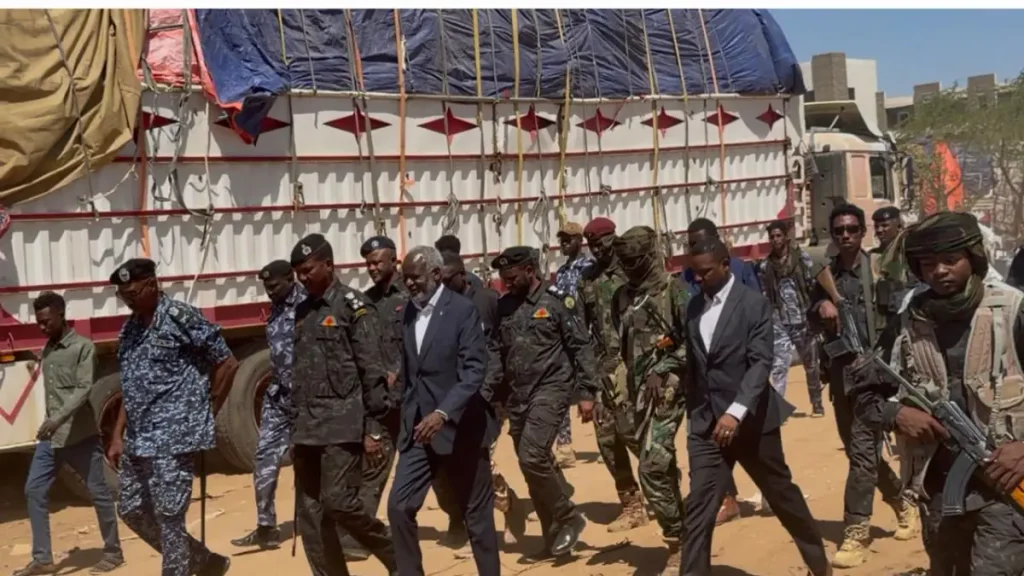
Interior Minister Suleiman Sandal outlined the measures during an inspection of the Customs Authority headquarters in Nyala, South Darfur, accompanied by Deputy Police Director-General Major General Mohamed Salah al-Din Farah.
During the visit, Sandal reviewed customs procedures, tariff systems, inspection arrangements and mechanisms used to regulate commercial activities.
He also examined preparations to activate inland customs stations across areas administered by the government.
Officials said the planned facilities would help improve the movement of essential goods and support commercial exchanges between states affected by years of conflict.
Plans to restore commercial activity
Sandal stressed the importance of simplifying customs procedures for traders and importers while maintaining effective oversight of goods entering local markets.
He called for improvements in administrative efficiency, transparency and professional standards within the customs service.
The minister also highlighted the role of inspection and quality-control departments in monitoring imported medicines, cosmetics and other products affecting public health.
According to the government, preparations to operate inland customs facilities form part of a broader programme to restore economic activity and strengthen public institutions damaged by Sudan’s war.
The administration believes improved customs management could facilitate the availability of essential supplies, reduce obstacles to interstate trade and generate additional public revenue.
Sandal said customs revenues should contribute to the resources available to the Ministry of Finance and Economic Planning.
He also praised customs personnel for maintaining operations despite the security and economic difficulties affecting the country.
The visit follows a series of institutional appointments and administrative measures introduced by the TASIS government.
Prime Minister Mohamed Hassan al-Taishi recently appointed new university directors and authorised changes within the federal police leadership as the administration expands its civilian institutions.
The Government of Peace and Unity, headquartered in Nyala, has prioritised restoring public services, strengthening security institutions and rebuilding economic infrastructure in areas under its control.
However, officials did not announce a timetable for opening the proposed customs facilities or provide details of the financial resources required.
The effectiveness of the reforms will depend on implementation and the restoration of reliable transport and commercial networks across the affected regions.