The United States has approved up to $414 million in financing for a major uranium project in Niger, marking a significant commercial re-entry into the country two years after US troops were expelled.
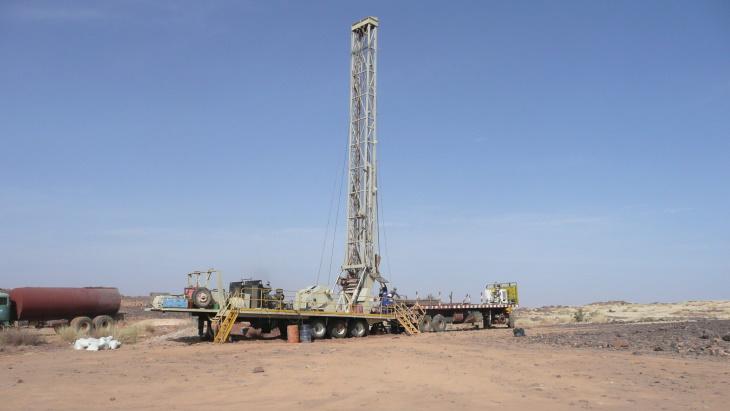
The US International Development Finance Corporation approved the debt facility for Canadian mining company Global Atomic’s Dasa uranium project, the company said on Wednesday.
Global Atomic describes Dasa as Africa’s highest-grade uranium deposit. The investment could strengthen US access to a strategic mineral at a time when Niger, one of the world’s leading uranium producers, is seeking to reshape a sector long dominated by French interests.
The agreement also signals a possible improvement in relations between Washington and Niamey after ties deteriorated sharply following Niger’s 2023 military coup.
The military authorities ordered US forces to leave the country in 2024 and subsequently strengthened security ties with Russia, including cooperation with Russian paramilitary forces.
People familiar with the discussions said US officials had pushed for renewed engagement with Niger and viewed the uranium project as an opportunity to rebuild relations while securing access to a resource considered increasingly important for energy and national security.
The effort gained momentum after the Trump administration took office with a stronger focus on commercial agreements and strategic mineral access in Africa, according to sources briefed on the talks.
Global Atomic Chief Executive Stephen Roman travelled to Washington earlier this year to help resolve outstanding issues surrounding the financing, one source familiar with the negotiations said.
The project could also provide a rare area of cooperation between the United States and Canada amid broader trade tensions between the two neighbouring countries.
Niger’s government did not immediately respond to a request for comment.
Security and export challenges
Despite the financing commitment, the Dasa project faces substantial security, logistical and political risks.
Armed groups have intensified attacks against Nigerien security forces over the past year, while mutinous soldiers last month attacked a major military airbase and targeted the presidency.
The worsening security environment has also complicated plans to export uranium from landlocked Niger.
Global Atomic has examined alternative transport corridors, including a possible northern route through Algeria and across the Sahara, according to a source briefed on the discussions.
Relations between Niger and Algeria have improved in recent months, with Algeria sending aircraft to support Nigerien authorities during the latest attempted military uprising.
Washington added uranium to its critical minerals list last year, increasing US interest in securing alternative supplies.
Niger’s uranium industry is also at the centre of a widening dispute with French nuclear group Orano, which has launched international arbitration proceedings after losing control of important mining assets in the country.
The US-backed Dasa investment could therefore give Washington a new foothold in Niger’s uranium sector at a time when the country is redefining its foreign partnerships and reducing its dependence on former Western partners.