West African countries are rapidly expanding domestic gold refining capacity in an effort to retain more value from one of the region’s most important commodities, but international certification requirements are complicating efforts to bring major mining companies on board.
Burkina Faso, Mali, Ghana, Guinea and Côte d’Ivoire are among countries seeking to process more gold locally rather than exporting largely unrefined material, according to a report by French magazine Jeune Afrique cited by Erem News.
Mali opened the privately operated Kankou Moussa refinery in 2015, while Ghana has developed similar facilities. Guinea plans to open a refinery by the end of this year, while Côte d’Ivoire is targeting the first half of 2027.
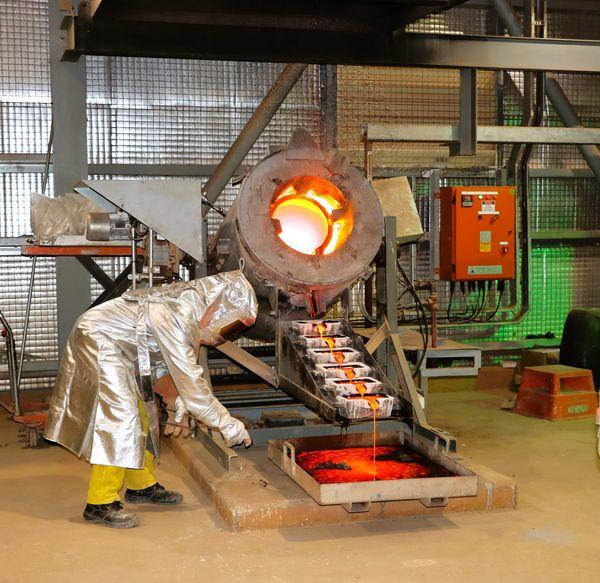
The facilities process doré — semi-pure gold bars that also contain silver and other metals — into gold with purity levels of around 99.9%.
Burkina Faso President Ibrahim Traoré, inaugurating his country’s first gold refinery on September 28, said the government wanted to move beyond simply extracting and exporting raw materials.
“Our ambition is no longer simply to be a country that extracts and exports its raw materials. We want to refine all our minerals locally,” Traoré said.
The state-owned facility, built at a reported cost of €16.8 million, has the capacity to process 164 tonnes of gold annually — significantly more than Burkina Faso’s estimated 2025 production of 94 tonnes.
Governments across West Africa see local refining as a way to tighten control over gold flows, increase domestic value addition, expand industrial capacity and generate greater revenues.
Authorities are also seeking to channel more gold produced by artisanal and small-scale miners through formal refining systems, with some countries ultimately aiming to process industrial mine output as well.
In Ghana, the state-owned Ghana Gold Board reached an agreement with the Chamber of Mines in June allowing it to purchase up to 30% of industrial gold production for domestic refining.
Guinean authorities entered talks with mining companies a month later to increase local processing after initially ordering a suspension of unrefined gold exports.
However, convincing major international mining groups such as Barrick Mining, AngloGold Ashanti and Endeavour Mining to use new domestic refineries remains difficult because of the importance of accreditation by the London Bullion Market Association.
The LBMA’s Good Delivery standard is widely regarded as a key benchmark in the global bullion market, covering gold purity, traceability and responsible sourcing requirements.
For major mining companies, access to an accredited refinery helps ensure their gold can be readily accepted and traded in London’s wholesale precious metals market without additional compliance concerns or discounts.
Jeune Afrique warned that the absence of LBMA-accredited refining capacity could also complicate financing for mining projects because lenders and investors typically want confidence that future gold production can be sold easily on international markets.
A former chief executive of a gold mining company operating in the region said it would be extremely difficult for a company to raise the funds required to build a mine without a clear strategy for marketing its output.
Obtaining Good Delivery accreditation can take years. Refineries must generally have operated for at least five years, processed at least 10 tonnes of fine gold annually during the previous three years and demonstrate significant financial strength. Independent technical audits are also required.
Africa currently has only one refinery on the LBMA Good Delivery list: Rand Refinery near Johannesburg, South Africa, which has operated for more than a century.
The certification gap therefore presents a major challenge for West African governments seeking to transform their growing refining capacity into a fully integrated part of the international gold market.