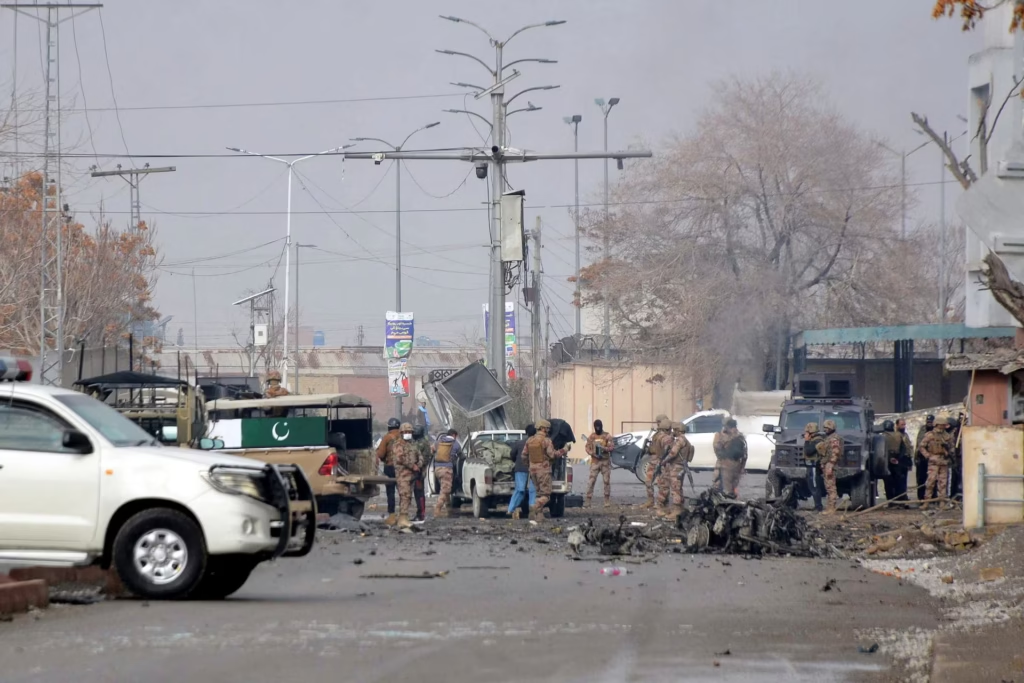
Coordinated separatist attacks tore through Balochistan on Saturday, leaving a trail of blood and fire across Pakistan’s southwestern frontier.
The military reported that fifteen security personnel and eighteen civilians perished during the chaotic, multi-pronged assaults across the mineral-rich province.
Security forces neutralized ninety-two militants, including three suicide bombers, as the region descended into a state of temporary paralysis.
The Baloch Liberation Army claimed responsibility for the carnage, targeting critical infrastructure and government installations to signal their defiance.
In the provincial capital of Quetta, thunderous explosions shattered the silence, forcing businesses to shutter and residents into hiding.
Militants orchestrated a daring jailbreak, freeing thirty inmates and seizing stockpiles of ammunition from a local district police station.
Prime Minister Shehbaz Sharif vowed to eradicate terrorism entirely while accusing external forces of fueling the persistent regional instability.
Despite its vast natural wealth, Balochistan remains the nation’s poorest province, fertile ground for long-simmering resentment and violent rebellion.
The military dismissed the operation as a failure of planning, yet the sheer scale of coordination suggests a deepening crisis.
This latest surge in violence underscores the fragile security landscape of a region caught between industrial potential and insurgency.