Bangladesh’s Jamaat-e-Islami party has drawn criticism for condemning the US-Israeli attack on Iran while remaining largely silent on Iranian strikes targeting Gulf states, despite the presence of millions of Bangladeshi workers in the region.
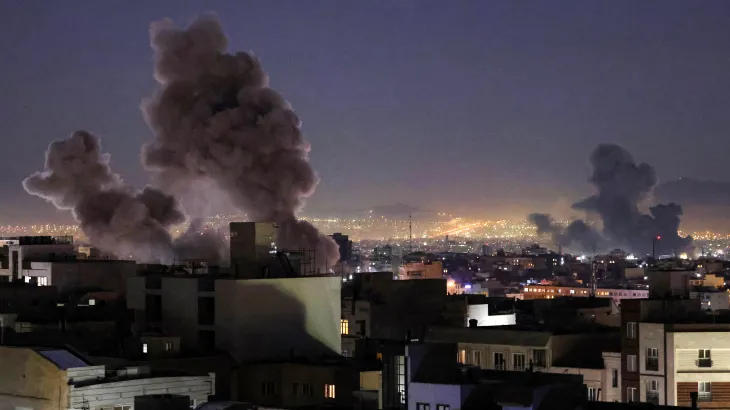
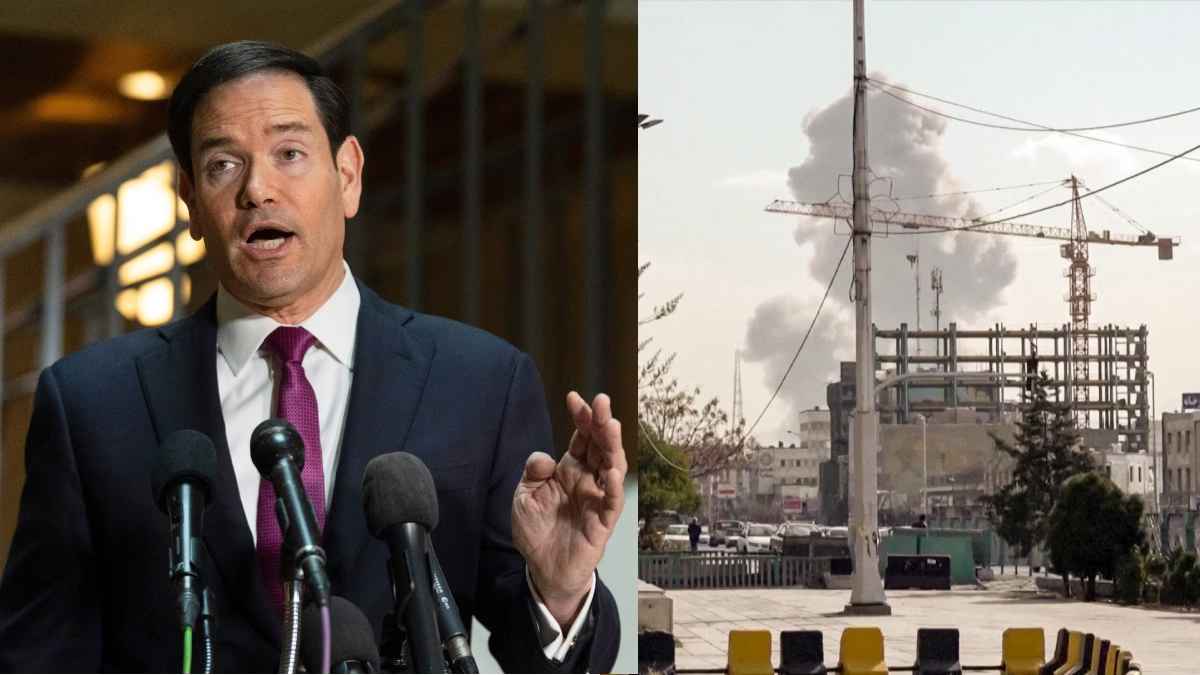
The controversy comes amid escalating tensions following the US-Israeli military campaign against Iran and the killing of Iran’s Supreme Leader, Ayatollah Ali Khamenei. The Islamist party — widely considered the political arm of the Muslim Brotherhood in Bangladesh — issued statements strongly denouncing the attack on Tehran.
In its official statements, Jamaat-e-Islami described the strike as an “illegal and unjustified attack” on a sovereign nation and the Muslim world. The party said the operation targeted civilians and innocent people and warned that the escalation could threaten regional stability and the broader international order.
Solidarity demonstrations
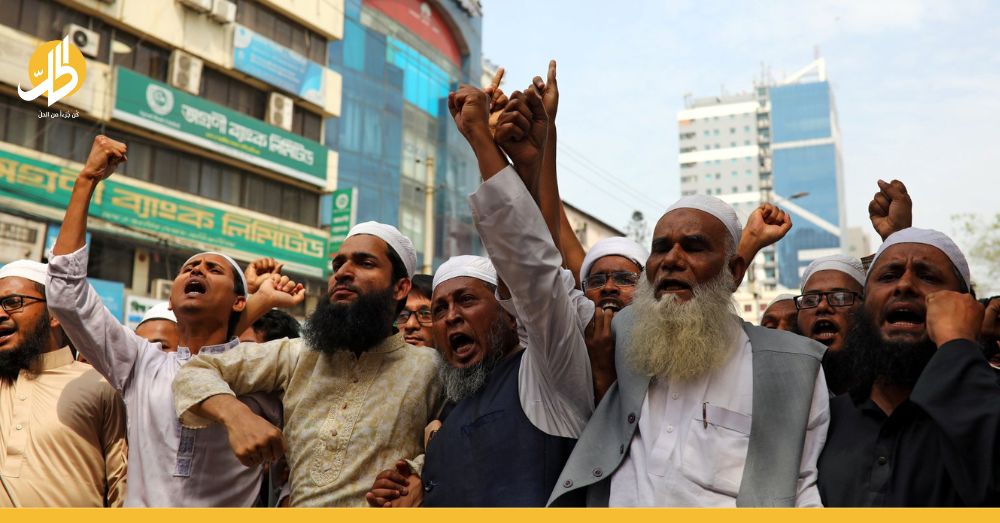
In Bangladesh’s capital, Dhaka, the party organized protest marches in which supporters carried banners condemning the US attack and calling for an end to military escalation.
Party leaders speaking at the demonstrations urged the international community to intervene and called on the United Nations and the Organization of Islamic Cooperation to help de-escalate the crisis and prevent a wider regional conflict.
Jamaat’s rhetoric focused heavily on condemning what it described as aggression against Iran as an Islamic state. Party officials expressed sorrow over the killing of Khamenei and argued that diplomacy and dialogue remain the only viable path for resolving international disputes.
However, the party has not issued comparable statements condemning Iranian missile and drone attacks on Gulf states during the same period of regional escalation.
Observers say the silence stands in stark contrast to the speed and clarity with which the party denounced the strike on Iran.
Bangladesh government response
The Bangladeshi government has taken a different stance, officially condemning violations of Gulf state sovereignty and urging restraint by all parties.
Dhaka has emphasized the importance of stability in the Gulf region due to its economic and diplomatic ties, particularly the role played by millions of Bangladeshi migrant workers whose remittances are a vital pillar of the country’s economy.
The government’s position highlights a divergence between state policy and the messaging coming from Jamaat-e-Islami.
Selective political messaging
Critics argue that the party’s focus on solidarity with Tehran while remaining silent about attacks on Arab states reveals a selective political narrative.
While Jamaat’s statements defending Iran included detailed legal and moral arguments about sovereignty and international law, no similar language was used regarding Gulf states that reported coming under Iranian attack.
Analysts say the contrast raises questions about the ideological considerations shaping the party’s position.
Economic implications for Bangladesh
Bangladesh has significant economic ties to Gulf countries, which host a large share of its overseas workforce.
Estimates suggest between 3.5 million and 4 million Bangladeshis work across the Gulf region. Saudi Arabia hosts the largest number — roughly 2.1 to 2.6 million — followed by the United Arab Emirates with about 600,000 to 700,000 workers, along with large communities in Oman, Kuwait and Bahrain.
These workers are employed largely in construction, domestic services and other labor sectors, making them an essential component of Gulf economies while providing a crucial source of remittance income for Bangladesh.
Several of these Gulf states have been targeted by Iranian missile and drone strikes during the current regional confrontation.
Reports indicate that some Bangladeshi nationals were among those affected.
The United Arab Emirates’ defense ministry reported that a Bangladeshi citizen was killed alongside two other foreign nationals, believed to be from Pakistan and Nepal, during Iranian missile strikes on Emirati territory.
Approximately 58 people were injured in the UAE during the attacks, including residents of multiple nationalities, despite air defense systems intercepting many of the incoming missiles and drones.
In Kuwait, local reports said at least four Bangladeshi workers were injured during a drone attack near Kuwait International Airport, with some suffering injuries from shrapnel following an explosion.
The regional escalation has also disrupted travel. Temporary airspace closures across parts of the Gulf forced the cancellation of dozens of flights between Bangladesh and the Middle East, leaving thousands of passengers stranded and affecting workers traveling for employment or family visits.
Regional ideological ties
Jamaat-e-Islami branches in Pakistan, India and Bangladesh have historically maintained ideological positions that analysts say are often sympathetic to Iran’s regional posture.
Critics argue that such alignments sometimes place ideological priorities above national economic interests and the safety of Bangladeshi citizens abroad.
The debate has renewed scrutiny of how political movements balance ideological commitments with the practical realities of protecting migrant workers and maintaining diplomatic relations with key economic partners.