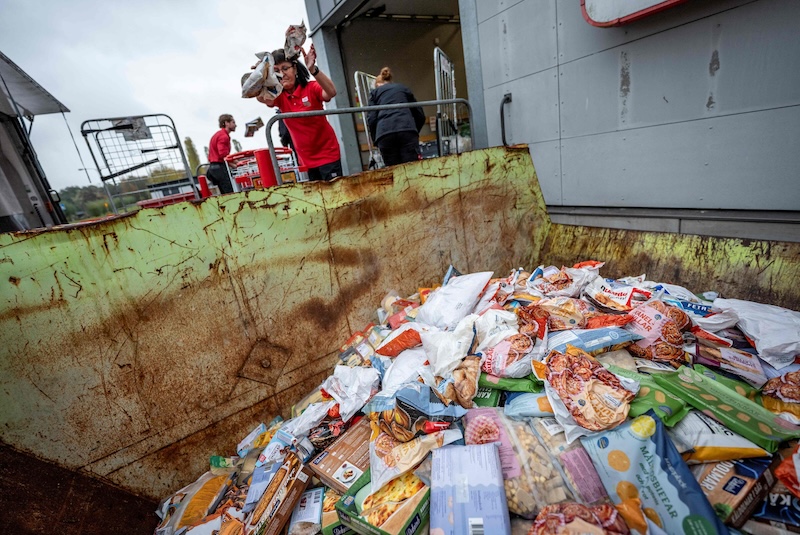
Major supermarket chains across Europe reported widespread disruptions to refrigeration and freezing systems on Monday, with suspected cyberattacks forcing retailers to remove large quantities of food from sale.
The incidents affected stores in Belgium, Ireland, Sweden, Finland and Estonia, with additional disruptions reported in Luxembourg and the Netherlands.
Retailers including Ahold Delhaize, Carrefour, Spar, ICA and Coop reported sudden increases in refrigeration temperatures, prompting emergency measures to prevent potentially spoiled products from reaching consumers.
According to Bloomberg, authorities and affected companies are investigating whether the incidents were part of a coordinated cyberattack targeting refrigeration control systems.
Dutch retail giant Ahold Delhaize confirmed an information technology incident affecting refrigeration equipment at several Delhaize supermarkets in Belgium late Sunday.
Carrefour Belgium said 15 of its approximately 700 stores were affected, while Spar reported similar disruptions at around five locations.
In Ireland, Musgrave Group confirmed that a cyber incident had affected refrigeration equipment at 13 SuperValu supermarkets.
The company said chilled and frozen products were removed from affected stores as a precaution, disrupting operations and causing inventory losses.
Freezer temperatures reportedly reach 50°C
Swedish supermarket chains ICA and Coop also reported unusual temperature increases in refrigeration and freezing equipment overnight.
Coop confirmed that seven stores had been affected by a cyber incident involving unauthorised interference with refrigeration systems.
ICA Sweden said a limited number of stores experienced disruptions but stopped short of confirming that hackers were responsible.
At an ICA Kvantum supermarket in Sjöbo, southern Sweden, refrigeration controls were reportedly altered to 50 degrees Celsius, according to a statement published by the store on Facebook.
Images circulating from Stockholm showed supermarket employees disposing of spoiled food after refrigeration equipment malfunctioned.
Similar incidents were reported in Finland, where several smaller K-food supermarkets experienced unexpected temperature fluctuations.
Petri Käyhkö, head of corporate security at Kesko, said the company launched an investigation after automated alerts indicated abnormalities in refrigeration equipment.
He said a possible IT-related incident had not been ruled out, although the disruptions were limited to a small number of stores operating equipment outside the company’s centralised protection systems.
In Estonia, supermarket operator Selver reported problems at its only remaining store using an older refrigeration control system manufactured by Danish company Danfoss.
The malfunction was resolved within minutes, according to Estonia’s public broadcaster ERR.
Similar attacks hit 700 French supermarkets
The latest incidents follow a major cyberattack in France in October, when refrigeration systems at approximately 700 supermarkets were compromised.
The attacks affected retailers including Intermarché, Coopérative U and Carrefour, forcing stores to discard substantial quantities of spoiled food.
French cybersecurity authorities identified compromises involving internet-connected refrigeration controllers, including equipment manufactured by Danfoss and other suppliers.
Bloomberg reported that a Danfoss spokesperson acknowledged that the latest European incidents involved the company’s products, as had the earlier attacks in France.
The incidents have renewed concerns about outdated refrigeration control software that may contain security vulnerabilities and cannot always be updated.
Such systems can allow attackers to interfere remotely with temperature settings, potentially causing significant financial losses without targeting payment terminals or customer databases.
Ahold Delhaize also experienced a separate cybersecurity incident in the Netherlands last month, which disrupted operations and left some supermarket shelves empty for several days.
Investigators have yet to establish whether the latest incidents are connected or identify those responsible.
The disruptions highlight the growing vulnerability of digitally connected refrigeration infrastructure, where interference with temperature controls can destroy food inventories and interrupt retail supply chains across multiple countries.